TheJakartaPost
Please Update your browser
Your browser is out of date, and may not be compatible with our website. A list of the most popular web browsers can be found below.
Just click on the icons to get to the download page.


Popular Reads
Top Results
No results found. Please check your search term and try again
Can't find what you're looking for?
View all search results
Popular Reads
Top Results
No results found. Please check your search term and try again
Can't find what you're looking for?
View all search resultsRedefining obesity: when trying “everything” finally meets real help
Change text size
Gift Premium Articles
to Anyone
Share the best of The Jakarta Post with friends, family, or colleagues. As a subscriber, you can gift 3 to 5 articles each month that anyone can read—no subscription needed!
 (Courtesy of Novo Nordisk)
A
s a 34-year-old based in Jakarta, Rosa “Ocha” Wardani is all too familiar with how the local society treats someone referred to as plus-size. After having her third child in 2018, she was well aware of how her weight could not seem to go down, adding that she puts on an extra 10 kg every time she’s carrying a child.
“In Indonesia, beauty is synonymous with being thin and white. I don't know where the stigma comes from. I just became a target for bullying, which leads to heartache, insecurity and lack of confidence,” she testified on her experience.
What people often oversee is the effort Ocha puts behind the scenes. After she stopped breastfeeding her third child, she started dieting, pouring her energy into remedies available on the market, from tea to medications.
“I've tried everything: tea, diet coffee, fasting, exercise, intermittent fasting, the protein shake diet, and expensive short-term programs. But it ended up causing my weight to go back up again, even worse,” she added. This reflects a common reality: many people have tried everything — diet, exercise and all kinds of effort — but nothing seems to work sustainably.
At the height of 156 cm and a body weight of 99.9 kilograms, doctors diagnosed Ocha with class 2 obesity (Body Mass Index 35–39.9), a range linked to a higher risk of serious conditions such as diabetes, high blood pressure and heart disease — and, sadly, Ocha had already developed these illnesses.
The mass of Indonesia

Over the past decades, overweight and obesity have grown across all age groups. Data from Indonesian Health Survey (SKI) suggested a sharp increase in prevalence in recent years, particularly among adults, from 28.9 percent in 2013 to 35.4 percent in 2018.
Characterized by an excessive accumulation of body fat, obesity is a chronic illness that leads to serious health consequences. In most cases, obesity is a matter of malnutrition and can be attributed to a lack of education about a balanced meal.
“Obesity is a very important issue right now, because so far not everyone, even some physicians, think of obesity as a disease,” revealed dr. Wismandari Wisnu, internist and endocrinologist.
She added that this year also saw the launch of the 2025 National Obesity Guidelines, which clearly explains the condition as a disease related to multifactorial causes that will have to be combated as a multidisciplinary team working together.
“If your parents are obese, you're more likely to become obese, because genetics is an important predisposition. There are also socioeconomic factors and hormones, because some hormones like cortisol will affect who becomes obese, how you eat, sleep quality and stress,” she said, adding that psychological factors and some medications will make you more likely to become obese.
She clarified that many of weight loss attempts may lead to temporary weight loss, but not long-term change if they don’t address the underlying causes of the gain.
“Based on a lot of multifactorial studies, we need to determine what causes these people to become obese; it's not just about eating too much or not being active enough, but there are many factors that make you more likely to become obese than others.”
This underlines a key message: obesity is not simply a personal failure, but rather a complex disease influenced by many factors.
Furthermore, dr. Riyanny Tarliman also emphasizes that obesity has a broader impact on families, productivity and healthcare costs. Linking it to how diabetes has earned the name of “mother of all diseases,” which led to complications, she urges that obesity is much worse.
Dr. Riyanny is the clinical, medical and regulatory director of multinational pharmaceutical company Novo Nordisk Indonesia. The company has a long-standing reputation for its commitment to addressing chronic diseases, including a significant focus on developing innovative therapies for the management of diabetes and obesity.
“We see obesity as a growing public health challenge. Around one in four Indonesians is now living with obesity or being overweight, and if this is not addressed early and systematically, we will continue to see more diabetes, hypertension and other complications,” she said.
“When you're obese, your risk of developing diabetes and hypertension increases, so everything is related. When you have those diseases, your productivity decreases, which can even impact the economy, physical illness, environmental and mental health.”
Light at the end of the tunnel
Weight loss journeys can be hard, but success stories are real. Although in reality, it is a work in progress.
Despite the challenges, there is growing hope for individuals living with obesity, driven by a better understanding of the disease, evolving medical treatments and expanding support systems.
“I'm still on a diet, but I've been helped by bariatric surgery. Now I'm stable at a maximum weight of 72 kg,” Ocha shared.
According to Wismandari and Riyanny, the weight loss journey should not be faced alone.
“Obesity, like diabetes and hypertension, is a chronic disease that must be managed by a doctor,” dr. Riyanny advised. “It’s not a short-term goal and involves many factors beyond just diet and exercise.”
This is another crucial reason why people should consult with their doctors: weight loss is not only about the kilograms, but also about the quality of the weight loss itself — especially reducing visceral fat and improving muscle function.
Concurring with Riyanny, Wismandari also adds, “Obesity itself is a high-risk factor for diabetes, cancer and cardiovascular disease. Once you know and understand that, you try to manage your diet and increase your activity - if doing it on your own doesn’t work, then it's time to turn to a professional.”
She acknowledged that figuring out which specialists to go to can be complicated. However, the first step is to see a doctor — a general practitioner or internist that can assess your health, identify related conditions, and refer you to a multidisciplinary team that may include an endocrinologist, nutritionist and mental health professional.
Some newer medications can help with weight loss, but they are prescription-only and should be used under medical supervision as part of a broader plan that includes diet, activity and behavioral support.
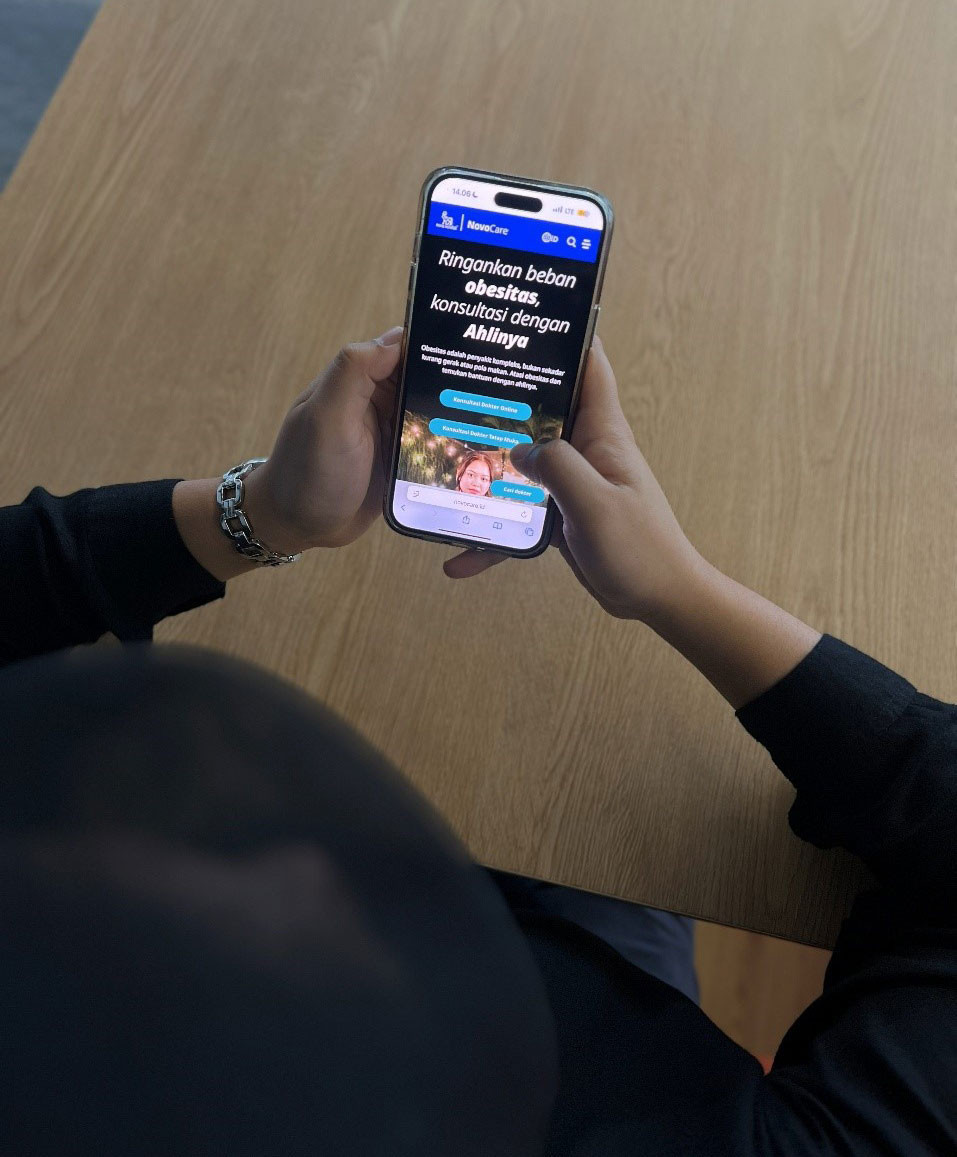
To help address these challenges, Novo Nordisk established NovoCare.id, a platform that allows individuals living with obesity to find doctors in their area who can support them and to access reliable information about obesity.
“I really appreciate what Novo Nordisk is doing regarding obesity. The programs created by Novo Nordisk help us as healthcare workers to extend our reach to provide education not just to the public, but also to our fellow healthcare workers,” said dr. Wismandari.
“As healthcare workers, we have the knowledge and the voice, but our reach is still limited. With NovoCare.id, I am very grateful because education about obesity is becoming more widely available, and it is really needed right now,” she concluded.
Most importantly, if you’re concerned about your weight, don’t wait. Ask for a full health assessment, talk honestly about your history and goals, and discuss evidence-based options.
At the end of the day, remember that obesity is a medical condition, not a moral failing. With proper care and support, meaningful and lasting change is possible.