TheJakartaPost
Please Update your browser
Your browser is out of date, and may not be compatible with our website. A list of the most popular web browsers can be found below.
Just click on the icons to get to the download page.


Popular Reads
Top Results
No results found. Please check your search term and try again
Can't find what you're looking for?
View all search results
Popular Reads
Top Results
No results found. Please check your search term and try again
Can't find what you're looking for?
View all search resultsTech firms lead Asian markets higher, oil swings after Maduro ouster
Change text size
Gift Premium Articles
to Anyone
Share the best of The Jakarta Post with friends, family, or colleagues. As a subscriber, you can gift 3 to 5 articles each month that anyone can read—no subscription needed!
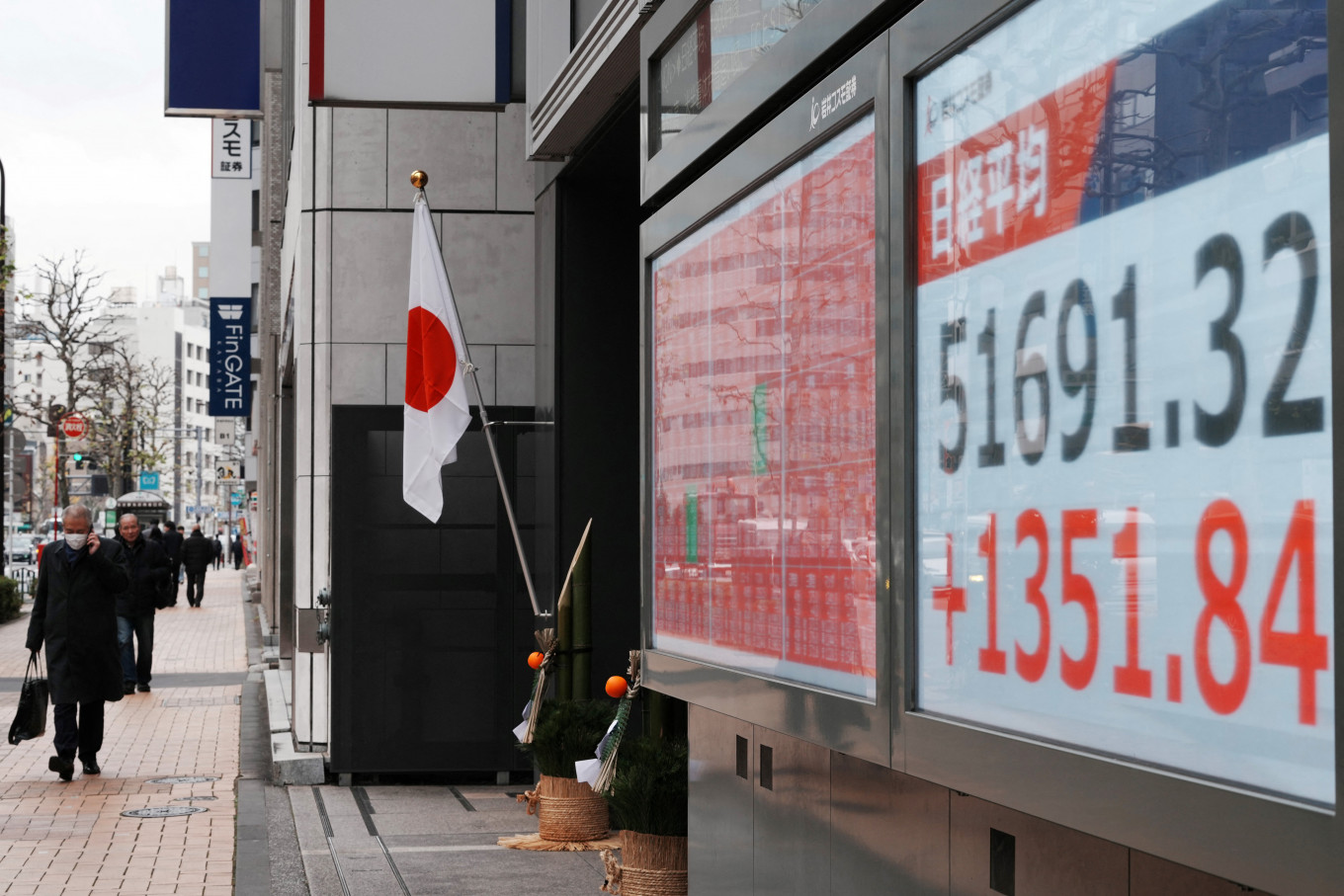 An electronic quotation board displays numbers of the Nikkei Stock Average on the Tokyo Stock Exchange in Tokyo on Jan. 5, 2026. (AFP/Kazuhiro Nogi)
A
sian stocks rose Monday on the back of a fresh rally in tech firms and oil fluctuated as investors weighed the impact of the US ouster of Venezuelan leader Nicolas Maduro.
While the South American leader's removal added to geopolitical risk on global markets, traders chose to focus on the long-running artificial intelligence boom and hopes for more US interest rate cuts.
The first full week of business for 2026 will also see the release of key jobs data that could play a role in the Federal Reserve's decision-making on borrowing costs.
Investors will also be on the lookout for an idea about who US President Donald Trump chooses to take the helm at the central bank when Jerome Powell steps down in May.
In early trade, Asian stocks were up across the board, led by markets with heavy tech presence.
Tokyo surged 2.8 percent thanks to tech investor SoftBank's 4 percent gains and chip equipment maker Tokyo Electron's 5 percent advance.

The Kospi in Seoul gained more than 2 percent, with SK Hynix up more than 3 percent and Samsung Electronics soaring 4.6 percent.
Taipei was 2.5 percent up as chip titan TSMC rocketed more than 5 percent.
Hong Kong, Shanghai, Sydney, Singapore, Wellington and Manila were also well up.
The gains suggest investors were brushing off worries that valuations in the tech sector have become stretched and warnings about the timing and size of returns on huge AI investments.
"This move now stands as the strongest start to a year for Asian equities since 2012, coming on the heels of a global market that just delivered its best annual return since 2017," wrote Stephen Innes at SPI Asset Management.
Still, Kyle Rodda at Capital.com warned: "Valuations remain around levels exceeded only by the Dot.com bubble, while allocation to equities are at elevated levels at the same time allocation to cash is on the low side.
"Most simply put, the markets probably need to see more evidence of resilient US growth, continued disinflation and therefore US rate cuts, strong corporate earnings, and the pay-offs from artificial intelligence to keep on rising."
Safe-haven investment gold was up more than 1 percent at about $4,400 per ounce.
Oil shifted between gains and losses after US forces attacked Venezuela early Saturday, bombing military targets and spiriting away Maduro and his wife to face federal charges in New York.
Venezuela has the world's largest proven oil reserves, and more Venezuelan crude in the market could exacerbate oversupply concerns and add to recent pressure on prices.
Trump said the United States will now "run" Venezuela and send US companies to fix its dilapidated oil infrastructure.
But analysts say that alongside other major questions about the South American country's future, substantially lifting its oil production will not be easy, quick or cheap.
After years of under-investment and sanctions, Venezuela pumps around one million barrels per day, down from around 3.5 million in 1999.
"Any recovery in production would require substantial investment given the crumbling infrastructure resulting from years of mismanagement and underinvestment," UBS analyst Giovanni Staunovo told AFP.
Investing today also holds little appeal as oil prices are weighed down by a supply glut, and fell last year.