The Jakarta Post
Please Update your browser
Your browser is out of date, and may not be compatible with our website. A list of the most popular web browsers can be found below.
Just click on the icons to get to the download page.


Popular Reads
Top Results
No results found. Please check your search term and try again
Can't find what you're looking for?
View all search results
Popular Reads
Top Results
No results found. Please check your search term and try again
Can't find what you're looking for?
View all search resultsGovt pledges central bank independence as rupiah hits record low
Foreign investors sold a net roughly $6.4 billion worth of Indonesian government bonds in 2025, adding to the pressure on the currency.
Change text size
Gift Premium Articles
to Anyone
Share the best of The Jakarta Post with friends, family, or colleagues. As a subscriber, you can gift 3 to 5 articles each month that anyone can read—no subscription needed!
 Set as preferred source
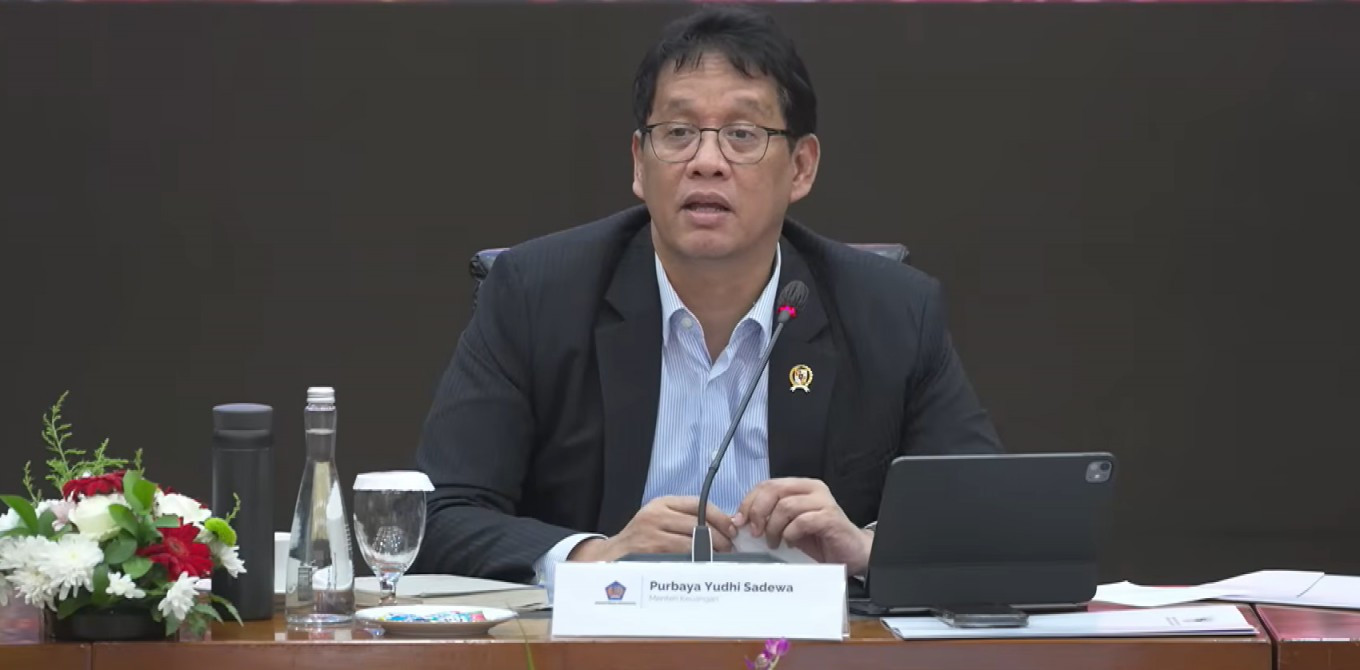 Finance Minister Purbaya Yudhi Sadewa speaks on Dec. 18, 2025, during the monthly state budget press conference. (Finance Ministry Official YouTube/-) (Finance Ministry Official YouTube/-)
F
inance Minister Purbaya Yudhi Sadewa pledged on Tuesday to uphold the independence of the central bank, after lingering fears about government interference in monetary policy drove the rupiah currency to a record intraday low.
The rupiah recovered from a slide of as much as 0.3 percent to Rp16,985 against the dollar, on investor jitters about President Prabowo Subianto's decision to nominate his nephew as a governor of Bank Indonesia, and overall fiscal health.
"We will maintain the independence of the central bank and the government as much as possible," Purbaya told journalists. "I will not squeeze the central bank to finance our development programs."
The currency has fallen nearly 2 percent in January after dropping 3.5 percent in 2025. The yield on the 10-year Indonesia government bond was 3.3 basis points higher at 6.33 percent, its highest in more than three months.
Purbaya sought to allay market concerns about the currency's depreciation, saying economic fundamentals remain sound.
"Although the rupiah has weakened, in percentage terms it is only a small amount, so the system should already be accustomed to this," he said, adding that the impact on the economy was minimal.

Prabowo's nephew, Thomas Djiwandono, currently a deputy finance minister, is one of three nominees whose names have been submitted to parliament, presidential spokesperson Prasetyo Hadi told reporters on Monday.
Purbaya said Thomas would resign from Prabowo's political party, Gerindra, and would not be able to influence all board members. Thomas did not immediately respond to a request for comment.
The focus will now switch to the central bank's policy meeting on Wednesday, where analysts expect it to stand pat on rates.
Another deputy finance minister, Suahasil Nazara, will represent the ministry at the review, but will have no voting rights, Purbaya said.
Trinh Nguyen, senior economist for emerging Asia at Natixis Corporate & Investment Banking, expects the rupiah to underperform against other Asian currencies in the short term as investors demand a higher risk premium for the economy.
"Concerns preceded the appointment as investors question the lunch program and the impact on Indonesia's bright spot – which is low fiscal debt and hard rule on 3 percent fiscal deficit on GDP," she said, referring to Prabowo's school meals program.
"Now with the appointment of his nephew, Bank Indonesia will be under pressure to ease monetary conditions," Nguyen added. "But with the rupiah weak, we do not expect the central bank to cut."
Markets were stunned in September when Prabowo abruptly removed Indonesia's influential finance minister Sri Mulyani Indrawati, as investors feared its hard-fought fiscal credibility could soon be eroded.
That also brought Bank Indonesia and its autonomy into the spotlight as investors fretted that independent monetary policymaking might be under pressure, with Prabowo targeting economic growth of 8 percent by 2029 from about 5 percent now.
Foreign investors sold a net roughly $6.4 billion worth of Indonesian government bonds in 2025, adding to the pressure on the currency.
At 2.92 percent of GDP, the 2025 budget deficit was the widest in at least two decades, except for the COVID-19 pandemic years, and close to a statutory cap of 3 percent of GDP.
Daniel Tan, portfolio manager at Grasshopper Asset Management, said Prabowo's move to appoint his nephew has further sparked jitters among investors concerned about erosion of central bank independence.
"The nomination added to existing concerns that Indonesia's budget deficit cap could be raised," Tan said.