The Jakarta Post
Please Update your browser
Your browser is out of date, and may not be compatible with our website. A list of the most popular web browsers can be found below.
Just click on the icons to get to the download page.


Popular Reads
Top Results
No results found. Please check your search term and try again
Can't find what you're looking for?
View all search results
Popular Reads
Top Results
No results found. Please check your search term and try again
Can't find what you're looking for?
View all search resultsPlasma fractionation plant in Karawang: The ‘donor-to-drug’ journey
Change text size
Gift Premium Articles
to Anyone
Share the best of The Jakarta Post with friends, family, or colleagues. As a subscriber, you can gift 3 to 5 articles each month that anyone can read—no subscription needed!
 Set as preferred source
 (Images courtesy of Indonesia Investment Authority)
E
very day, thousands of Indonesians donate blood and plasma, often unaware of the complex scientific and safety-driven processes that transform a single donation into life-saving therapies. As Indonesia advances toward domestic production of plasma-derived medicines, the “donor-to-drug” journey is becoming increasingly relevant for patients, healthcare professionals, policymakers and the wider public.
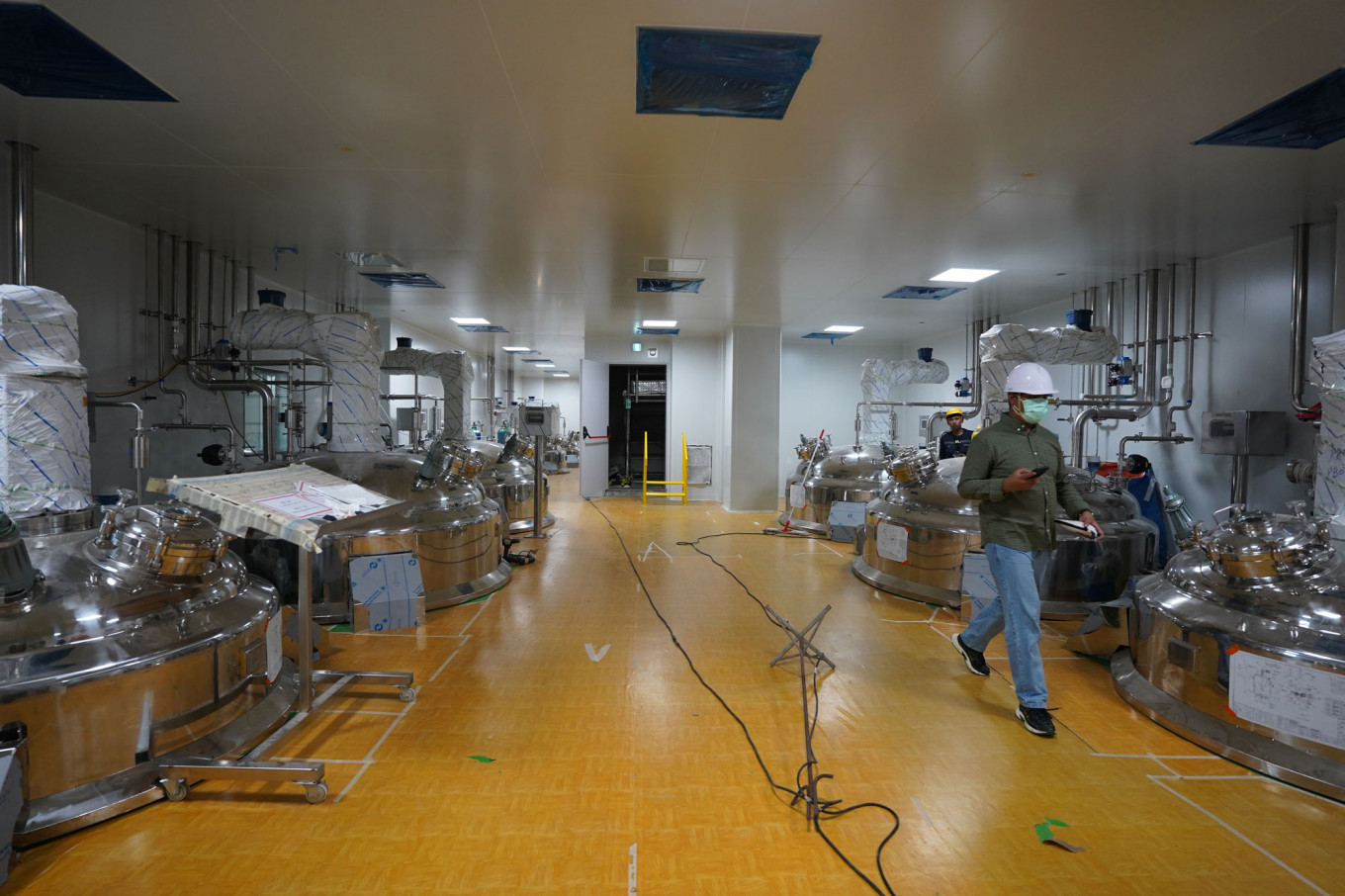
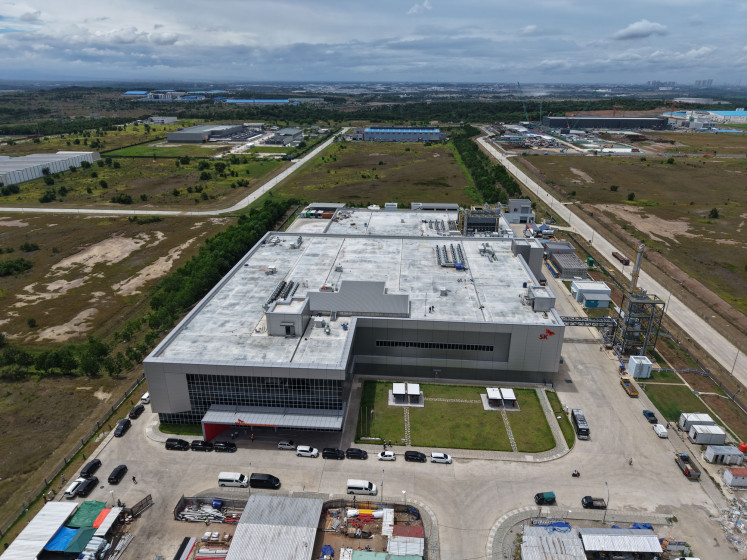
This journey highlights the medical significance of plasma, with the SK Plasma fractionation plant in Karawang, West Java, serving as a vital link in the process. The plant will play a crucial role in separating and purifying therapeutic proteins from donated human blood plasma, transforming it into life-saving medicines such as albumin, immunoglobulins (IVIG) and clotting factors.
The long-awaited plant, owned by PT SK Plasma Core Indonesia, a joint venture between South Korea’s biopharmaceutical company SK Plasma and Indonesia’s sovereign wealth fund, the Indonesia Investment Authority (INA), is more than 980 percent complete.
What is the medical significance of plasma?
This question came to mind during a media visit to the nearly completed SK Plasma fractionation plant in Karawang, West Java, on Dec. 18.
To answer it, one must first understand human blood, its components and their roles in health. According to Dr. Syahrul, chair of the Indonesian Neurology College, plasma is one of the main components of blood. It consists of approximately 92 percent water, which serves as a transport medium, while about 7 percent is made up of proteins such as albumin, globulins and fibrinogen, each with distinct functions.

“For example, globulins, including immunoglobulins or antibodies, function to fight infections and transport various substances throughout the body,” he explained.
The remaining 1 percent of plasma contains sugars, fats, mineral salts (electrolytes), hormones, enzymes and vitamins. “Plasma proteins such as albumin and globulins are essential for capillary exchange, antibody production, immune function and blood coagulation,” he added.
Syahrul further explained that plasma plays a critical role in emergency and life-threatening conditions such as trauma, severe burns and shock. “Transfusion of fresh frozen plasma [FFP] can restore lost blood volume and pressure and replenish clotting factors to stabilize patients experiencing massive blood loss or severe burns,” he said.
“For patients with bleeding disorders, plasma-derived products provide essential clotting factors, such as fibrinogen for patients with hemophilia and Von Willebrand disease,” he noted.
In cases of immune deficiency, immunoglobulin therapy derived from pooled donor plasma supplies antibodies to patients with compromised immune systems, helping them fight infections. “Convalescent plasma therapy has also been used during emerging infectious disease outbreaks, such as in the early stages of the COVID-19 pandemic,” he added.
Rising demand and national strategy
Indonesia, with a population of around 280 million, has seen a rising demand for plasma, estimated to reach millions of liters per year. Plasma is required to produce vital medicines such as albumin, immunoglobulins and clotting factors, particularly for patients with rare diseases, immune disorders and critical conditions.
To meet these needs, the government has implemented programs aimed at achieving self-sufficiency in the plasma fractionation industry. These efforts are supported by regulatory frameworks such as Health Ministry Regulation No. 17/2017 and by increasing the capacity of Blood Management Units (UPD) certified under Good Manufacturing Practices (CPOB) at the Indonesian Red Cross (PMI) and hospitals.
Currently, 18 PMI and hospital blood management units are certified under CPOB standards to produce plasma that meets the requirements for plasma-derived medicinal products (PDMPs). The number of certified UPDs and plasma production capacity is expected to continue expanding to support the national plasma fractionation project.
According to Syahrul, the government also supports domestic plasma production and toll manufacturing, processing plasma overseas, as an interim solution while preparing for full domestic production by a national plasma fractionator. This effort involves coordination among the Food and Drug Monitoring Agency (BPOM), state-owned enterprises (SOEs) and the PMI.
Based on national estimates, Indonesia’s ideal blood requirement is approximately 5.6 million units per year, with plasma accounting for 55–60 percent of total blood volume. Each unit of blood, approximately 300–350 milliliters, yields plasma.
“If the target of 5.6 million units is met, the estimated plasma volume would reach around 1.68 million to 1.96 million liters per year, excluding plasma obtained through plasmapheresis,” Syahrul said.
From donation to medicine
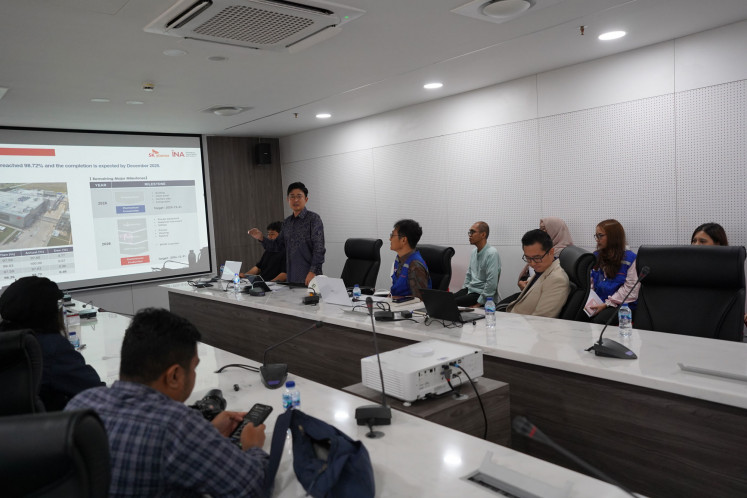
Syahrul outlined the steps involved in processing blood collected from donors, highlighting a series of examinations and separation procedures to ensure safety and maximum benefit for patients.
The process begins with component processing (fractionation) of sterile blood using a centrifugal machine, or blood separator. This separates blood into red blood cells for anemia and blood loss, platelets for patients with clotting disorders such as cancer patients, and plasma for patients with hemophilia, burns or autoimmune diseases. This approach allows one unit of donated blood to potentially save up to three people.
Crossmatching is then performed to ensure compatibility between donor and recipient blood, preventing adverse reactions. Blood components that pass all tests are stored under specific temperature conditions before being distributed to hospitals based on demand.
There are strict criteria to determine whether plasma is suitable for fractionation. According to Syahrul, plasma must meet requirements based on donor selection, comprehensive infectious disease testing and controlled processing, storage and transportation protocols.
Safety and quality are ensured through three pillars: rigorous donor screening, mandatory multi-stage viral inactivation during manufacturing and continuous regulatory oversight.
The SK Plasma fractionation plant in Karawang operates using a sophisticated multi-stage industrial process, primarily cold ethanol precipitation (Cohn fractionation), combined with modern purification methods such as chromatography, to separate valuable proteins from large volumes of human plasma.
“These isolated proteins are then used to produce life-saving medicines,” he said.
The process generally includes plasma collection and pooling, fractionation through cold ethanol precipitation, centrifugation and filtration, protein purification, pathogen safety measures and final processing.
Designed to produce plasma-derived products such as albumin and immunoglobulins for domestic medical needs, the plant offers strategic advantages for strengthening Indonesia’s healthcare industry through investment and technology transfer from South Korea’s biotechnology sector.
“Quality is maintained through international standards, strict quality control and a skilled workforce, supported by government regulations and SK Plasma’s commitment,” Syahrul noted.
He added that collaboration with SK Plasma brings significant investment and advanced plasma-processing technology, which is essential for national pharmaceutical self-reliance.
The plant conducts comprehensive testing at every stage to ensure the absence of contamination and maintain protein purity. It also applies a traceability system that enables tracking each unit of plasma from donor to finished product, ensuring quality and safety.
Other advantages include strengthening the national healthcare industry, adherence to international healthcare standards, increased production capacity, advanced fractionation technology, continuous workforce training and regulatory compliance.
The near completion of the SK Plasma fractionation plant in Karawang marks a major milestone in Indonesia’s biomedical and pharmaceutical landscape. With the ability to produce critical plasma-derived medicines domestically, Indonesia is moving toward greater availability, affordability and long-term independence in this essential healthcare sector.
From donor to drug, this new era promises safer and more reliable access to life-saving therapies for millions of Indonesians.