The Jakarta Post
Please Update your browser
Your browser is out of date, and may not be compatible with our website. A list of the most popular web browsers can be found below.
Just click on the icons to get to the download page.


Popular Reads
Top Results
No results found. Please check your search term and try again
Can't find what you're looking for?
View all search results
Popular Reads
Top Results
No results found. Please check your search term and try again
Can't find what you're looking for?
View all search resultsAsia's factory activity expands on solid global demand
Brightening prospects for global demand have helped factory activity expand across Asia. Taiwan's PMI rose to 51.7 in January from 50.9 in December, while that of Indonesia rose to 52.6 from 51.2.
Change text size
Gift Premium Articles
to Anyone
Share the best of The Jakarta Post with friends, family, or colleagues. As a subscriber, you can gift 3 to 5 articles each month that anyone can read—no subscription needed!
 Set as preferred source
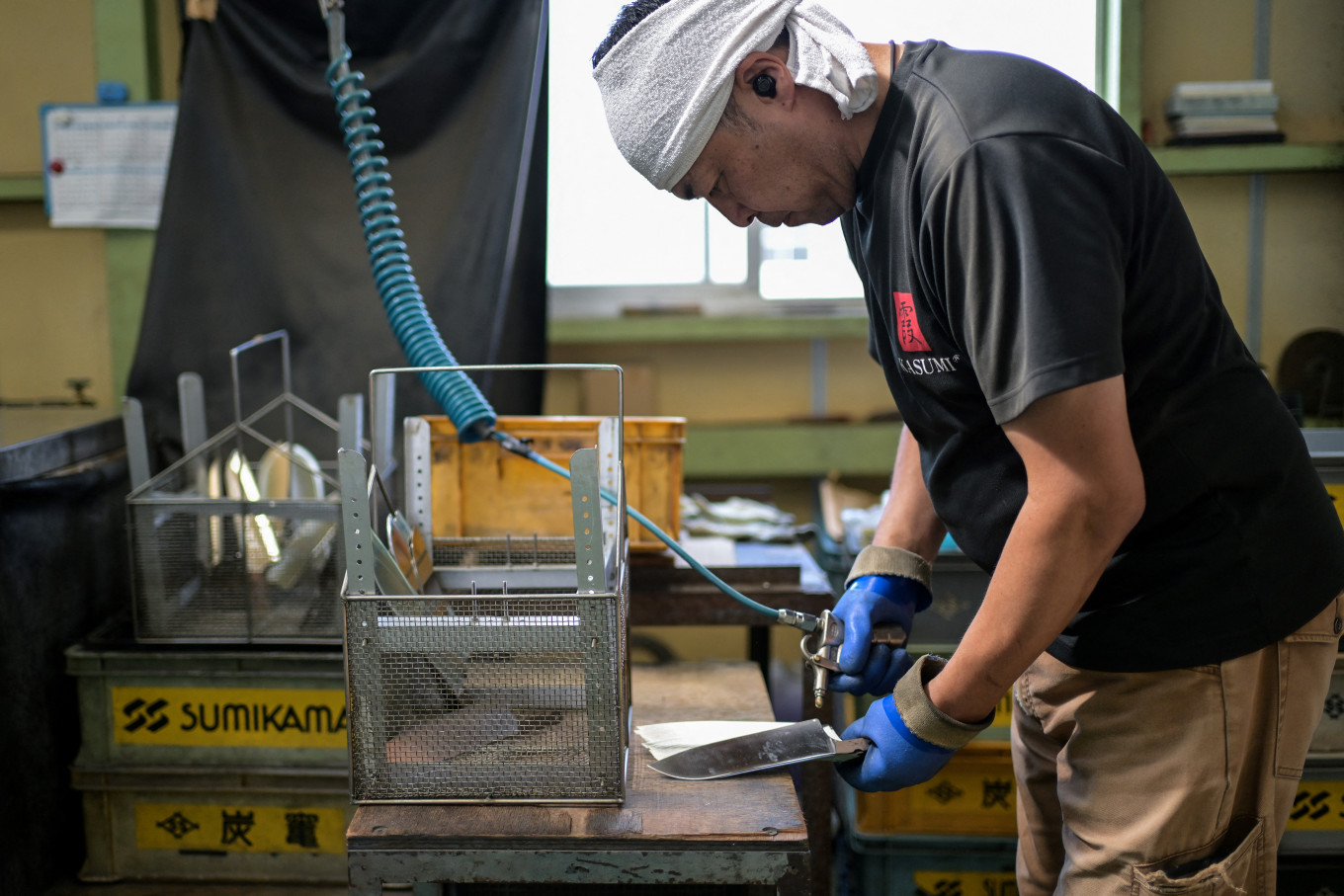 An employee for Japanese knife manufacturer Sumikama Cutlery washes and dries blades at their factory in Seki, Gifu prefecture, north of Nagoya, on July 22, 2025. (AFP/Richard A. Brooks )
A
sia's factory activity expanded in January as solid global demand lifted export orders, private-sector surveys showed on Monday, offering policymakers some assurance the hit from higher US tariffs has run its course for now.
Japan and South Korea saw manufacturing activity grow at a multi-year pace as big markets like the US sustained momentum, the surveys showed, brightening prospects for Asia's export powerhouses.
China's factory activity expanded at a faster pace in January as export orders rebounded, one of the surveys showed, which contrasted with an earlier official report showing activity faltering.
"Exports from most countries have surged in recent months, and we think the near-term outlook for Asia's export-oriented manufacturing sectors remains favorable," said Shivaan Tandon, Asia Economist at Capital Economics.
The RatingDog China General Manufacturing Purchasing Managers' Index (PMI), compiled by S&P Global, rose to 50.3 from 50.1 in December, exceeding the 50-mark that separates growth from contraction and hitting the highest level since October.
The upbeat survey likely reflects China's export drive that offset weak domestic consumption and helped the world's second-largest economy expand 5.0 percent last year.

Japan's S&P PMI rose to 51.5 in January from 50.0 in December, the strongest level since August 2022, driven by robust demand from key markets such as the US and Taiwan.
"Japan's manufacturing industry propelled itself back into growth territory at the start of 2026, with firms signaling the strongest upturns in output and new orders for nearly four years," said Annabel Fiddes, an economics associate director at S&P Global Market Intelligence.
South Korea's PMI also rose to 51.2 in January from 50.1 in December to mark the highest reading since August 2024.
The International Monetary Fund raised its 2026 global growth forecast last month on receding fears over the hit from US tariffs, and a continued AI investment boom that has fueled asset wealth and expectations of productivity gains.
Brightening prospects for global demand have helped factory activity expand across Asia. Taiwan's PMI rose to 51.7 in January from 50.9 in December, while that of Indonesia rose to 52.6 from 51.2.
Factory activity in Malaysia, the Philippines and Vietnam also expanded in January, the surveys showed.
India's manufacturing activity inched up in January as demand improved slightly, though the gain wasn't strong enough to lift business optimism or meaningfully increase hiring.