The Jakarta Post
Please Update your browser
Your browser is out of date, and may not be compatible with our website. A list of the most popular web browsers can be found below.
Just click on the icons to get to the download page.


Popular Reads
Top Results
No results found. Please check your search term and try again
Can't find what you're looking for?
View all search results
Popular Reads
Top Results
No results found. Please check your search term and try again
Can't find what you're looking for?
View all search resultsIndonesia’s growth: Resilient but uneven
Although formal job creation has improved, job quality, reflected in income stability, benefits and productivity, remains unequal.
Change text size
Gift Premium Articles
to Anyone
Share the best of The Jakarta Post with friends, family, or colleagues. As a subscriber, you can gift 3 to 5 articles each month that anyone can read—no subscription needed!
 Set as preferred source
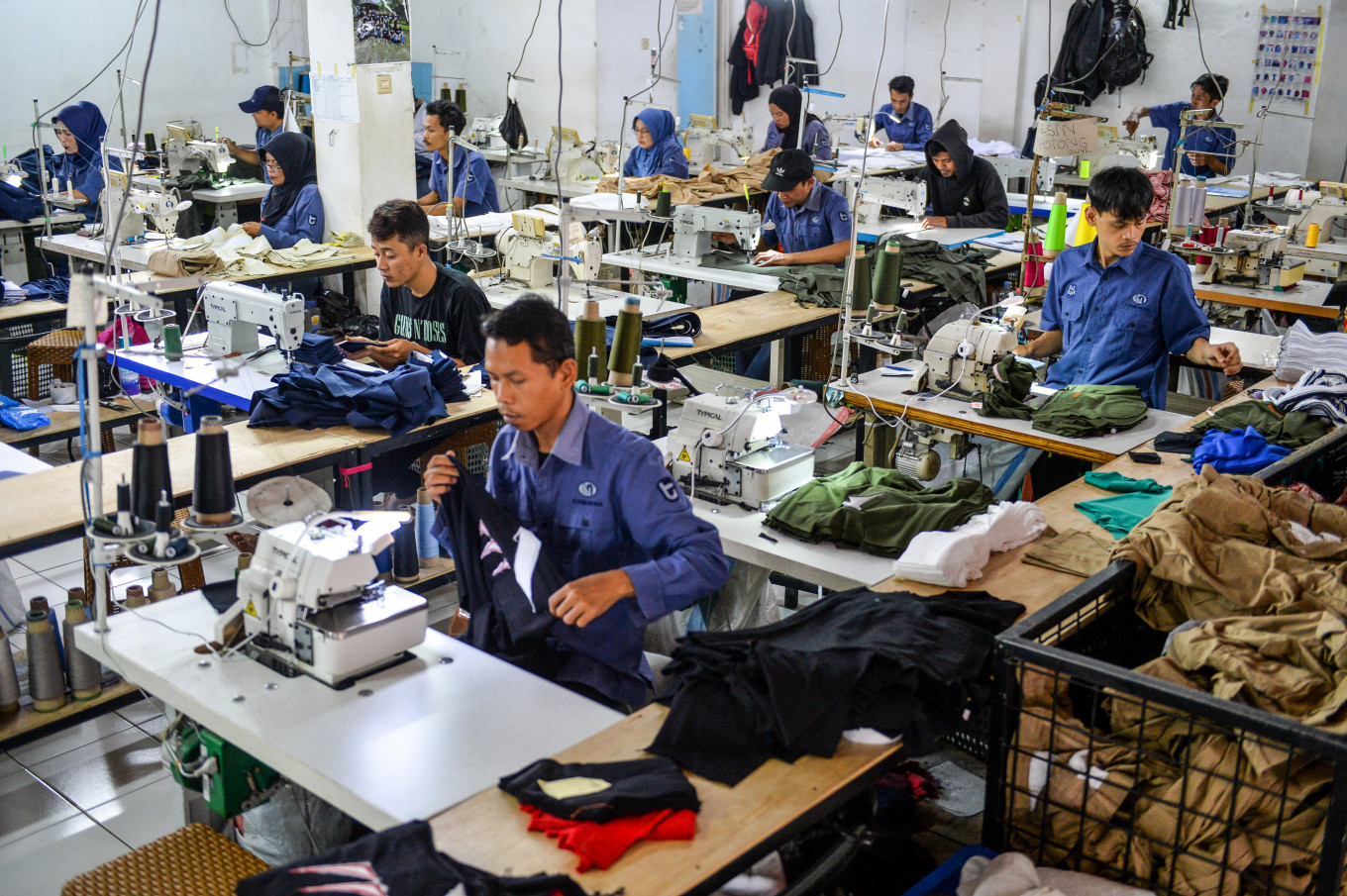 Workers assemble fashion products on Oct. 29, 2025, at the Tectona Textile Factory in Pameungpeuk, Bandung regency, West Java. (Antara/Raisan Al Farisi)
I
ndonesia’s economy continues to record steady growth, reaching 5.11 percent in 2025, a modest acceleration from 5.03 percent in 2024. Amid a global environment characterized by heightened geopolitical tensions, market fluctuation and slowing growth momentum, an expansion of around 5 percent reflects a degree of macroeconomic resilience.
Headline indicators remain broadly supportive, with inflation kept under control, fiscal deficits contained and public debt ratios relatively low compared with many peer economies. Overall, the macroeconomic outlook appears stable.
However, beyond these aggregate indicators, questions remain about how widely economic gains are being shared. While overall macroeconomic performance has been maintained, certain segments, particularly middle- and lower-income households, continue to face persistent pressures.
Based on the latest twice-yearly National Socioeconomic Survey (Susenas) data, the size of the middle class, defined as households with monthly spending between Rp 2 million and Rp 10 million (US$119 - $596), has continued to decline. The middle-class share of the population now stands at 16.6 percent, down from around 21 percent prior to the pandemic.
The middle class has long been a key pillar of Indonesia’s consumption-driven growth model. In recent years, however, this segment has encountered growing structural challenges. Rising living costs, modest real income growth and limited availability of quality jobs have weighed on discretionary spending. This has been reflected in softer demand for non-essential goods and services, even as basic consumption remains relatively resilient.
Against this backdrop, Indonesia’s key challenge is increasingly about the quality and inclusiveness of growth. Economic expansion delivers its full value when it translates into improvements in living standards, yet for many households this transmission has been less evident. Real wage growth has been relatively modest, particularly in labor-intensive and informal sectors that employ a large share of the workforce.

Furthermore, although formal job creation has improved, job quality, reflected in income stability, benefits and productivity, remains uneven.
Based on the National Labor Force Survey (Sakernas) data, the proportion of formal workers has risen to 42 percent, though still below pre-pandemic level at 44 percent. This also suggests that the proportion of informal workers is still larger, at 57.8 percent. Consequently, many households are employed but continue to face financial pressure, with income gains largely used to maintain, rather than improve, living standards. These pressures reflect not only cyclical factors, but also underlying structural constraints.
Job availability, skills mismatches and limited productivity gains have limited income growth. Without stronger income growth among middle-income households, consumption, as the main engine of Indonesia’s economy, risks losing momentum over time.
In recent years, labor market development has been accompanied by limited growth in quality jobs. Although overall employment has improved alongside the economic recovery, much of the increase has been concentrated in informal, low-productivity or lower-paying roles. This has limited income growth and weakened the transmission of employment gains to stronger household purchasing power.
Uneven sectoral growth has also been a key contributing factor. Capital-intensive sectors, such as commodities, mining-related activities and downstreaming industries, have expanded more rapidly, supporting investment and export performance but generating relatively fewer jobs. In contrast, labor-intensive sectors that traditionally absorb a large share of the workforce, including parts of manufacturing, construction and agriculture, have grown more modestly in the past few years. This imbalance has constrained overall job absorption despite steady headline GDP growth.
Within manufacturing and services, growth has also become increasingly concentrated in lower value-added activities. Manufacturing expansion has been led by resource-based processing and basic assembly, while progress in higher-value, globally competitive industries, such as advanced manufacturing, electronics, textiles and garments, has been more limited. Similarly, services growth has been driven largely by low value segments such as retail trade and vehicle repair, rather than higher value areas including professional, digital and knowledge-based services. This structure continues to limit the creation of higher-quality jobs with stronger productivity and wage prospects.
Addressing these challenges will not be straightforward and will require a renewed focus on structural reforms. With much of the country’s physical infrastructure already in place, policy priorities increasingly need to shift toward strengthening human capital, particularly by aligning skills development with evolving industry needs. Advancing the manufacturing sector also remains crucial, as it has the potential to generate higher-quality employment and support more sustainable income growth.
At the same time, greater policy predictability and clearer communication are essential to strengthen investor confidence and encourage long-term capital deployment into higher-value, job-creating sectors. More consistent regulatory frameworks, transparent industrial policies and clearer reform priorities would help improve business confidence, encouraging capital mobilization toward more competitive manufacturing and services, ultimately supporting better-quality employment over time.
Economic growth, after all, is not measured solely in percentages, but in whether people feel their economic future is moving forward. Indonesia’s economy remains resilient, the next challenge is ensuring that this resilience is more widely felt.
*****
The writer is a senior economist at Bank Mandiri.