The Jakarta Post
Please Update your browser
Your browser is out of date, and may not be compatible with our website. A list of the most popular web browsers can be found below.
Just click on the icons to get to the download page.


Popular Reads
Top Results
No results found. Please check your search term and try again
Can't find what you're looking for?
View all search results
Popular Reads
Top Results
No results found. Please check your search term and try again
Can't find what you're looking for?
View all search resultsUS trade partners cautiously welcome tariff ruling
While the conservative-majority Supreme Court ruled that Trump was not authorized by the International Emergency Economic Powers Act (IEEPA) to impose tariffs, the ruling does not impact sector-specific duties that Trump has imposed on imports of steel, aluminum and various other goods.
Change text size
Gift Premium Articles
to Anyone
Share the best of The Jakarta Post with friends, family, or colleagues. As a subscriber, you can gift 3 to 5 articles each month that anyone can read—no subscription needed!
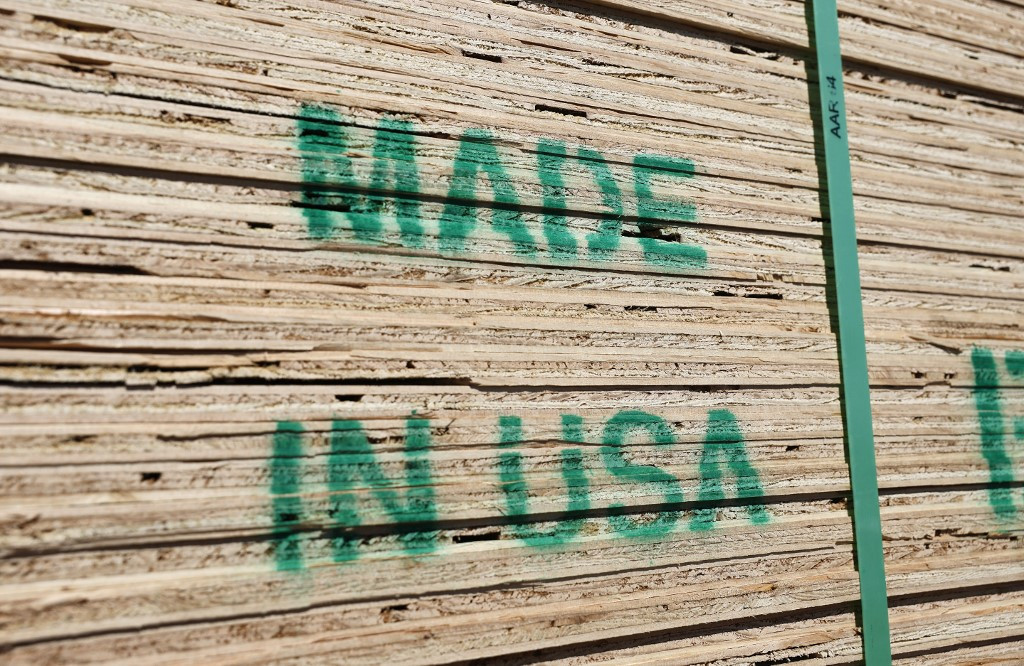 Stacks of US lumber are stamped 'Made In USA' and available for sale at Home Depot on March 3, 2025 in Pasadena, California, US. (AFP/Getty Images/Mario Tama)
U
S trading partners on Friday cautiously welcomed a Supreme Court ruling striking down US President Donald Trump's sweeping global tariffs, with hard-hit Canada saying the levies were always "unjustified."
But soon after the decision was announced, Trump vowed to impose a 10 percent tariff on all imports into the United States under a separate authority.
While the conservative-majority Supreme Court ruled that Trump was not authorized by the International Emergency Economic Powers Act (IEEPA) to impose tariffs, the ruling does not impact sector-specific duties that Trump has imposed on imports of steel, aluminum and various other goods.
Governments were weighing how all this this would impact commerce with the world's largest economy, which has been transformed through Trump's use of executive authority since he took office a year ago.
Here is a look at how governments around the world have reacted:
Canada

Canadian International Trade Minister Dominic LeBlanc said the ruling reinforces Ottawa's position that the levies were "unjustified."
But he noted that the tariffs causing the most pain in Canada -- sector-specific measures affecting the steel, aluminum and auto industries -- remained in force.
The Canadian Chamber of Commerce cautioned against viewing the court's decision as "a reset of US trade policy."
"Canada should prepare for new, blunter mechanisms to be used to reassert trade pressure, potentially with broader and more disruptive effects," the chamber's president, Candace Laing, said in a statement.
European Union
EU trade spokesman Olof Gill said that the 27-nation bloc was closely analyzing the ruling.
"We remain in close contact with the US Administration as we seek clarity on the steps they intend to take in response to this ruling," he said, stressing need for "stability and predictability" in trade.
France's economy minister Roland Lescure said the ruling showed that tariffs are "at the very least, open to debate."
The German government told AFP it was in "close contact with the American government to obtain clarifications on the next steps."
German industry group BDI was upbeat, with board member Wolfgang Niedermark saying the ruling was "clear proof that the separation of powers in the USA is still going strong."
United Kingdom
Britain's government said that it expects its "privileged trading position with the US to continue."
The close allies reached a trade deal last May that lifted tariffs on UK steel and aluminum products and slashed levies on British car exports from 27.5 percent to 10 percent.
"We will work with the administration to understand how the ruling will affect tariffs for the UK and the rest of the world," a government spokesperson said.
Mexico
Mexico, which sends 80 percent of its exports to the United States, said it was studying the possible effects of the 10-percent general tariff that Trump announced after the court verdict.
"First, we're going to see what measures they will take to determine how this will affect our country," Mexican Economic Minister Marcelo Ebrard said.