The Jakarta Post
Please Update your browser
Your browser is out of date, and may not be compatible with our website. A list of the most popular web browsers can be found below.
Just click on the icons to get to the download page.


Popular Reads
Top Results
No results found. Please check your search term and try again
Can't find what you're looking for?
View all search results
Popular Reads
Top Results
No results found. Please check your search term and try again
Can't find what you're looking for?
View all search resultsSumatra post-flood rehab: When fiscal orthodoxy becomes an obstacle
Why disasters require timely recovery spending, and what the Sumatra disaster reveals about the limitations of budget orthodoxy
Change text size
Gift Premium Articles
to Anyone
Share the best of The Jakarta Post with friends, family, or colleagues. As a subscriber, you can gift 3 to 5 articles each month that anyone can read—no subscription needed!
 Set as preferred source
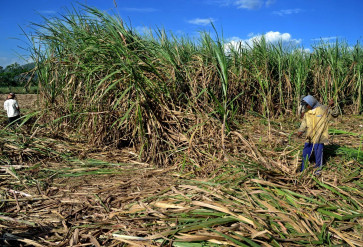
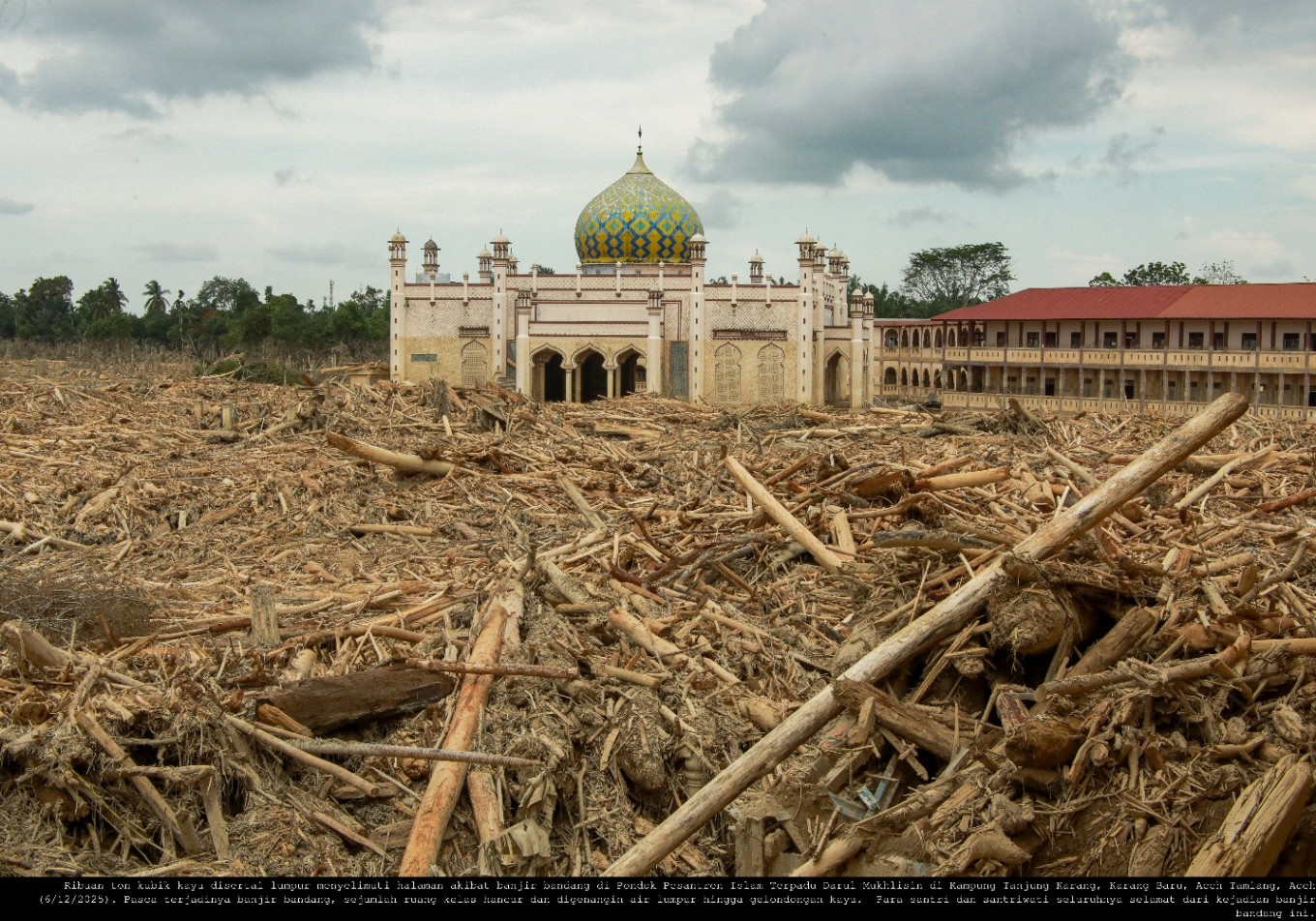 Thousands of tonnes of wood and mud cover the grounds of Pondok Pesantren Darul Mukhlisin, an integrated Islamic boarding school in Tanjung Karang, a village in Karang Baru district, Aceh Tamiang regency, Aceh, following the November 2025. disaster in northern Sumatra. (Photo credit: TREND ASIA/Ferdy Siregar)
M
any villages that were affected by the floods and landslides that struck three Sumatran provinces more than two months ago have yet to recover from paralysis.
According to media reports, residents in as many as 13 villages in Aceh still have difficulty accessing electricity, telecommunications networks and clean water. Compounding these conditions is another, less visible crisis: stagnant livelihoods, where people lead busy lives but are unemployed.

The list of tasks to be completed is long, and what is missing is the money to pay for it.
As the rehabilitation phase begins and reconstruction looms, progress has slowed, constrained by a tight state budget (APBN) and a tendency to treat rebuilding as a long-term concern.
Among these issues, one urgent reality appears to have slipped under the radar: People need income now, and there is no shortage of work waiting to be done.

“Recent disasters have opened new discourse about current budget management. The funds are available but locked and centralized, while local administrations still face challenges from tight budget rules and lack of support from the central government to rebuild housing, infrastructure and farming in disaster-impacted areas,“ said Bhima Yudhistira, executive director of the Center of Economic and Law Studies (Celios).
According to Bhima, fiscal orthodoxy is designed only for normal times, built on assumptions of stable markets, predictable revenues and functioning institutions. Disasters meanwhile represent abnormal shocks that simultaneously disrupt livelihoods, local markets and the state’s capacity to respond.

The latest data from the National Disaster Management Agency (BNPB) show that 117,269 people in Aceh, North Sumatra and West Sumatra remain displaced and dependent on aid since the disaster in late November that killed more than 1,200 people. Although most markets had reportedly reopened as of a few days before Ramadan, economic activity remains largely unrecovered.
Bhima explained that in such conditions, the budget mechanism itself becomes a bottleneck. Annual budget cycles, rigid line item allocations and lengthy approval processes slow the flow of funds precisely when speed matters most. When austerity prevails in such times, spending is deferred, unemployment rises, regional demand weakens and recovery costs grow over time.
More fundamentally, he emphasized that disaster response should not be regarded as “extra” spending.
“Disasters destroy capital: homes, infrastructure and productive assets. Replacing them is not optional. Choosing to not respond is also a fiscal decision, but one that pushes higher costs into the future,” said Bhima.
From this viewpoint, the question is no longer how to protect the budget from disaster but how to mobilize it to restore livelihoods before economic damage becomes permanent.
Bhima also noted that the most feasible and immediate recovery projects were also the most urgent, such as land clearing, rebuilding roads, schools and clinics, repairing irrigation canals, resuming agricultural planting and initiating river management projects such as sediment removal, riverbank reinforcement, drainage restoration and upstream watershed rehabilitation.
These activities are labor-intensive and can be quickly organized using local labor through cash for work schemes with central financing, such as Padat Karya Tunai (PKT).
Bhima highlighted that restoring irrigation networks and agricultural land did not require complex technology, but rather upfront financing, which conventional budget mechanisms typically struggle to deliver in post-disaster conditions.
“Agricultural recovery projects, in practice, represent a huge job opportunity. For instance, 2.5 million people in North Sumatra work as farmers, almost 33 percent of total employment. Building a strong restorative economy based on agriculture will boost income for households,” he said.
Consequently, the state financing mechanism must go beyond the annual budget cycle.
“When recovery work is urgent and productive, there’s no reason to wait for the next fiscal year, or we are going to miss economic drivers from many regions and an increasing number of severe unemployment,” Bhima said.
Restructuring the budget and deploying state-owned enterprises in the construction, utilities and housing sectors can fill this gap. Both off-budget sovereign instruments align with Indonesia’s institutional experience.
Taken together, this approach reflects a simple idea that is often forgotten in times of crisis: Recovery begins with providing jobs to people as the state mobilizes resources to finance them.
In principle, not all public spending is equally urgent. In the post-disaster context, the distinction between what can wait and what cannot is decisive.
Bhima opined that budget reallocation might not mean cutting social spending, but rather restructuring its timeline, as some programs are designed to provide benefits over many years.
“While disaster recovery is a program about preventing permanent damage for now. Other programs that directly improve welfare need to continue with a more targeted [list of] recipients,” he said.
Within that framework, large-scale national initiatives that require massive fiscal commitments, such as the Makan Bergizi Gratis (free nutritious meal) program, can be phased in or prioritized geographically without compromising their long-term goals. This is also the case with infrastructure projects like road construction.
Crisis management requires governments to distinguish between urgent relief and long-term reform. Temporarily slowing the expansion of these programs and projects can create fiscal space to prioritize rehabilitation and reconstruction in disaster-affected areas. This can avoid immediate delays in recovery efforts that may cause lost income, missed planting seasons and prolonged dependency.
In urgent situations, foreign financing can also play a limited strategic role as a means of extending time.
During the post-disaster period, the costs of delay are often higher than the costs of borrowing. Concessional financing from multilateral institutions such as the Asian Development Bank or the World Bank, and possibly sukuk for reconstruction, can bridge this gap, enabling immediate rehabilitation and reconstruction while spreading the fiscal pressure over several years.
However, Bhima pointed out, such financing must be carefully planned.
“External financing should accelerate recovery, not complicate it. Government debt is already looming, and we need to issue more than Rp 830 trillion this year alone. The fiscal space is not only tightening but has almost hit the [deficit cap] of 3 percent,” he said.
“There is a difference between using external financing for disaster recovery or just to fill the budget deficit gap. The former improves economic conditions, the latter goes to unproductive spending.”
In practice, this means time-bound loans or facilities tied to local labor and procurement of goods and services that focus on clearly defined recovery projects rather than overly general structural changes. Thus, foreign financing does not undermine fiscal discipline, but rather serves its original purpose: stabilizing the economy during periods of extraordinary shock.
For affected areas in Sumatra, Bhima explained, this approach allowed recovery programs to continue generating employment without waiting for the next budget cycle while still allowing the government to pursue long-term priorities after conditions return to normal.
History shows that in times of collective shock, recovery begins not with restraint, but with the decision to return people to their jobs.
In the villages of Bener Meriah and beyond, a variety of jobs are waiting. Whether recovery remains slow or becomes a source of dignity and income now depends on how narrowly the state defines responsibility in times of crisis.