TheJakartaPost
Please Update your browser
Your browser is out of date, and may not be compatible with our website. A list of the most popular web browsers can be found below.
Just click on the icons to get to the download page.


Popular Reads
Top Results
No results found. Please check your search term and try again
Can't find what you're looking for?
View all search results
Popular Reads
Top Results
No results found. Please check your search term and try again
Can't find what you're looking for?
View all search resultsBeyond El Niño: How Asian Agri builds communal, long-term fire prevention
As the dry season approaches, communities are becoming increasingly vital in the fight against land and forest fires.
Change text size
Gift Premium Articles
to Anyone
Share the best of The Jakarta Post with friends, family, or colleagues. As a subscriber, you can gift 3 to 5 articles each month that anyone can read—no subscription needed!
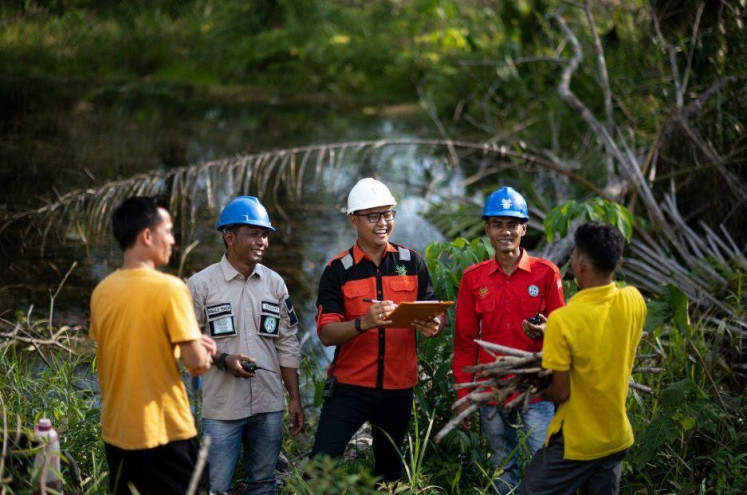
 (Courtesy of Asian Agri)
After months of continuous rain across the archipelago, Indonesia is set to enter a prolonged dry season in the second half of 2026.
With the Meteorology, Climatology and Geophysics Agency (BMKG) predicting that the 2026 El Niño phenomenon will bring a drier, longer drought, experts have called for greater caution and anticipatory measures as the heat raises the risk of land and forest fires.
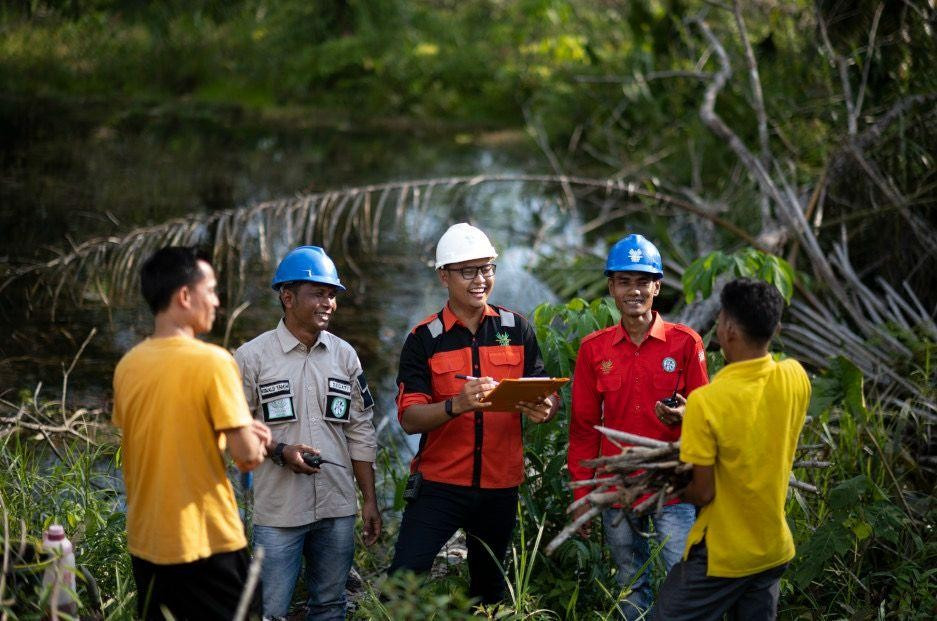
Palm oil producer Asian Agri says land and forest fire preparedness has long been a priority for the company. Efforts that are supported through routine prevention measures and active collaboration with stakeholders, including the Forestry Ministry’s land and forest fire response brigade (Manggala Agni) and local communities around the company’s operational areas in North Sumatra, Riau and Jambi.
“Our approach is not seasonal; our fire prevention efforts are year-round, but we increase our vigilance and preparedness for extreme weather conditions such as this ‘Godzilla’ El Niño,” said Dani Nugraha Syafly, Asian Agri’s fire assistant.
According to the BMKG’s climate modeling, El Niño is predicted to last until early 2027, with a 98 percent chance to grow into a moderate category, and a 62 percent chance to grow into the strong category. These categories refer to the scale of ocean warming in the central-eastern equatorial Pacific: "moderate" indicates sea surface temperatures of about 1 to less than 1.5 degrees Celsius above normal, while "strong" indicates about 1.5 to less than 2 degrees Celsius above normal.
Entering the dry season, Asian Agri says its focus extends beyond maintaining day-to-day operations to intensifying fire prevention efforts alongside field teams and local communities.

“The company has increased patrols in vulnerable areas, intensified hotspot monitoring, conducted routine inspections of firefighting equipment, installed banners to raise awareness about fire risks and held refresher courses for emergency field response teams,” Dani said.
Collective effort

Even before land and forest fire entered the national spotlight in the 2010s due to the haze that plagued Southeast Asia, Asian Agri has implemented a zero-burning policy since 1994.
“At that time, the focus was on ensuring that land clearing in the company’s operational areas was not carried out through burning,” Dani said.
Over time, the company’s approach evolved into a broader and more comprehensive prevention strategy. One of Asian Agri’s flagship initiatives is the Fire Free Village Program (FFVP), which was developed based on the understanding that fire prevention is most effective when awareness begins at the village level.
First established in 2016 in nine villages across Riau and Jambi, the program now reaches 16 villages and covers more than 343,000 hectares.
Through FFVP, the company worked with communities through education and mentoring, along with routine training, patrols and the provision of supporting equipment to strengthen readiness so that villagers have better capacity in fire prevention and early fire containment.
“Long-term prevention efforts cannot be achieved alone. It requires genuine community involvement that grows and continues consistently over time,” he said.
Alongside villages, Asian Agri also holds routine coordination meetings with the local district leadership assembly (Muspika), which involves officials from the district government, the police and the military. The intensity of these meetings can vary according to conditions and risk levels, with the dry season requiring extra precautions.
Ihsan Abdillah, Manggala Agni’s head of operational area for Siak, Jambi, reiterated that cross-sector collaboration is crucial in forest and land fire management, as the vast area to be monitored makes prevention and response impossible to achieve alone.
“The private sector also helps strengthen forest and land fire control efforts, particularly through monitoring and preparedness support around their operational areas. The presence of personnel and facilities in the field significantly contributes to expediting initial response,” he said.
Manggala Agni also plays a role in providing training and skills transfer to both the company team and the communities surrounding its operational areas. For communities, training is typically provided through Community Fire Awareness (MPA) groups, volunteer groups formed at the village level to assist with fire prevention and early response efforts.
The training is generally tailored to the conditions and needs of each region, while the material covers topics such as recognizing potential fires, simple patrol methods, using basic firefighting equipment and initial response steps when a fire is detected.
Because MPA is community-volunteer-based, the training approach is also designed to be more accessible and understandable, allowing for immediate application in daily life.
According to Ihsan, the community is one of the most important sources of information for early fire detection, as approximately 80 percent of initial reports come from people directly near the location.
“In some cases of small fires, the community even takes the initiative to carry out an initial response independently while waiting for the team to arrive on the ground. This role is crucial, given that the response process is often influenced by distance and access conditions to the fire site,” he explained.
Real impact on the ground

As for the villagers themselves, many have witnessed firsthand how outreach efforts have transformed their attitude toward their surrounding environment.
Ronald Yamin, the MPA crew leader of Segati Village in Riau, said that before his community collaborated with Asian Agri, villagers didn't view forest and land fires as something important or a major risk. Previously, he explained, clearing land by burning was commonplace because it had been done that way for a long time, with many seeing it as quicker and more practical.
“After mentoring and collaboration, the community's mindset slowly began to change. They became more aware of the impact of fires, more cautious and started to seek out safer methods,” Ronald said, noting that the awareness is more pronounced because the community is directly involved instead of merely receiving information.
In addition to fire prevention, the FFVP also identifies additional sources of income that does not put extra burden on the surrounding forests. For Segati Village, the program provided villagers with coconut and durian seedlings that residents can plant for the long term.
“While the results aren't immediate, the community has a more sustainable alternative for the future,” Ronald said, adding that the funds also flow into the MPA’s coffers, which allows them to repair community posts and support patrol activities.
At the same time, villages also benefit directly from protecting their environment. Through the Fire Free Village Award, villages are assessed over a one-year period and receive monetary incentives if they reduce the burned area on their land or prevent fires completely throughout the year. The incentives are then funneled to community projects, such as improving village facilities and infrastructure.
“Previously, people may have thought that the most important thing was that the land could be used and activities could continue, but now they are more aware that keeping the village fire-free is crucial for the comfort and future of the village,” Ronald said.
Going forward, he hopes that the FFVP can continue and be sustainable in the future, as he thinks the program requires a consistent process and support to truly impact the community.
“We also hope that support and guidance will continue until the community is truly self-sufficient, so that eventually residents will develop their own awareness and ability to protect the environment and prevent fires without constant direction. That, in my opinion, is most important for the long term.”