The Jakarta Post
Please Update your browser
Your browser is out of date, and may not be compatible with our website. A list of the most popular web browsers can be found below.
Just click on the icons to get to the download page.


Popular Reads
Top Results
No results found. Please check your search term and try again
Can't find what you're looking for?
View all search results
Popular Reads
Top Results
No results found. Please check your search term and try again
Can't find what you're looking for?
View all search resultsTrend vs. tradition: Matcha’s revival takes hold in Indonesia
Matcha is enjoying a renewed boom in Indonesia in 2025, driven by social media trends, specialty cafés and matcha-infused treats. As the powdered green tea goes mainstream, purists continue to defend its cultural roots through chado, the Japanese tea ceremony.
Change text size
Gift Premium Articles
to Anyone
Share the best of The Jakarta Post with friends, family, or colleagues. As a subscriber, you can gift 3 to 5 articles each month that anyone can read—no subscription needed!
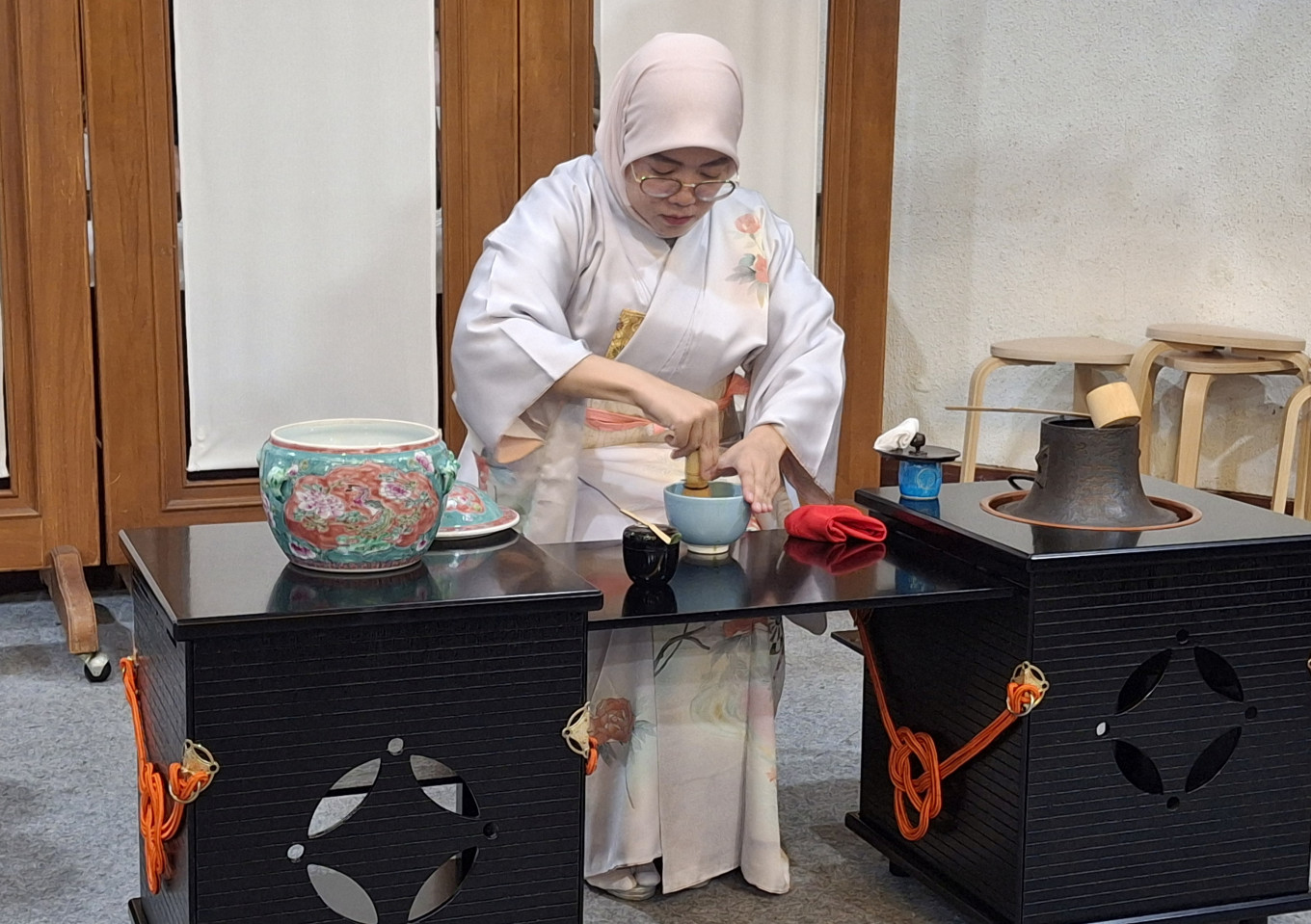 Mindful process: A hostess trained by Chado Urasenke Tankokai Indonesia Association prepares a bowl of matcha during a demonstration of chanoyu (Japanese traditional tea ceremony) during an event in December 2025, at the ASEAN Secretariat in Jakarta. (JP/A. Muh. Ibnu Aqil)
M
atcha, the traditional Japanese green tea powder, has seen a new resurgence in 2025 with matcha bars popping up in Jakarta and other big cities in Indonesia offering matcha lattes as well as bakeries and pastry shops offering matcha-infused confectioneries.
The drink, with its iconic deep green color and frothy foam, has taken the internet by storm by popping up on social media such as Instagram reels or TikTok videos.
The viral trend seems to be backed by real-life data as well, as according to Google’s Year in Search 2025 recipes for matcha is the first among top ten searches for recipes in Indonesian language, although Google did not fully disclose the number of searches.

A recent YouGov poll hints at the impact of matcha to drinking trends in Southeast Asia, specifically Indonesia, Singapore and Thailand, as people leaned more to teas than coffee, with 64 percent of Indonesians say they drink both tea and coffee, 17 percent drink only tea, compared to 12 percent only drinking coffee and 7 drinking neither according to a poll of 2,036 Indonesians polled online by YouGov on May 8-12.
Around half of Indonesians, 53 percent, say they are familiar with matcha drinks and desserts, although over half of Indonesians, 59 percent, are also unaware of the ongoing matcha shortage, which is driven by soaring global demand and severe heatwaves.
The trend is also seen worldwide as according to the Japanese Tea Production Association, in 2024 Japan produced 5,336 tonnes of tencha (dried tea leaves) used for the making of matcha, a nearly 2.7-fold increase from ten years earlier.
Japan’s green tea exports, including matcha, also rose 25 percent by value to 36.4 billion yen (US$252 million) in 2024, according to Japanese government data.


More from The Weekender

Siapa Anda? Mengapa Anda?
What begins as a small grammatical curiosity becomes a larger question about language, culture and the way we understand ourselves in relation to others - and, ultimately, about what we risk losing in a world increasingly impatient with reflection, ambiguity and the humanities.

A passport to the kingdom of the sick
A breast cancer diagnosis, a journey to the kingdom of the sick and a determination to describe what lies there without metaphor, euphemism or the word “fight.”

The weight of time
Richard Mille’s newest ultralight timepiece pares down haute horlogerie to its mechanical necessities, proving that sophistication often comes from knowing what to leave out.