TheJakartaPost
Please Update your browser
Your browser is out of date, and may not be compatible with our website. A list of the most popular web browsers can be found below.
Just click on the icons to get to the download page.


Popular Reads
Top Results
No results found. Please check your search term and try again
Can't find what you're looking for?
View all search results
Popular Reads
Top Results
No results found. Please check your search term and try again
Can't find what you're looking for?
View all search resultsFrom Ali to Kadek: The oft-overlooked role of local science collaborators
The contributions of the local people who worked behind the scenes, serving as secretaries, interpreters and guides, are frequently a mere footnote in the works of the Western researchers they assisted, or are missing altogether from historical records.
Change text size
Gift Premium Articles
to Anyone
Share the best of The Jakarta Post with friends, family, or colleagues. As a subscriber, you can gift 3 to 5 articles each month that anyone can read—no subscription needed!
 Set as preferred source
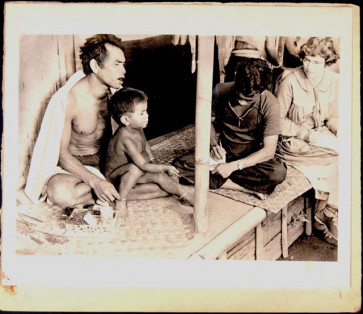
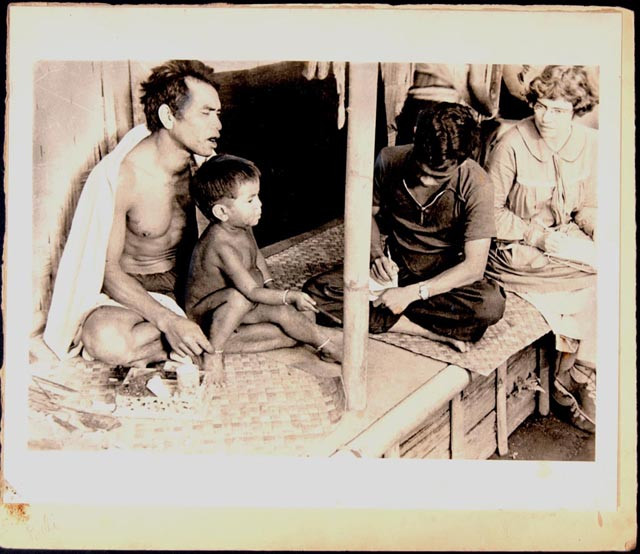 Notable contributor: Balinese secretary I Made Kaler (second right) assists American anthropologist Margaret Mead (right) interview Nang Karma (left) and his son I Gata in Bayung Gede village, Kintamani, Bali, in this photo taken circa 1937 by Mead's husband, Gregory Bateson. (-/Courtesy of Library of Congress)
M
any across the world know or have heard of Alfred Russel Wallace, the British naturalist most famed for his theory of the Wallace Line that marks an evolutionary divide between the western and eastern parts of the Indonesia archipelago, the former containing animals largely of Asian origin and the latter, Australasian fauna.
But how many people have heard about Ali from the Bornean region of Sarawak, now part of present-day Malaysia, who worked as Wallace’s assistant during his research in Southeast Asia between 1855 and 1862?
Ali’s case is just one of the many examples of academic colonialism committed by primarily Western researchers, who dismissed the work and roles of their local contributors in the regions where they were researching, regions that generally fall under what is now called the Global South.

But academia is seeing growing efforts to acknowledge and even involve local collaborators more in the knowledge production process.
The contributions from local people like Ali have become known only in recent years, decades since the work of the Western scientists they assisted have basked in the spotlight.
In the 2015 article “‘I am Ali Wallace’: The Malay Assistant of Alfred Russel Wallace”, historian John van Wyhe and anthropologist Gerrell Miles Drawhorn estimated that the Sarawakian man might have collected 5,150 birds of the 125,660 natural history specimens included in Wallace’s collection of insects, birds, reptiles, mammals and mollusk shells.
Aside from collecting bird specimens, van Wyhe and Drawhorn wrote that Ali made major contributions to Wallace’s understanding of the Malay Archipelago, which led the British naturalist to discover the standardwing bird-of-paradise (Semioptera wallacii).

More from The Weekender

The real cost of being a recreational athlete
For a growing number of Indonesians, sports have stopped being a hobby and started being a life. We asked three of them what that actually costs, and whether it’s worth it.

All of me: A journey of becoming nonbinary
Through personal reflection and conversations with others, one writer explores gender, belonging, and the long – often arduous – process of becoming oneself.

All the streams. Where are the crowds?
Local music now dominates streaming charts across Southeast Asia. So why aren't Indonesian artists filling bigger rooms?