TheJakartaPost
Please Update your browser
Your browser is out of date, and may not be compatible with our website. A list of the most popular web browsers can be found below.
Just click on the icons to get to the download page.


Popular Reads
Top Results
No results found. Please check your search term and try again
Can't find what you're looking for?
View all search results
Popular Reads
Top Results
No results found. Please check your search term and try again
Can't find what you're looking for?
View all search resultsThen and Now: Revelations after two decades
An exhibition in Jakarta reunites 11 artists first championed in the late 2000s, tracing how their ideas, materials and methods have evolved amid shifting cultural and technological landscapes.
Change text size
Gift Premium Articles
to Anyone
Share the best of The Jakarta Post with friends, family, or colleagues. As a subscriber, you can gift 3 to 5 articles each month that anyone can read—no subscription needed!
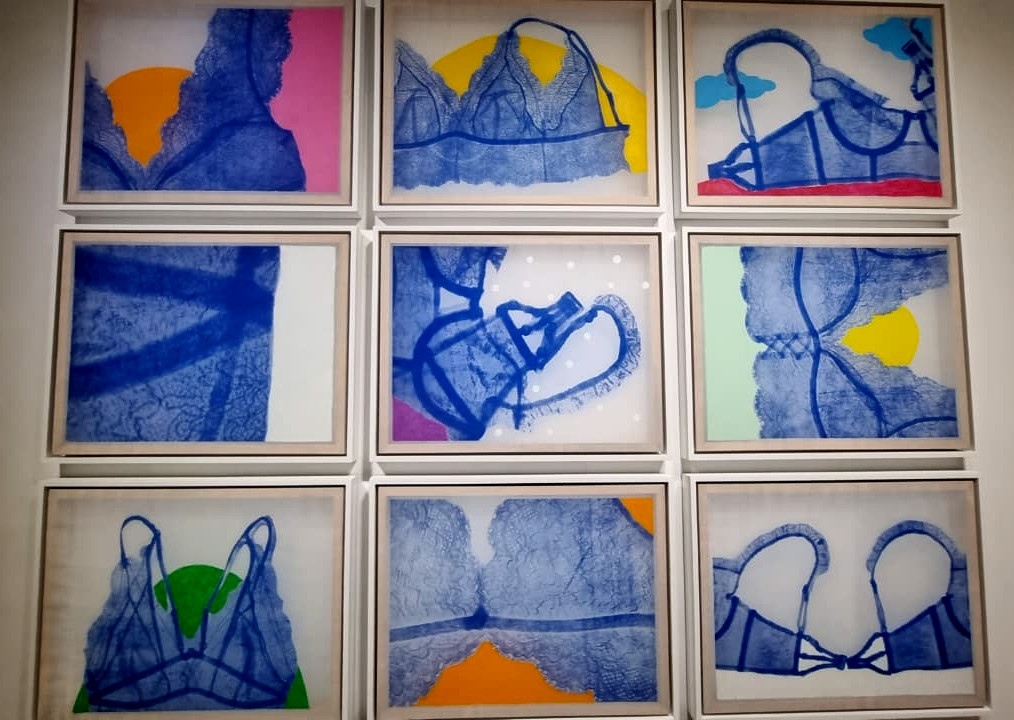 'Je Me Vois’ by Teresia A. Sitompul, afdruk emulsion on nylon screen and oil pastel (Mirah M./-)
A
t many moments in Indonesia’s art history, the term “contemporary” has been used to describe artists whose works respond to the spirit of their time. Such was the context in 2008, when art lover and former executive of an international art fair Vivi Yip established an art room and platform aimed at introducing emerging Indonesian artists to local and international audiences.
Nearly two decades later, Vivi revisits that moment by presenting works by 11 artists who once filled her art room. Over the years, each has developed a distinct artistic character and secured a place within Indonesia’s art landscape. Some have received awards, others have exhibited abroad, but all have continued to work steadily within a shifting cultural and technological environment.
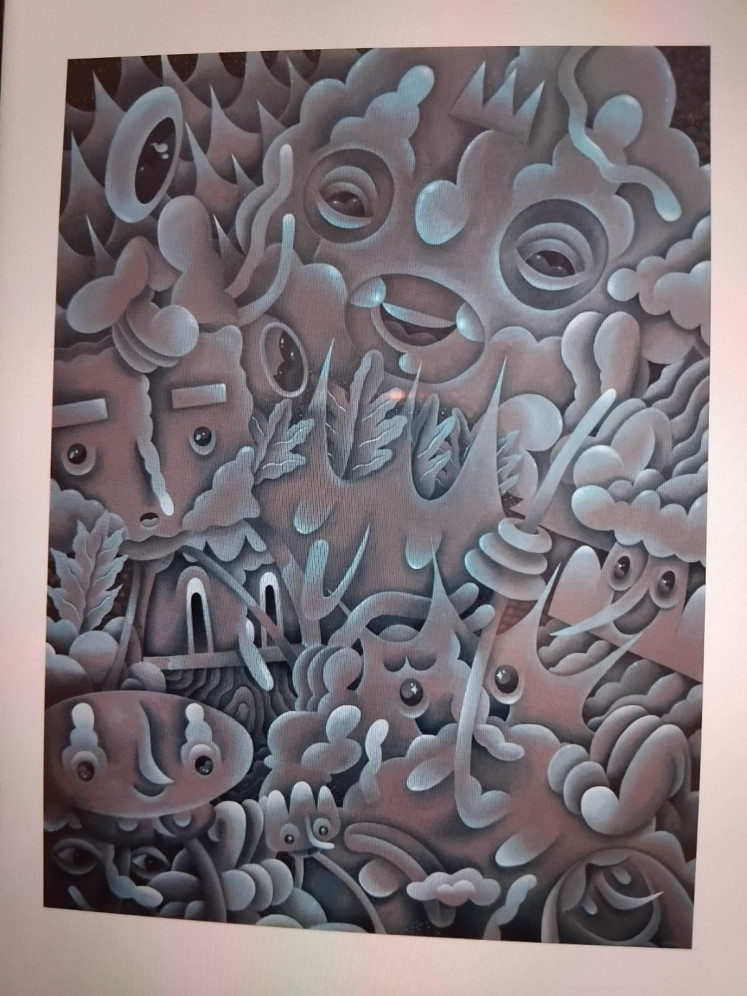

The Then and Now group exhibition at Baik Art Gallery in South Jakarta offers a rare opportunity to trace how these artists’ visions, and their choice of materials, have evolved alongside the spirit of their times. Artists who were in their early 20s then are now in their 40s, bringing with them years of experience, experimentation and reflection.
After almost two decades, Vivi has reunited the eleven artists. For those who have followed their practices over the years, the exhibition reveals a spectrum of continuity and change. Some remain firmly rooted in the approaches that first brought them attention, while others have gradually introduced new methods, materials and conceptual frameworks.
Angkie Purbandono, for instance, first drew public attention with print works created using a flatbed photo scanner equipped with a charged couple device (CCD), on which he arranged objects directly. While he continues to use this technique, his conceptual approach has shifted. Earlier works drew inspiration from everyday surroundings - at times placing raw fish directly on the scanner. In this exhibition, Angkie instead shows a fascination with Scrabble: he begins by forming words, then searches for objects that visually represent the ideas behind them, reversing his earlier process.
Agan Harahap, once known for photographic works that manipulated reality with fantasy, such as imagined encounters between Indonesia’s first president Soekarno and Marilyn Monroe, has now embraced artificial intelligence as part of his creative process. Other artists, including Ronald Apriyan, Iqi Qoror, Arkiv Vilmansa and Badruzzaman, retain their signature use of bright, striking colors. Hendra “Hehe” Harsono, meanwhile, departs from his usual palette by experimenting with monochrome works, an exploration he describes as an attempt to test whether such a shift resonates with audiences.
More from The Weekender

Show up, show off and call it self-care: Strong is the new flex
With toned arms as the new status symbol, maybe it’s time we rethink why we come to the gym and pick up those dumbbells.
When a friend becomes a stranger: Healing after a platonic breakup
We expect heartbreak in romance, but no one warns us how much it hurts when a friendship falls apart.
The power of small acts: Glimmers of hope from 2025
In a year marked by despair, it was small, human acts that broke through the noise, reminding us that hope doesn’t vanish. It’s passed hand to hand, one person to another.