TheJakartaPost
Please Update your browser
Your browser is out of date, and may not be compatible with our website. A list of the most popular web browsers can be found below.
Just click on the icons to get to the download page.


Popular Reads
Top Results
No results found. Please check your search term and try again
Can't find what you're looking for?
View all search results
Popular Reads
Top Results
No results found. Please check your search term and try again
Can't find what you're looking for?
View all search resultsThe subtle power of everyday Indonesian humor
An Indonesian comedian’s stand-up special, and the response it provoked, reveal how everyday humor continues to unsettle authority.
Change text size
Gift Premium Articles
to Anyone
Share the best of The Jakarta Post with friends, family, or colleagues. As a subscriber, you can gift 3 to 5 articles each month that anyone can read—no subscription needed!
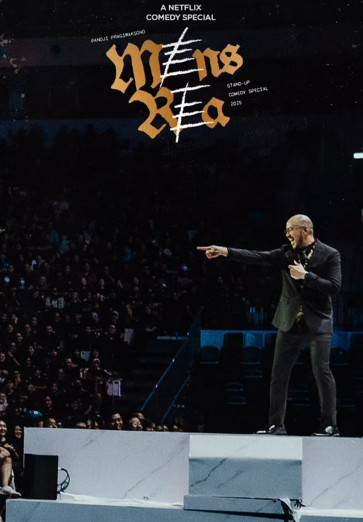
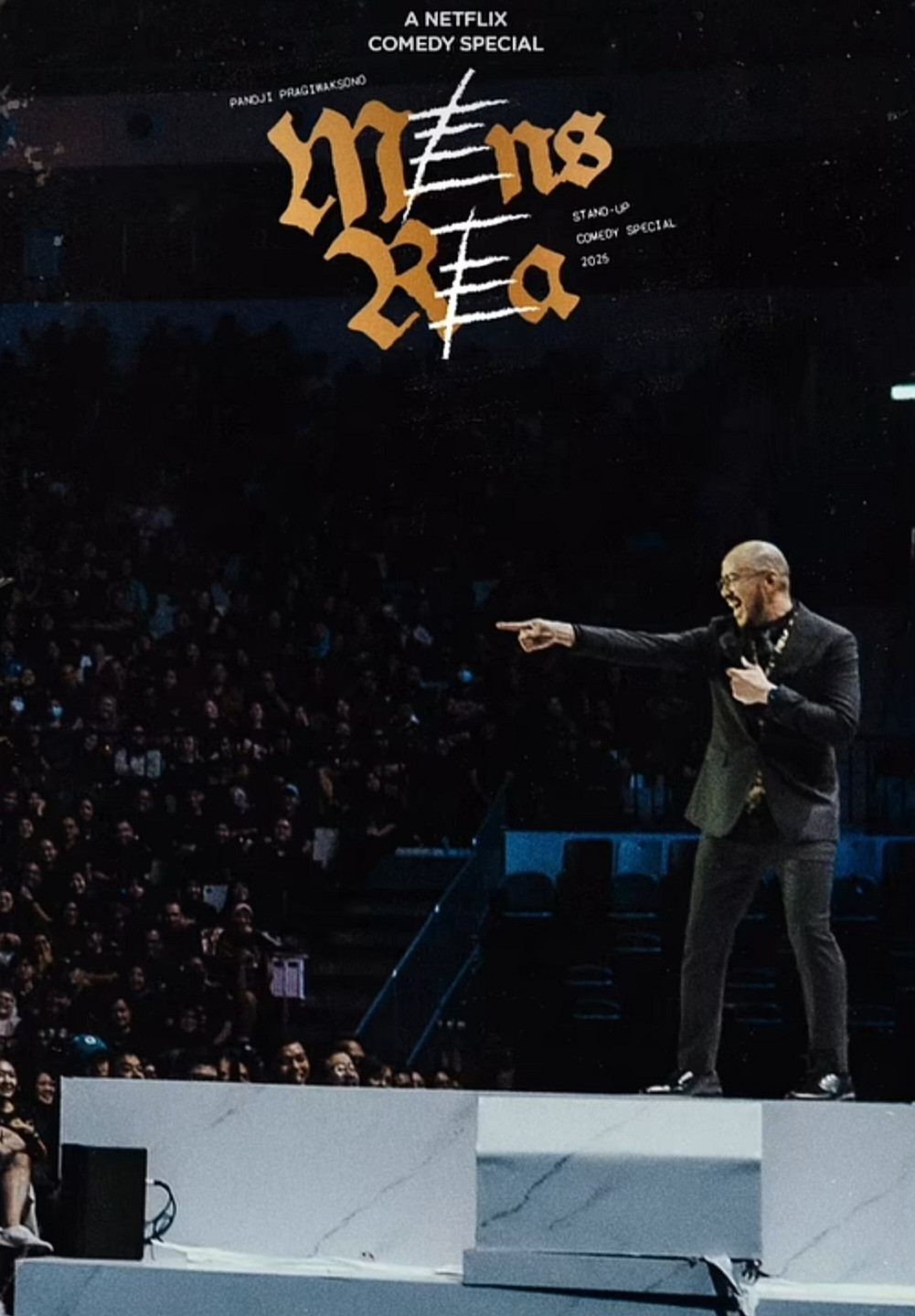 Punchlines and power: An official poster advertises Mens Rea, a stand-up special by Indonesian comedian Pandji Pragiwaksono, which uses satire to poke fun at those in power and has drawn a large audience on global streaming platform Netflix. (Instagram/@pandji.pragiwaksono)
P
olitical humor has long had a place in Indonesia, functioning as both entertainment and a subtle form of social commentary. In recent months, it has found renewed visibility through Mens Rea, a stand-up comedy special by Pandji Pragiwaksono that pokes fun at those in power while drawing a large and engaged audience on a global streaming platform.
Filmed in the Indonesia Arena in Central Jakarta in August last year, Mens Rea began streaming on Netflix in late December, marking the final stop of Pandji’s tour across 10 cities. Its arrival on a major platform signaled how political humor, once confined to small stages and niche audiences, has moved into the mainstream.
Pandji opened the Jakarta show by greeting the audience as “the superiors of the President of the Republic of Indonesia,” setting the tone for a performance that uses humor to deliver political criticism. The line drew laughter not only for its audacity but also for its appeal to common sense, reflecting frustrations shared by many Indonesians. The special topped Netflix’s TV shows ranking in Indonesia in mid-January and quickly became a talking point on social media.

Pandji has said Mens Rea was created in response to the country’s current sociopolitical conditions, with the aim of making political issues more accessible to a broader public.
“Politics is funny. Sometimes I don’t understand why young people don’t want to engage with politics, even though it directly affects our lives,” Pandji said on April 17 last year, as quoted by Tempo.co. He added that viewers would leave with a better understanding of politics. In this sense, humor becomes an entry point, lowering the barrier to engagement in a political climate that many find exhausting or alienating.
Pandji is not alone. Other comedians such as Bintang Emon and Arie Kriting have also used humor to question power, public policy and inequality, often drawing from everyday experiences familiar to their audiences.
Bintang’s observational style frequently highlights contradictions between official statements and lived reality, particularly in relation to bureaucracy and law enforcement. Arie, meanwhile, uses storytelling and self-deprecating humor rooted in his background as an eastern Indonesian, bringing issues of identity and regional inequality into focus. Their approaches differ, but both rely on humor that feels grounded and recognizable.

More from The Weekender

Show up, show off and call it self-care: Strong is the new flex
With toned arms as the new status symbol, maybe it’s time we rethink why we come to the gym and pick up those dumbbells.

When a friend becomes a stranger: Healing after a platonic breakup
We expect heartbreak in romance, but no one warns us how much it hurts when a friendship falls apart.
The power of small acts: Glimmers of hope from 2025
In a year marked by despair, it was small, human acts that broke through the noise, reminding us that hope doesn’t vanish. It’s passed hand to hand, one person to another.