TheJakartaPost
Please Update your browser
Your browser is out of date, and may not be compatible with our website. A list of the most popular web browsers can be found below.
Just click on the icons to get to the download page.


Popular Reads
Top Results
No results found. Please check your search term and try again
Can't find what you're looking for?
View all search results
Popular Reads
Top Results
No results found. Please check your search term and try again
Can't find what you're looking for?
View all search resultsSumatra flood survivors battle mud, trauma
The rains have moved on and the floodwaters have largely receded, but the disaster has left a trail of devastation and trauma for those who survived.
Change text size
Gift Premium Articles
to Anyone
Share the best of The Jakarta Post with friends, family, or colleagues. As a subscriber, you can gift 3 to 5 articles each month that anyone can read—no subscription needed!
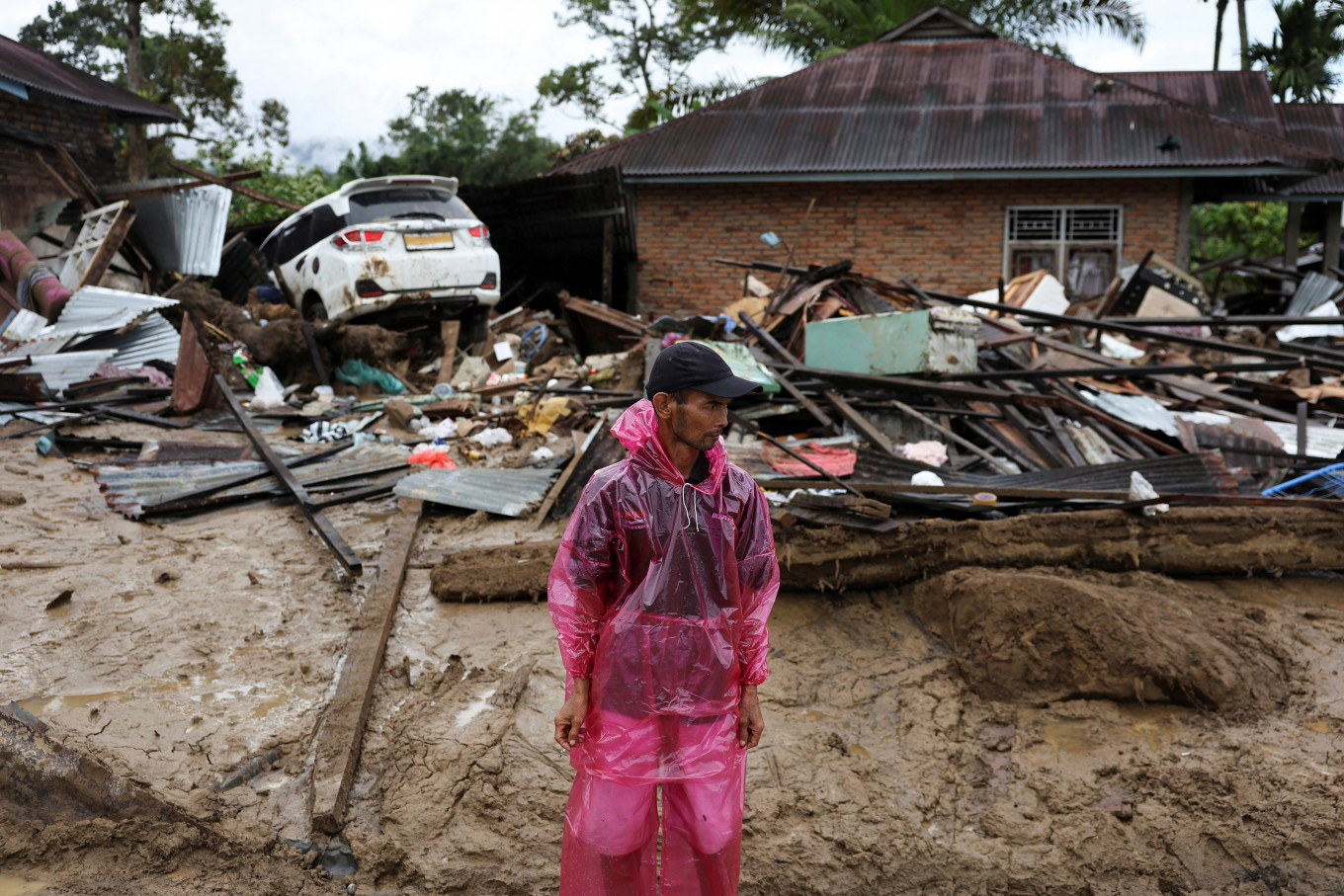 Imuwarizal, 52, stands while looking for his sister who has been missing following a deadly flash flood in Palembayan, Agam regency, West Sumatra, December 2, 2025. (Reuters/Willy Kurniawan)
I
n North Sumatra, Rosmina wades into her home through soupy grey-brown mud that reaches her knees, searching for belongings she can extract after deadly flooding submerged her village.
More than 500 people have been killed and as many again remain missing after days of torrential rain and a rare tropical storm battered Sumatra.
The rains have moved on and the floodwaters have largely receded, but the disaster has left a trail of devastation and trauma for those who survived.
Rosmina described fleeing her home in terror when the floodwaters arrived last week.
"Someone ran from the garden," she told AFP outside her home in Tapanuli.
"'Come on, run, run, the big water's coming!' he said. So I immediately ran to save my child," she said.

"The water... was already up to their knees."
She fished mud-sodden clothes and a small wardrobe daubed in the same grey mud from her house, but quickly conceded defeat.
"My home, it is destroyed," she said.
"I hope the government will help us."
President Prabowo Subianto visited the region on Monday, pledging support to the survivors, including helping with damaged homes.
But he has not yet bowed to pressure to declare a national emergency, nor made calls for international appeals like his counterpart in flood-stricken Sri Lanka.
Read also: Flood-hit Sumatra faces hunger as Prabowo visits
Some areas in Sumatra remain inaccessible and the government has sent military ships and helicopters to help.
Much of Asia is currently in its annual monsoon season, when heavy rains and flooding are common. But climate change has increased the frequency of abnormally heavy rain events because a warmer atmosphere holds more moisture.
A rare tropical storm made matters worse. Warmer oceans caused by climate change can turbocharge the strength of storms.
In East Aceh, 33-year-old Zamzami said the arriving floodwaters had been "unstoppable, like a tsunami wave."
"We can't explain how big the water seemed, it was truly extraordinary."
People in his village sheltered atop a local two-story fish market to escape the deluge and were now trying to clean the mud and debris left behind while battling power and telecommunications outages.
"It's difficult for us (to get) clean water," he told AFP.
"There are children who are starting to get fevers, and there's no medicine."
In West Sumatra, Jumadilah was taking shelter with several hundred other survivors at a school in Padang.
The grilled meatball seller said the disaster would hit people like him hardest, "the farmers, traders, and casual laborers" with no savings to help them restart.
"We only earn a daily wage. It's not that we're too lazy to save, but the circumstances have forced us. We can only get by day-to-day."
More than half a million people evacuated their homes during the disaster, and the government estimates tens of thousands of houses have suffered damage ranging from light to severe.
Read also: Sumatra flood toll hits 631, one million in shelters
In North Aceh, 28-year-old Misbahul Munir said he considered himself among the lucky ones.
"We have a lot to be grateful for. In other places, there were a lot of people who died," he told AFP.
But he began to cry as he described the situation in his home.
"The furniture is all damaged. I only have the clothes that I'm wearing," he said.
His coworkers are still missing, he added, breaking down again.
"I can't cry at home... seen by my parents," he said.