The Jakarta Post
Please Update your browser
Your browser is out of date, and may not be compatible with our website. A list of the most popular web browsers can be found below.
Just click on the icons to get to the download page.


Popular Reads
Top Results
No results found. Please check your search term and try again
Can't find what you're looking for?
View all search results
Popular Reads
Top Results
No results found. Please check your search term and try again
Can't find what you're looking for?
View all search resultsEnvironmental degradation in spotlight in Sumatra floods
About 1.4 million hectares of forest cover have been cleared across Aceh, North Sumatra and West Sumatra between 2016 and 2025 to make way for plantations and mining, according to the environmental group Walhi. The areas hardest-hit by floods and landslides last week were degraded watersheds.
Change text size
Gift Premium Articles
to Anyone
Share the best of The Jakarta Post with friends, family, or colleagues. As a subscriber, you can gift 3 to 5 articles each month that anyone can read—no subscription needed!
 Set as preferred source
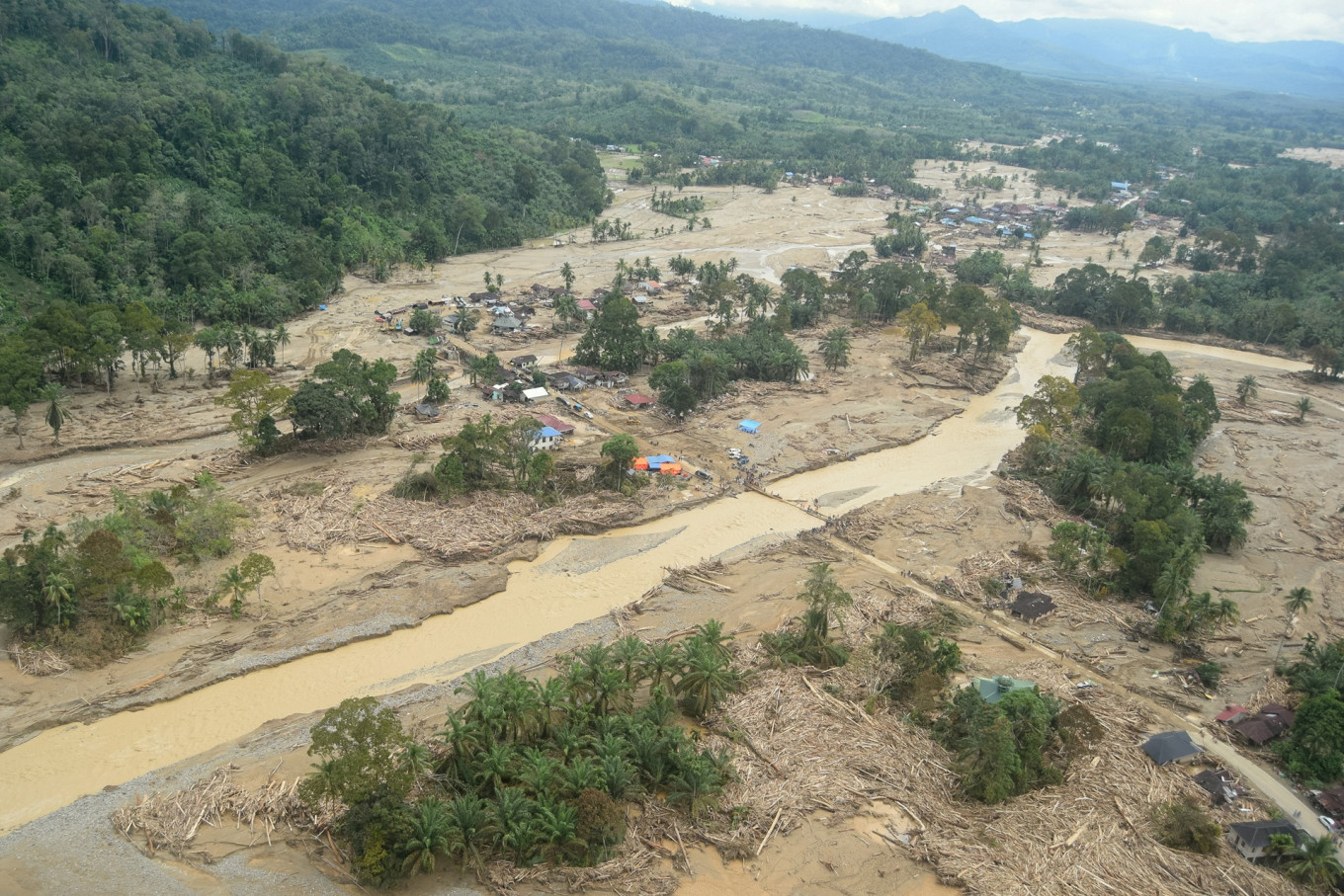 A village is seen from above on Dec. 2 following a flash flood in Batang Toru district, South Tapanuli regency, North Sumatra. (Reuters/Stringer)
D
eadly floods and landslides across northern Sumatra have intensified public scrutiny of extractive industries, with environmental groups warning that years of weak oversight have magnified the scale of the ecological disaster.
Tropical Cyclone Senyar made landfall in northern Sumatra on Nov. 25, unleashing extreme rain and winds that triggered massive flooding and landslides in Aceh, North Sumatra and West Sumatra provinces. At least 3.1 million people were affected with 770 killed, some 2,600 injured and nearly 500 still missing as of Wednesday, according to the National Disaster Mitigation Agency (BNPB).
Environmental organizations, such as the Indonesian Forum for the Environment (Walhi), attributed the severe toll to large-scale deforestation and lackluster enforcement of environmental regulations.
The group noted that 1.4 million hectares of forest cover had been cleared across the three provinces between 2016 and 2025 to make way for businesses such as plantations and mining.
“These facts clearly show that today’s ecological disasters are caused by state officials and corporations. The government needs to evaluate all business permits, especially ones located in critical ecosystems,” Walhi forest and plantation campaigner Uli Arta Siagian said on Monday.
Data from Walhi show areas hardest-hit by floods and landslides were degraded watersheds (DAS). In North Sumatra, for instance, the flood-stricken regencies of South, Central and North Tapanuli and Sibolga City sit within the Batang Toru watershed, which lost nearly 73,000 ha of forest between 2016 and 2024.

The group alleged activities by seven companies, including gold miner PT Agincourt Resources and pulp producer PT Toba Pulp Lestari, significantly contributed to the environmental degradation.