TheJakartaPost
Please Update your browser
Your browser is out of date, and may not be compatible with our website. A list of the most popular web browsers can be found below.
Just click on the icons to get to the download page.


Popular Reads
Top Results
No results found. Please check your search term and try again
Can't find what you're looking for?
View all search results
Popular Reads
Top Results
No results found. Please check your search term and try again
Can't find what you're looking for?
View all search resultsDangerous levels of toxic chemicals found in blood of Indonesia’s waste workers
An analysis conducted at WIOEH’s Green Hospital Laboratory in South Korea detected 23 hazardous plastic-related chemicals in all samples, with the waste workers showing significantly higher concentrations than the control group.
Change text size
Gift Premium Articles
to Anyone
Share the best of The Jakarta Post with friends, family, or colleagues. As a subscriber, you can gift 3 to 5 articles each month that anyone can read—no subscription needed!
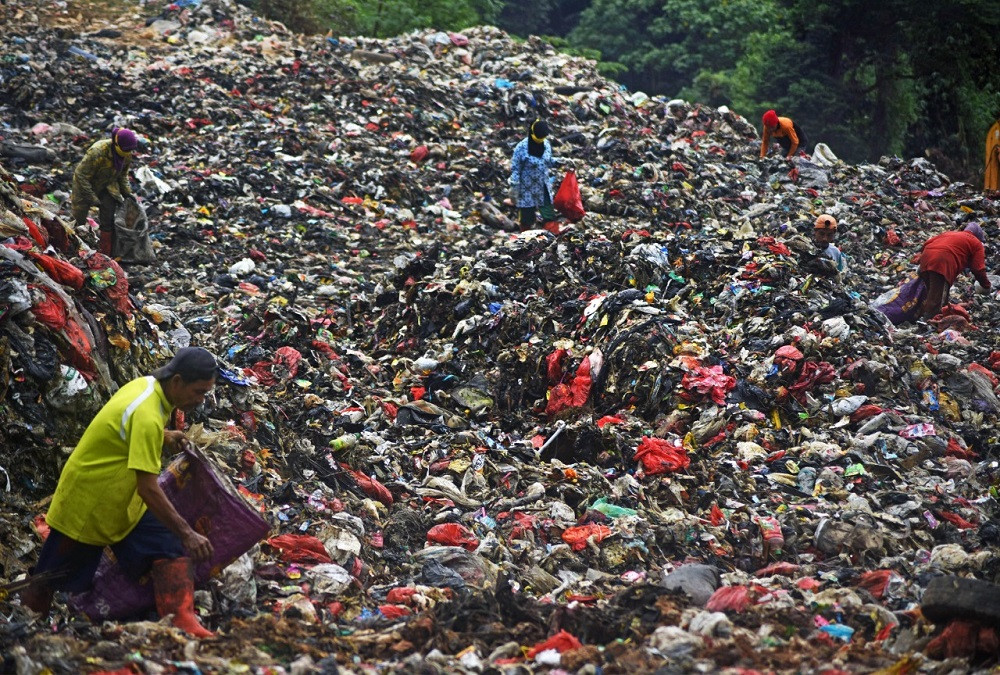 Trashed: Waste pickers sift through a pile of garbage on May 20 at the Cilowong dump site in Serang, Banten. Despite playing an important role in the circular economy, waste pickers are mostly ignored and unprotected. (Antara/Asep Fathulrahman)
A
new study has found that Indonesia’s waste pickers and waste sorters, the often-overlooked backbone of the country’s recycling sector, carry dangerously high levels of toxic chemicals in their bodies because of chronic exposure to microplastics.
The study was conducted by the Wonjin Institute for Occupational Environmental Health (WIOEH) in collaboration with environmental watchdog Ecological Observation and Wetlands Conservation (Ecoton) and the Faculty of Medicine at Airlangga University from August to November.
Researchers collected blood and urine samples from 27 female waste pickers and waste sorters in East Java’s Gresik regency, along with samples from five local women who served as a control group.
Analysis conducted at WIOEH’s Green Hospital Laboratory in South Korea detected 23 hazardous plastic-related chemicals in all samples, with the waste workers showing significantly higher concentrations than the control group.
Blood tests revealed alarming levels of phthalates (DEHP), which were twice as high as those found in the control group, while PAH (1-OH-pyrene) was 2.8 times higher. Flame retardants, including DPHP and DBuP, were present at two to three times the levels seen in control samples. The workers’ blood also contained BPA at 2.3 times the concentration of the control group, 10 times higher than levels reported in Korean women and seven times higher than in American women.
Read also: Waste processing rate in Indonesia only reaches 10 percent

DEHP is a potent endocrine disruptor associated with reproductive harm, reduced fertility, developmental problems in children and a higher risk of metabolic diseases. PAHs are known carcinogens that can damage DNA and contribute to both respiratory and cardiovascular disorders.