The Jakarta Post
Please Update your browser
Your browser is out of date, and may not be compatible with our website. A list of the most popular web browsers can be found below.
Just click on the icons to get to the download page.


Popular Reads
Top Results
No results found. Please check your search term and try again
Can't find what you're looking for?
View all search results
Popular Reads
Top Results
No results found. Please check your search term and try again
Can't find what you're looking for?
View all search resultsAir pollution blamed for nearly 2 million respiratory infections in Jakarta
Persistent air pollution in Jakarta has triggered nearly 2 million cases of respiratory illness throughout this year, raising concerns over the long-term well-being of the capital’s 11 million residents.
Change text size
Gift Premium Articles
to Anyone
Share the best of The Jakarta Post with friends, family, or colleagues. As a subscriber, you can gift 3 to 5 articles each month that anyone can read—no subscription needed!
 Set as preferred source
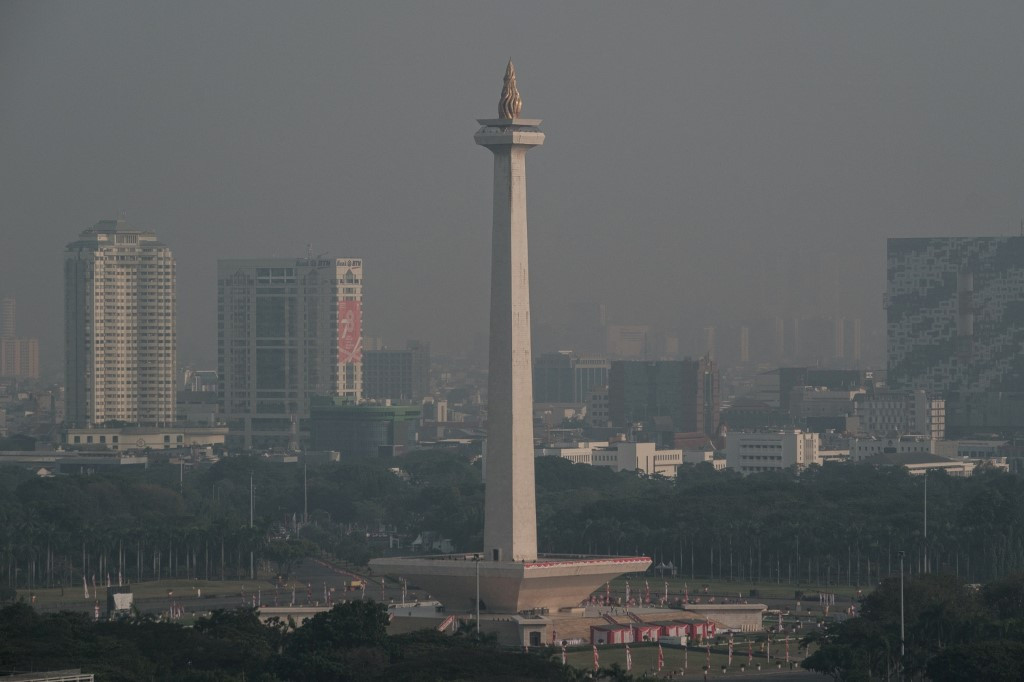 The National Monument (Monas) is seen in the haze caused by the air pollution in Jakarta on August 16, 2023. (AFP/Yasuyoshi Chiba)
P
ersistent air pollution in Jakarta has triggered nearly 2 million cases of respiratory illness throughout this year, raising concerns over the long-term well-being of the capital’s 11 million residents and the 42 million residents of the greater Jakarta area, the most populous city in the world, according to new United Nations data.
As of October of this year, there were more than 1.9 million people in the capital that suffered from acute respiratory infections, with children accounting to nearly 20 percent of the number, according to the Jakarta Health Agency.
“In general, the high prevalence of acute respiratory infections is triggered by the combination of numerous factors, such as changing weather patterns, air pollution, high population density and human mobility in Jakarta, declining immunity and exposure to pathogens,” agency head Ani Ruspitawati told The Jakarta Post on Monday.
A report published by the Health Ministry on Nov. 29 placed Jakarta as the province with the third highest prevalence of respiratory illness, behind only West Java and Central Java. The ministry reported that more than 12 million people in the country suffered from respiratory problems this year, with the trend continuing to increase since the first week of January.
Experts and activists have long blamed poor air quality in Jakarta for making the capital more vulnerable to environmental hazards.
Jakarta has consistently ranked among the most polluted cities in the world in recent years.

The level of microscopic harmful particles known as PM2.5 in Jakarta on Sunday afternoon reached around 26 micrograms per cubic meter (µg/m3), according to data from Swiss technology company IQAir. It was around 5 times higher than the safety limit set by the World Health Organization (WHO).