TheJakartaPost
Please Update your browser
Your browser is out of date, and may not be compatible with our website. A list of the most popular web browsers can be found below.
Just click on the icons to get to the download page.


Popular Reads
Top Results
No results found. Please check your search term and try again
Can't find what you're looking for?
View all search results
Popular Reads
Top Results
No results found. Please check your search term and try again
Can't find what you're looking for?
View all search resultsTablet market extends slide as consumer habits shift
Change text size
Gift Premium Articles
to Anyone
Share the best of The Jakarta Post with friends, family, or colleagues. As a subscriber, you can gift 3 to 5 articles each month that anyone can read—no subscription needed!
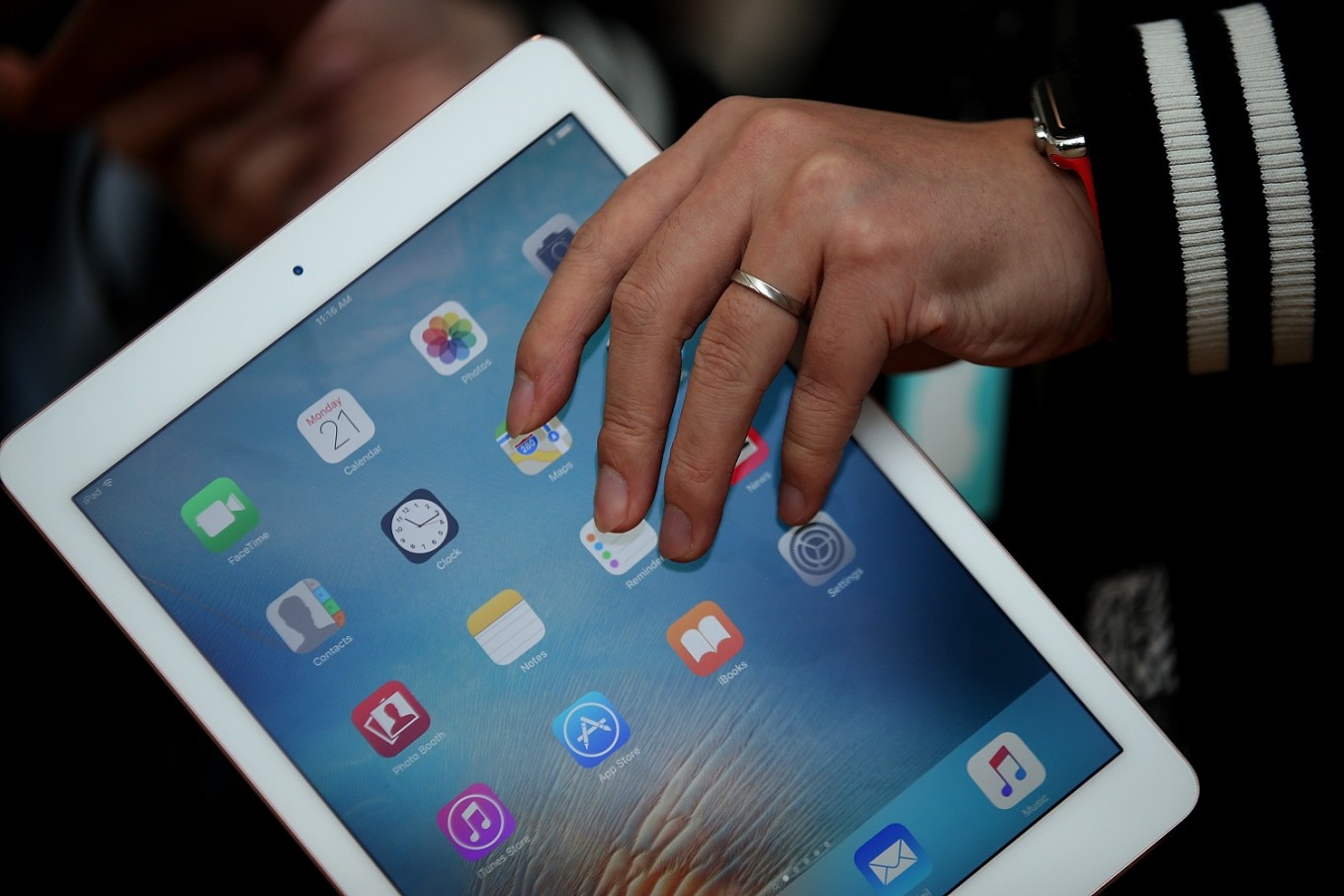 An attendee looks at the new 9.7" iPad Pro during an Apple special event at the Apple headquarters on March 21, 2016 in Cupertino, California. IDC said Apple led the market with a 24.6 percent share in first quarter despite a 13 percent sales drop. (Getty Images via AFP/Justin Sullivan )
T
he tablet craze from a few years ago showed more signs of fading this year, with most major producers reporting sales declines, market surveys showed Thursday.
IDC reported an 8.5 percent drop in global tablet shipments to 36.2 million. This was the 10th straight quarterly decline for tablets, IDC said.
A separate survey by Strategy Analytics pegged the decline for the quarter at 10 percent.

IDC analyst Ryan Reith said the sizzling growth in tablets from 2010 to 2013 following the launch of the first iPad is now history, and that many consumers are finding they can do without tablets, relying instead on smartphone or new slimmer laptop PCs.
"The rate at which the tablet market grew from 2010 to 2013 was unlike many other consumer-oriented device markets we've seen before," Reith said.
"However, it appears for many reasons consumers became less eager to refresh these devices, or in some instances purchase them at all. We continue to believe the leading driver for this was the increased dependency on smartphones, along with rather minimal technology and form factor progression."
IDC said Apple led the market with a 24.6 percent share in first quarter despite a 13 percent sales drop.
Read also: Hacks to survive a 20-hour flight without a laptop or tablet
Samsung sales fell 1.1 percent but retained the number two spot at 16.5 percent.
China's Huawei was the only major vendor to show growth -- reporting a 31.7 percent jump, garnering a 7.4 percent share, after introducing new "detachable" tablets powered by Microsoft Windows, IDC said.
IDC estimated that Amazon, which does not report detailed sales figures, sold 2.2 million tablets for a six percent market share, a drop of 1.8 percent.
Lenovo held the number five spot with a market share of 5.7 percent for the Chinese electronics giant, according to IDC.
Strategy Analytics, which reported similar market shares, said the growth had evaporated for Microsoft and its Surface tablets after a number of strong quarters.

"Sales performance for Windows tablets has been fantastic over the last several years but the hero of this segment is missing in action," said Eric Smith of Strategy Analytics.
The Strategy Analytics survey found that sales of Windows tablets, which include Microsoft Surface devices, fell two percent from a year ago to 6.3 million units, which gave the operating system a market share of 15 percent.