TheJakartaPost
Please Update your browser
Your browser is out of date, and may not be compatible with our website. A list of the most popular web browsers can be found below.
Just click on the icons to get to the download page.


Popular Reads
Top Results
No results found. Please check your search term and try again
Can't find what you're looking for?
View all search results
Popular Reads
Top Results
No results found. Please check your search term and try again
Can't find what you're looking for?
View all search resultsLetter: Notes for women' empowerment
President SBY just installed a new Cabinet, receiving mixed comments on some names whom are professionally "peculiar" to be in their position
Change text size
Gift Premium Articles
to Anyone
Share the best of The Jakarta Post with friends, family, or colleagues. As a subscriber, you can gift 3 to 5 articles each month that anyone can read—no subscription needed!

P
resident SBY just installed a new Cabinet, receiving mixed comments on some names whom are professionally "peculiar" to be in their position. People are mostly concerned by those who have so-called strategic ministerial positions such as those that manage the country's macro economic sector and those for the polical arena.
Less discussions, except from the women's movements, raised with regard to whom sit as the state minister of women empowerment. Then, the name of Linda Gumelar as the new minister was announced. Questions on "Who is she?" and "Why she leads the office," may be raised by women activists and organizations, but why does this matter to Indonesians?
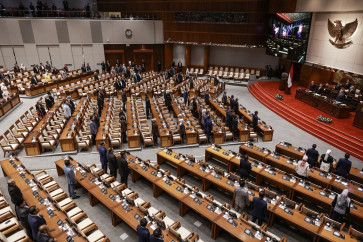
People have talked about efforts to increase women's participation in politics and decision making. The Indonesia's Commission for General Elections (KPU) announced that among 560 elected legislators, only 101 were women, representing 18 percent out of all parliamentarians.
Would that be enough? No! Other complex inequality issues are here in Indonesia! Does the new Minister Linda Gumelar understand about such issues? Will we need to wait or will we just say "Not sure, I do not think so"?
Poverty is a constant issue. Due to inflation, contributed by the increases in fuel prices from 2005 to 2008, the poor have been hurt by rising food prices. The families' economic status, their welfare, and malnutrition status have become a challenge. Women are critical players in assuring food security in the family, but they do not have access to and control over agricultural resources. Only about 5 percent of land's plots are registered in join entitlement.
A high proportion of women, particularly during their pregnancy and lactation, experience malnutrition. Issues of a lack or limited access to clean water and sanitation and poor food intake, due to an inability to afford eggs, meat, or fish as sources of their protein, for at least once a week have been some among the causes.
Women have continued to play important role in the growth of the agriculture and rural development sectors, but they still earn considerably less than men, in both the formal and informal sectors. Attentions to provide women with proper inputs, training, and more ergonomically-friendly equipment have still limited.
The National Commission on Anti-Violence against Women reported a doubling of reported violence against women cases to 54,425 from 2008 to 2009, where economic-based violence and domestic violence being the two major cases.
Every thirty minutes, an Indonesian woman dies of pregnancy-related causes and one among 65 women in Indonesia has their lifetime risk as a mother dying of causes related to childbirth.
The office of the state minister for women's empowerment could actually have significant influence in these issues. Demonstration on the success of mainstreaming gender in specific programs, and being focused its work to support, in meaningful ways, few key sectors, would build the ministry of women empowerment's accountability to convince technical ministries and the public that equality should be promoted, and the existence of the ministry is mandatory.
We can not accept old and unproductive experiences of policy evaporation, resistance among government staffs, and inability to claim results, and lack of the ministry's capacity to be catalysts of gender mainstreaming that occurred during the implementation of gender responsive to repeatedly and windingly happen in the future. Are we too late to share this note?
Leya Cattleya
Jakarta