TheJakartaPost
Please Update your browser
Your browser is out of date, and may not be compatible with our website. A list of the most popular web browsers can be found below.
Just click on the icons to get to the download page.


Popular Reads
Top Results
No results found. Please check your search term and try again
Can't find what you're looking for?
View all search results
Popular Reads
Top Results
No results found. Please check your search term and try again
Can't find what you're looking for?
View all search resultsIndonesia and Norway: Cementing middle power cooperation in a turbulent time
A constructive collaboration between Indonesia and Norway on many issues in the global arena could serve as a distinctive model of cooperation among middle powers.
Change text size
Gift Premium Articles
to Anyone
Share the best of The Jakarta Post with friends, family, or colleagues. As a subscriber, you can gift 3 to 5 articles each month that anyone can read—no subscription needed!
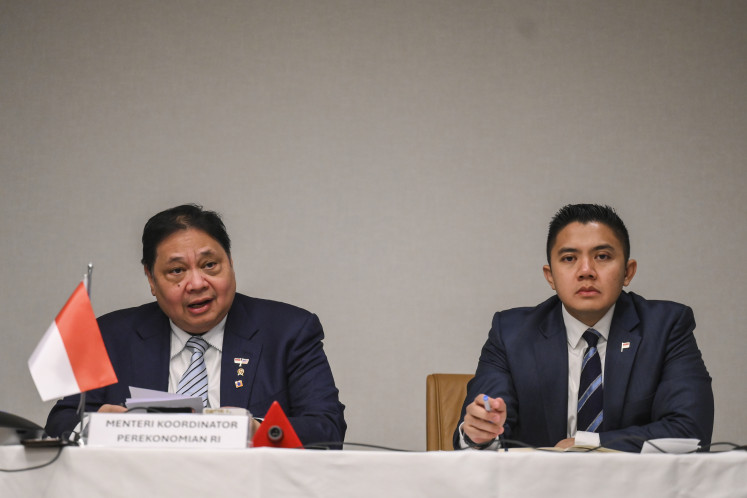
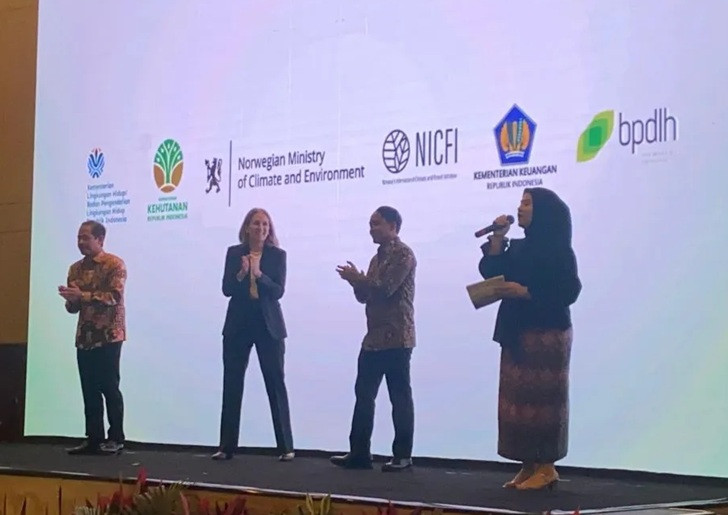 Environment Minister Hanif Faisol Nurofiq (left), Norwegian Ambassador to Indonesia Rut Kruger Giverin (second left) and Forestry Minister Raja Juli Antoni (second right) attend the launch of the fourth phase of a Result-Based Contribution funding cooperation on Dec. 10, 2024, in Jakarta. (Antara/Prisca Triferna)
W
ho would have thought that although thousands of miles apart, there exists centuries-old historical connections between Indonesia and Norway. At that time both countries had not yet been formed in the way we understand it today and in the case of Indonesia it was under the Dutch colonial power.
It was in this era of exploration and ocean voyages of the late 1500s, that a Dutchman by the name Willem Barentsz led a naval expedition in search of shorter routes from Europe to the spice islands—a well-known location in the Eastern part of today’s Indonesia.
They were adamant that if they could discover a new route to Asia by sailing through the Arctic and north of Russia (the Northeast Passage), the length of sea travel will be shortened by a year.
During his third exploration attempted in 1596 and after sailing along the coast of northern Norway and moving up north toward the Arctic, Barentsz and his crew discovered an archipelago.
This archipelago, situated in the upper North of the Arctic circle is now known as Svalbard and is becoming one of the most strategic territories in Norway. Especially in the view of their threat perception due to the ongoing war in Ukraine.
Another connection, although anecdotal in nature, has a lot to do with liquor fermentation. Legend has it that in 1805, a cargo ship containing several barrels of aquavit, a traditional Scandinavian liquor made from potatoes, sailed from the city of Trondheim in central Norway to Batavia.

For an unexplained reason, the liquor in the barrels was then shipped back to Copenhagen in 1807. The story goes that due to the long voyage and after passing twice the equator, the aquavit had a distinctive taste, the so-called "(equator) line effect."