TheJakartaPost
Please Update your browser
Your browser is out of date, and may not be compatible with our website. A list of the most popular web browsers can be found below.
Just click on the icons to get to the download page.


Popular Reads
Top Results
No results found. Please check your search term and try again
Can't find what you're looking for?
View all search results
Popular Reads
Top Results
No results found. Please check your search term and try again
Can't find what you're looking for?
View all search resultsIndia-Russia: A time-tested partnership building trust
Russia has moved significantly closer to China, sometimes uncomfortably so, while the United States has tried to consolidate Europe under a NATO-centered response to Moscow.
Change text size
Gift Premium Articles
to Anyone
Share the best of The Jakarta Post with friends, family, or colleagues. As a subscriber, you can gift 3 to 5 articles each month that anyone can read—no subscription needed!
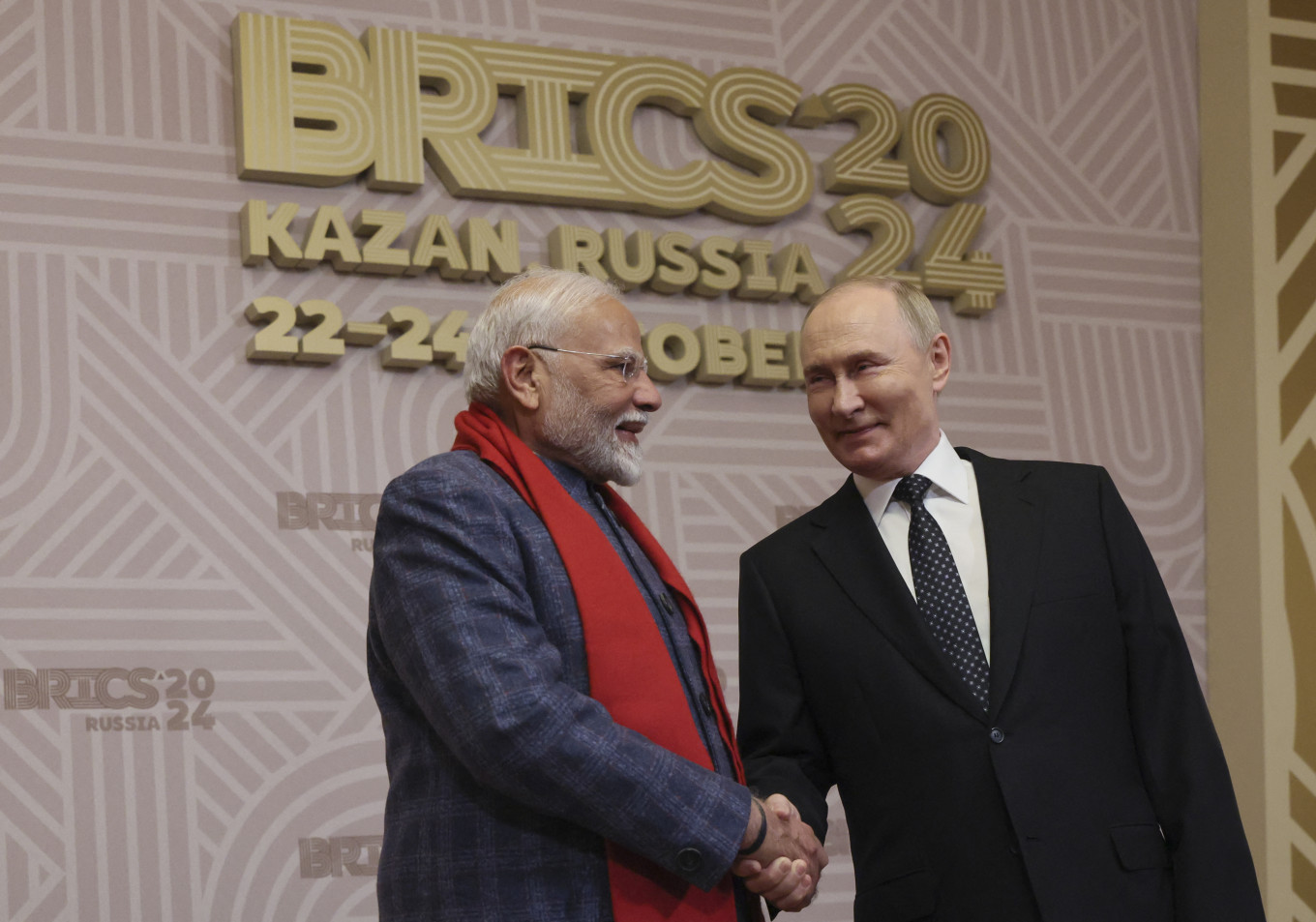 Russian President Vladimir Putin greets Indian Prime Minister Narendra Modi on Oct. 22, 2024, during a welcoming ceremony for participants of the BRICS summit in Kazan. (AFP/Pool/Maxim Shipenkov)
I
ndia and Russia marked the 23rd Annual Summit on Dec. 4-5, a meeting of special significance as it commemorated the silver jubilee of the 2000 Declaration on Strategic Partnership signed during Russian President Vladimir Putin’s first state visit to India.
Over a quarter century, Putin has met successive Indian leaders and developed an uncommon familiarity with India’s political landscape. His personal rapport with Prime Minister Narendra Modi was on clear display during this visit, highlighted by Modi’s unusual gesture of receiving Putin at the airport and accompanying him in his own car.
This was Putin’s first visit to India since the Ukraine conflict, generating heightened expectations in a rapidly shifting geopolitical climate. Both nations today face pressures from the Trump administration, which has sanctioned them for different reasons: Russia comprehensively and India largely for its continued imports of discounted Russian oil.
Against this backdrop, the summit became a deliberate assertion of strategic autonomy by both sides. The evolving United States push for a “G2-style” US-China global management model runs counter to Indian and Russian visions of a multipolar world order, making alignment between Delhi and Moscow even more essential.
The Ukraine conflict has, however, disrupted the earlier equilibrium of multipolarity. Russia has moved significantly closer to China, sometimes uncomfortably so, while the US has tried to consolidate Europe under a NATO-centered response to Moscow.
Yet the Trump administration’s current overtures to both Beijing and Moscow indicate its own attempt to reorder global power centers. In this fluid environment, India believes that an early negotiated end to the Ukraine war would allow it to deepen cooperation with Russia and play a more effective role in shaping multipolarity.

Though not explicitly written into the joint statement, Modi conveyed this sentiment clearly in his public remarks, reaffirming India’s consistent advocacy of peace. Western capitals had expected Modi to press Putin on Ukraine; he did so in his own understated style, urging all sides to reach a settlement acceptable to all.