TheJakartaPost
Please Update your browser
Your browser is out of date, and may not be compatible with our website. A list of the most popular web browsers can be found below.
Just click on the icons to get to the download page.


Popular Reads
Top Results
No results found. Please check your search term and try again
Can't find what you're looking for?
View all search results
Popular Reads
Top Results
No results found. Please check your search term and try again
Can't find what you're looking for?
View all search resultsPolice accused of using ‘excessive force’ in August protests
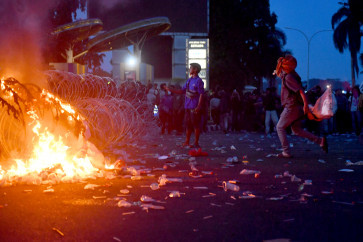
When handling the nationwide anti-government protests in August, the police used a variant of tear gas grenade that contains explosive charges, which is banned in police crowd control in several countries.
Change text size
Gift Premium Articles
to Anyone
Share the best of The Jakarta Post with friends, family, or colleagues. As a subscriber, you can gift 3 to 5 articles each month that anyone can read—no subscription needed!
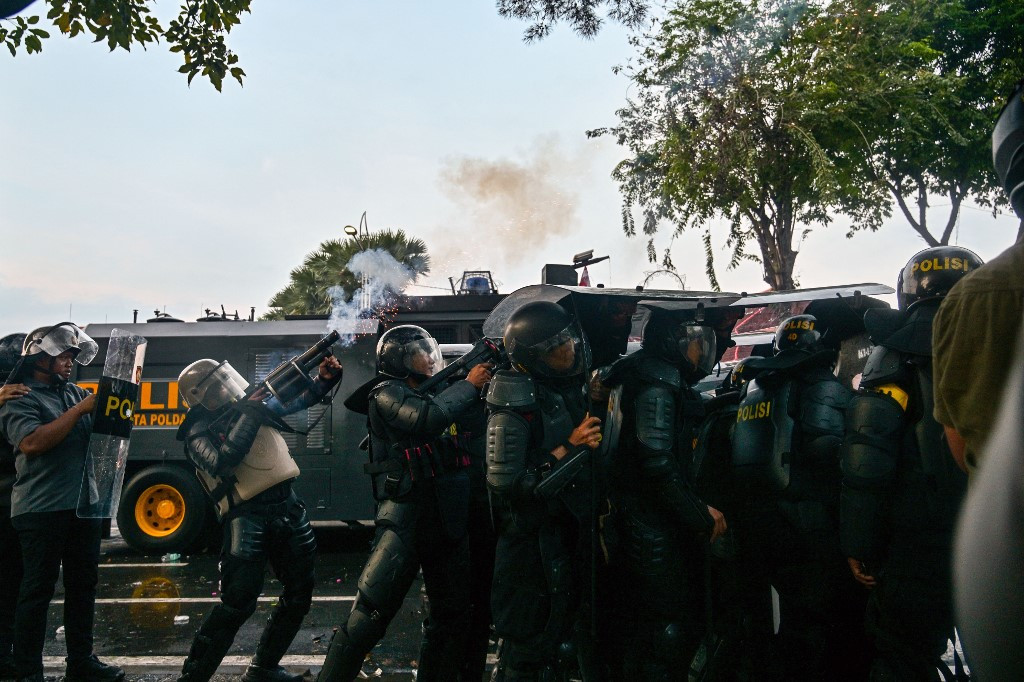 Police fire tear gas to disperse demonstrators on Aug. 29, 2025, during a protest against the Jakarta Police Mobile Brigade (Brimob) in front of the East Java gubernatorial residence in Surabaya, East Java, after 21-year-old ojol (online motorcycle transportation) driver Affan Kurniawan was killed after being struck by a police tactical vehicle amid a protest against lavish allowances for lawmakers in Jakarta on Aug. 28. (AFP/Juni Kriswanto)
T
he National Police had been accused of using excessive force against protesters during nationwide rallies in late August, according to an investigation by human rights group Amnesty International on multiple cases of violence around the demonstrations.
The human rights group examined verified footage and witness statements about protests against economic inequalities and lavish allowances for lawmakers across the country from Aug. 25 to Sept. 1.
The demonstrations later escalated into nationwide unrest following the death of 21-year-old ojol (online motorcycle transportation) driver Affan Kurniawan, who was fatally struck by a police tactical vehicle in Jakarta on Aug. 28.
From the investigation, Amnesty accused police officers of committing acts described as “unnecessary and excessive force”, including firing tear gas at close range, beating protesters and arresting them without a clear legal basis. The crackdown resulted in 1,036 victims in 19 cities.
Amnesty also identified the tear gas grenade used during the August protests as GLI-F4, a variant of tear gas grenade that carries an explosive charge in addition to chemical irritants.
The use of the weapon may cause serious physical injury through its blast and debris. Amnesty has repeatedly urged a global ban on its use in civilian law enforcement. France banned the weapon in police crowd control in 2020.

“When people speak out against injustice, the government should listen, not silence them with batons, tear gas or any other forms of violence,” Amnesty International Indonesia executive director Usman Hamid said during a press briefing on Tuesday.