TheJakartaPost
Please Update your browser
Your browser is out of date, and may not be compatible with our website. A list of the most popular web browsers can be found below.
Just click on the icons to get to the download page.


Popular Reads
Top Results
No results found. Please check your search term and try again
Can't find what you're looking for?
View all search results
Popular Reads
Top Results
No results found. Please check your search term and try again
Can't find what you're looking for?
View all search resultsTrump's United States of the Americas
The national security strategies document speaks of reducing America’s trade imbalances, increasing commerce, securing supply chains and reindustrializing the country.
Change text size
Gift Premium Articles
to Anyone
Share the best of The Jakarta Post with friends, family, or colleagues. As a subscriber, you can gift 3 to 5 articles each month that anyone can read—no subscription needed!
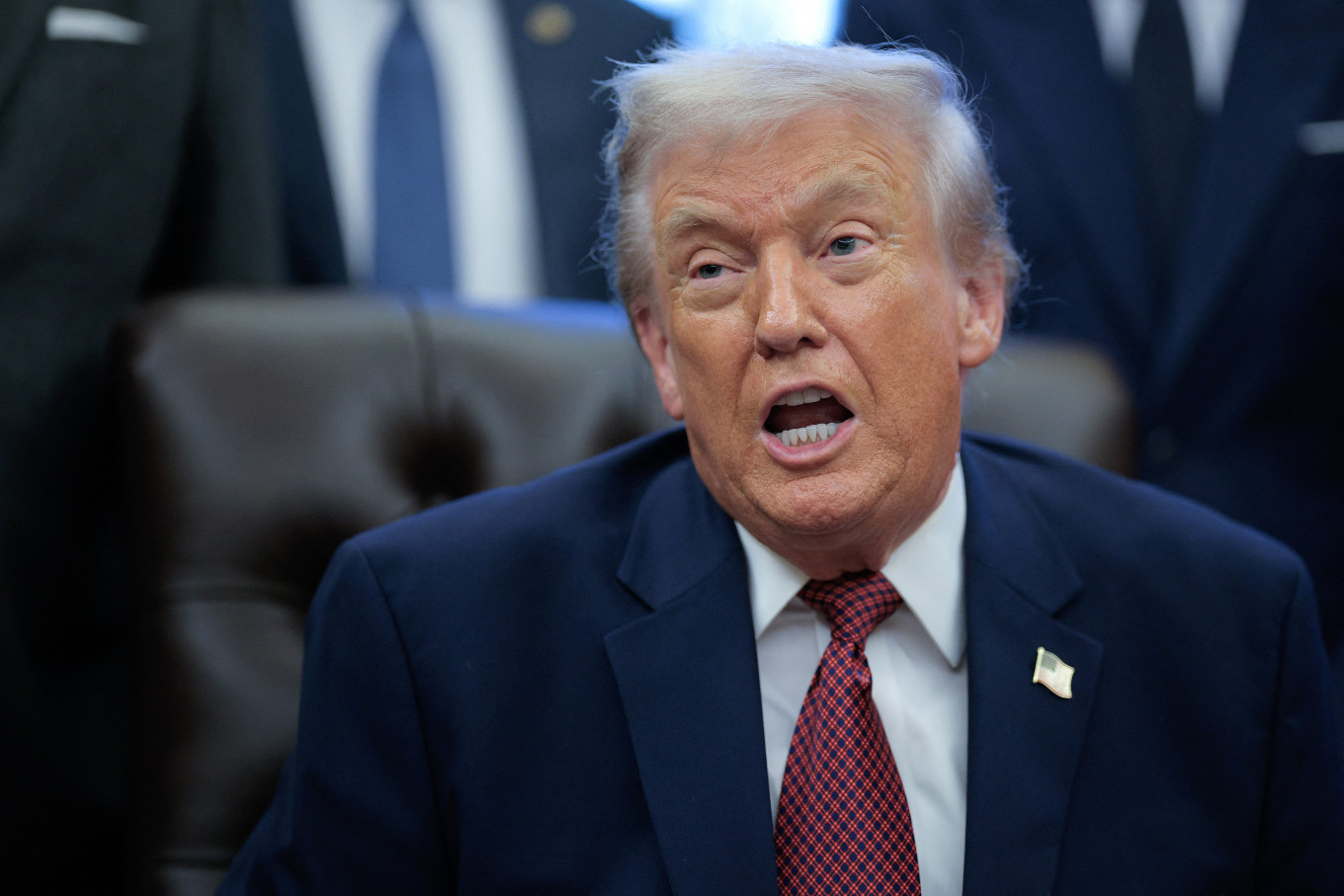 United States President Donald Trump speaks in the Oval Office of the White House on Dec. 3, 2025, in Washington, DC. (AFP/Getty Images/Chip Somodevilla)
N
ational security strategies, released from time to time by every United States administration, often say little and are quickly forgotten. The latest one, however, issued by the Donald Trump administration late last week, is the exception. It is essential reading, for it previews the biggest redirection of US foreign policy since the dawn of the Cold War 80 years ago.
What leaps out is the prioritization of economic and commercial interests. The document speaks of reducing America’s trade imbalances, increasing commerce, securing supply chains and reindustrializing the country. Allies are considered allies only so long as they assume a much larger share of the defense burden. Geoeconomics has superseded geopolitics. Investment is in; assistance is out. Fossil fuels and nuclear power are in; wind, solar and other renewables are out, along with climate change concerns.
The biggest change is that the Western Hemisphere, long largely ignored, is now at the center of America’s national-security policy. It comes first in the list of what the US wants in and from the world; it is discussed at length before every other region.
The newfound priority can best be understood as stemming from heightened concern over homeland security, an extension of domestic efforts to thwart drug trafficking and stop illegal immigration. America’s military presence will shift accordingly. In short, the “Trump Corollary” now takes its place alongside the Monroe Doctrine and the [Theodore] Roosevelt Corollary, although the policy seems premised on getting the US inside the rest of the Americas economically and strategically as much as on keeping others out.
The Indo-Pacific is the silver medalist in terms of attention. Not surprisingly, there is a great deal of focus on economic dimensions of policy, on “rebalancing America’s economic relationship with China, prioritizing reciprocity and fairness to restore American economic independence.” That said, the document does state that deterring a conflict over Taiwan is a priority.
North Korea, however, is not mentioned. How the administration plans to balance its economic and strategic goals in this part of the world is unknown, making Trump’s planned visit to China next spring critical.

By contrast, the administration wants to downsize America’s role in the Middle East, which has dominated US foreign policy for much of the past 35 years. Whether this will prove possible remains to be seen: the strategy arguably exaggerates what has been accomplished in terms of promoting peace and weakening Iran. Africa, despite being the region set to experience the greatest population growth, is mostly an afterthought.