The Jakarta Post
Please Update your browser
Your browser is out of date, and may not be compatible with our website. A list of the most popular web browsers can be found below.
Just click on the icons to get to the download page.


Popular Reads
Top Results
No results found. Please check your search term and try again
Can't find what you're looking for?
View all search results
Popular Reads
Top Results
No results found. Please check your search term and try again
Can't find what you're looking for?
View all search resultsPollution is not 'new normal'
Jakartans must take the lead in controlling the city's air quality instead of waiting for an official response, especially after alarming reports showing that pollution is seeping into our homes at higher, more dangerous levels than in the air outside.
Change text size
Gift Premium Articles
to Anyone
Share the best of The Jakarta Post with friends, family, or colleagues. As a subscriber, you can gift 3 to 5 articles each month that anyone can read—no subscription needed!
 Set as preferred source
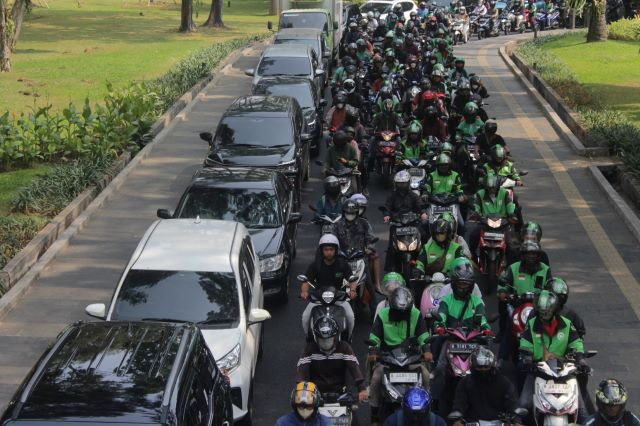 Cars and motorcycles throng an access road leading to the Semanggi Underpass in South Jakarta on Oct. 10, 2023. (Antara/Suci Nurhaliza)
I
t is time for Jakartans to stop waiting. We can no longer afford to merely complain about the slow pace of the city administration’s actions to reduce pollution in this choking megapolis: We must be proactive in creating cleaner air ourselves.
While Jakarta officials and residents tend to focus on outdoor air pollution, a group of scholars recently pointed out that poor indoor air quality was equally dangerous for public health. This means many people are overlooking the invisible danger lurking inside their own homes.
The question remains: Will Jakartans wake up to this domestic threat, or will they wait passively for the city administration to work its magic? There are clear signs, however, that they have simply accepted severe pollution as a daily fact of life, a "new normal" they must endure.
Normally, front-page news like “Air pollution blamed for nearly 2 million respiratory infections in Jakarta” (Dec. 9, 2025, The Jakarta Post) would be horrifying. But the public has come to regard pollution as routine because it has been a daily concern in Jakarta for years, if not decades.
The article reported that in the afternoon on Dec. 7, the level of harmful PM2.5 (fine particulate matter) in Jakarta reached around 26 micrograms per cubic meter (µg/m3), citing data from Swiss air quality monitor IQAir. This is roughly five times the safe annual exposure stipulated in the World Health Organization’s air quality guidelines.
Yet such reports have become background noise. Jakartans no longer view such a high figure as indicating a direct threat to their lives and livelihoods, despite the fact that air pollution is responsible for increasing cases of asthma, lung tissue damage, ischemic heart disease, kidney failure, hypertension and even symptoms of neurological disorders, like tremors. For hospitals in the city, treating these ailments has become a grim daily routine.

This is not to say the Jakarta administration is doing nothing. It has made significant efforts to make the city livable, including expanding its transit system (TransJakarta, MRT, LRT) and issuing regulations to restrict the use of private vehicles.