TheJakartaPost
Please Update your browser
Your browser is out of date, and may not be compatible with our website. A list of the most popular web browsers can be found below.
Just click on the icons to get to the download page.


Popular Reads
Top Results
No results found. Please check your search term and try again
Can't find what you're looking for?
View all search results
Popular Reads
Top Results
No results found. Please check your search term and try again
Can't find what you're looking for?
View all search resultsWhy Indonesia needs media literacy now more than ever
In a country where social media serves as a primary source of news, misinformation now moves faster than relief efforts, shaping public perception long before facts can catch up.
Change text size
Gift Premium Articles
to Anyone
Share the best of The Jakarta Post with friends, family, or colleagues. As a subscriber, you can gift 3 to 5 articles each month that anyone can read—no subscription needed!
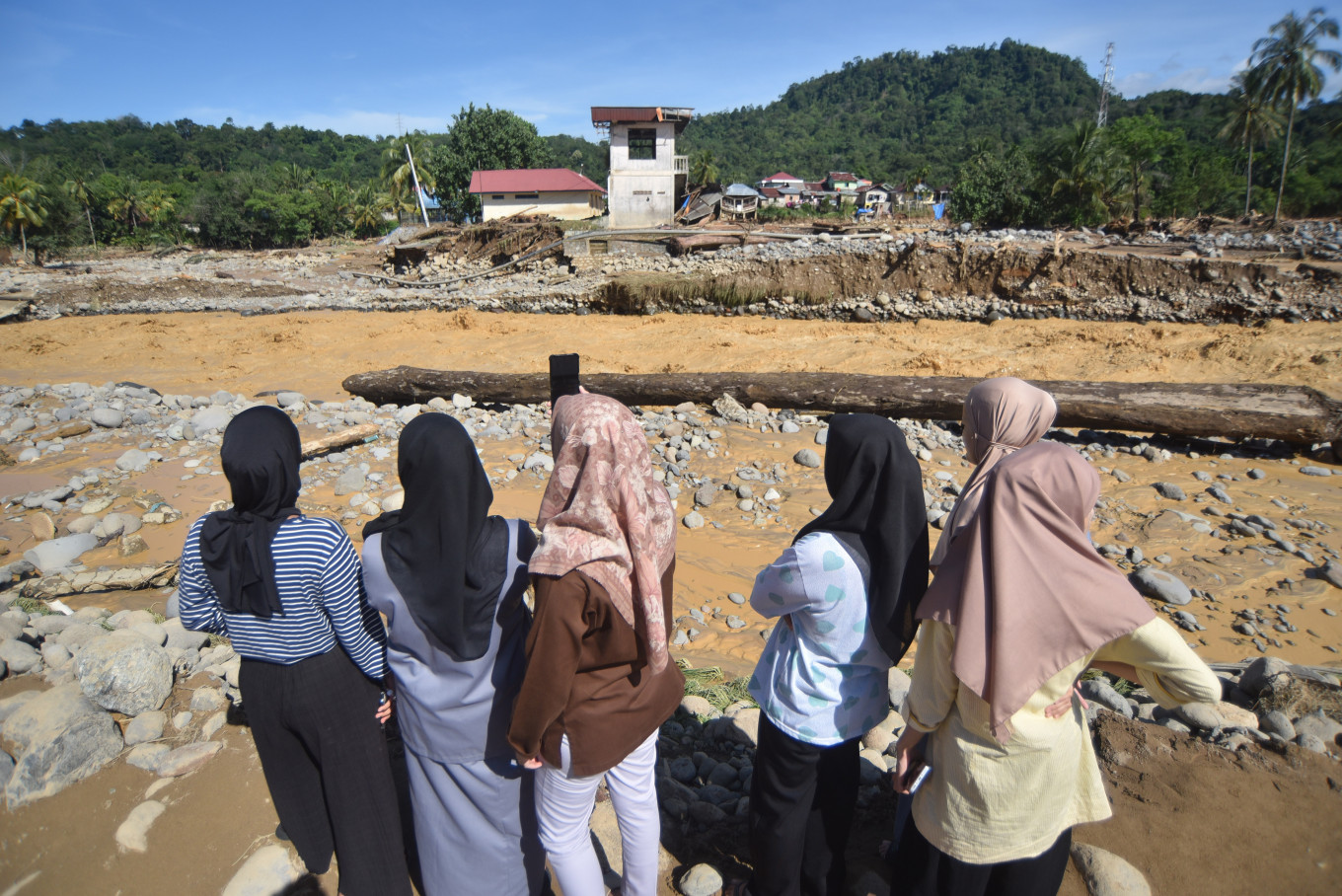 Residents inspect the aftermath of a flash flood in the Gunung Nago area, Padang, West Sumatra, on Nov. 29, 2025. (Antara/Iggoy el Fitra)
W
hen floods and landslides devastated Sumatra, the physical catastrophe was only the beginning. A second crisis emerged online: outdated videos, recycled photos from past disasters and decontextualized commentary that drowned out verified updates from rescue teams.
In a country where social media serves as a primary source of news, misinformation now moves faster than relief efforts, shaping public perception long before facts can catch up.
This dual disaster, material and informational, exposes a structural weakness in Indonesia’s digital ecosystem. It demonstrates why media literacy is not merely a desirable skill, but a civic requirement.
What Indonesia experienced during the Sumatra disaster aligns with global patterns. Research on the 2011 Tohoku tsunami, the 2023 Turkey–Syria earthquake and Cyclone Idai in Mozambique shows the same phenomenon: old footage resurfaces in moments of crisis, often spreading more widely than verified updates. Humanitarian agencies warn that such recirculated content creates the false impression that response efforts are stagnant even as conditions improve rapidly.
This dynamic was visible across Indonesia’s social platforms. While responders cleared debris, reopened roads, restored communications and executed airdrops into isolated valleys, timelines were dominated by imagery from earlier phases of the disaster. The resulting perception gap did not arise from a lack of action on the ground, but from digital noise misaligned with facts.
In the midst of this confusion, one of the clearest accounts came not from viral posts but from a volunteer: Ferry Irwandi. Embedded across the worst-hit areas, he documented the work of the Indonesian Military (TNI) and police units operating with the National Disaster Mitigation Agency (BNPB), local governments, NGOs and community groups. His reports described evacuation corridors being established, aid lifted by Hercules aircraft into narrow valleys and engineering units working through the night to reopen access routes.

His observations highlight something absent from much of the online commentary: large-scale humanitarian logistics depend on state capacity. Moving tonnes of food, fuel and medical supplies into mountainous regions is not an improvisational act; it requires coordinated assets and professional responders.