TheJakartaPost
Please Update your browser
Your browser is out of date, and may not be compatible with our website. A list of the most popular web browsers can be found below.
Just click on the icons to get to the download page.


Popular Reads
Top Results
No results found. Please check your search term and try again
Can't find what you're looking for?
View all search results
Popular Reads
Top Results
No results found. Please check your search term and try again
Can't find what you're looking for?
View all search resultsLots of clicks, few arrivals as ‘New Bali’ dream hits snag
A report published by the Tourism Ministry noted a low search-to-traffic ratio, which gauges potential demand by comparing online search interest from various countries for the priority destinations with the actual traffic that follows.
Change text size
Gift Premium Articles
to Anyone
Share the best of The Jakarta Post with friends, family, or colleagues. As a subscriber, you can gift 3 to 5 articles each month that anyone can read—no subscription needed!
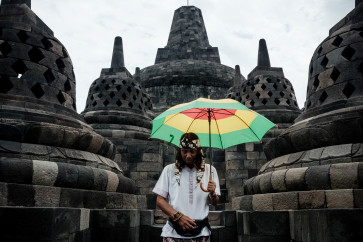
 Passive stance: A guide stands at Borobudur Temple on Jan. 31, the world's largest Buddhist monument and a UNESCO World Heritage Site, in Magelang, Central Java. (AFP/Yasuyoshi Chiba)
T
he Tourism Ministry has admitted that its ambition to spread tourist arrivals beyond Jakarta and Bali to 10 priority destinations, known as the “10 New Balis” program, is falling short. While online searches for these emerging spots have surged, the buzz has yet to translate into real-world foot traffic, with the government blaming the bottleneck on international flights that remain heavily concentrated in Jakarta and Bali.
But experts suggest the problem runs deeper. Rather than connectivity, they argue the real obstacle lies in how central and regional authorities promote these destinations.
First launched in 2015 under former president Joko “Jokowi” Widodo, the 10 New Balis initiative set out to replicate Bali-level tourism success across the archipelago. The program spotlighted a lineup of flagship destinations, from Central Java’s Borobudur Temple and West Nusa Tenggara’s (NTB) Mandalika to Labuan Bajo in East Nusa Tenggara (NTT) and Lake Toba in North Sumatra.
However, a report published by the Tourism Ministry on Dec. 2 noted a low search-to-traffic ratio, which gauges potential demand by comparing online search interest from various countries for the priority destinations with the actual traffic that follows.
Several countries, including Japan, India, China, Russia, the United States and Germany, have shown interest, but visitor numbers from these markets remain low. The pattern of high search activity but low arrivals “is a strong indicator that direct connectivity to priority destinations is still minimal, hence tourism demand cannot be converted into actual visits,” the report said.
The report also cited data from global travel technology company Amadeus, which shows that both Jakarta and Bali accounted for 81 percent of international traffic as of October, while the ten other priority destinations collectively received only 3.75 percent of direct arrivals.

“This gap causes the distribution of tourists to priority destinations to be highly dependent on transit patterns through Jakarta and Bali,” the report reads.