The Jakarta Post
Please Update your browser
Your browser is out of date, and may not be compatible with our website. A list of the most popular web browsers can be found below.
Just click on the icons to get to the download page.


Popular Reads
Top Results
No results found. Please check your search term and try again
Can't find what you're looking for?
View all search results
Popular Reads
Top Results
No results found. Please check your search term and try again
Can't find what you're looking for?
View all search resultsBecoming the Archipelagic Bridge: Reimagining Indonesia’s maritime strategy
While the South China Sea demands vigilance, the Indian Ocean Region offers Indonesia a horizon of strategic possibilities, particularly due to its central role in the global energy supplies.
Change text size
Gift Premium Articles
to Anyone
Share the best of The Jakarta Post with friends, family, or colleagues. As a subscriber, you can gift 3 to 5 articles each month that anyone can read—no subscription needed!
 Set as preferred source
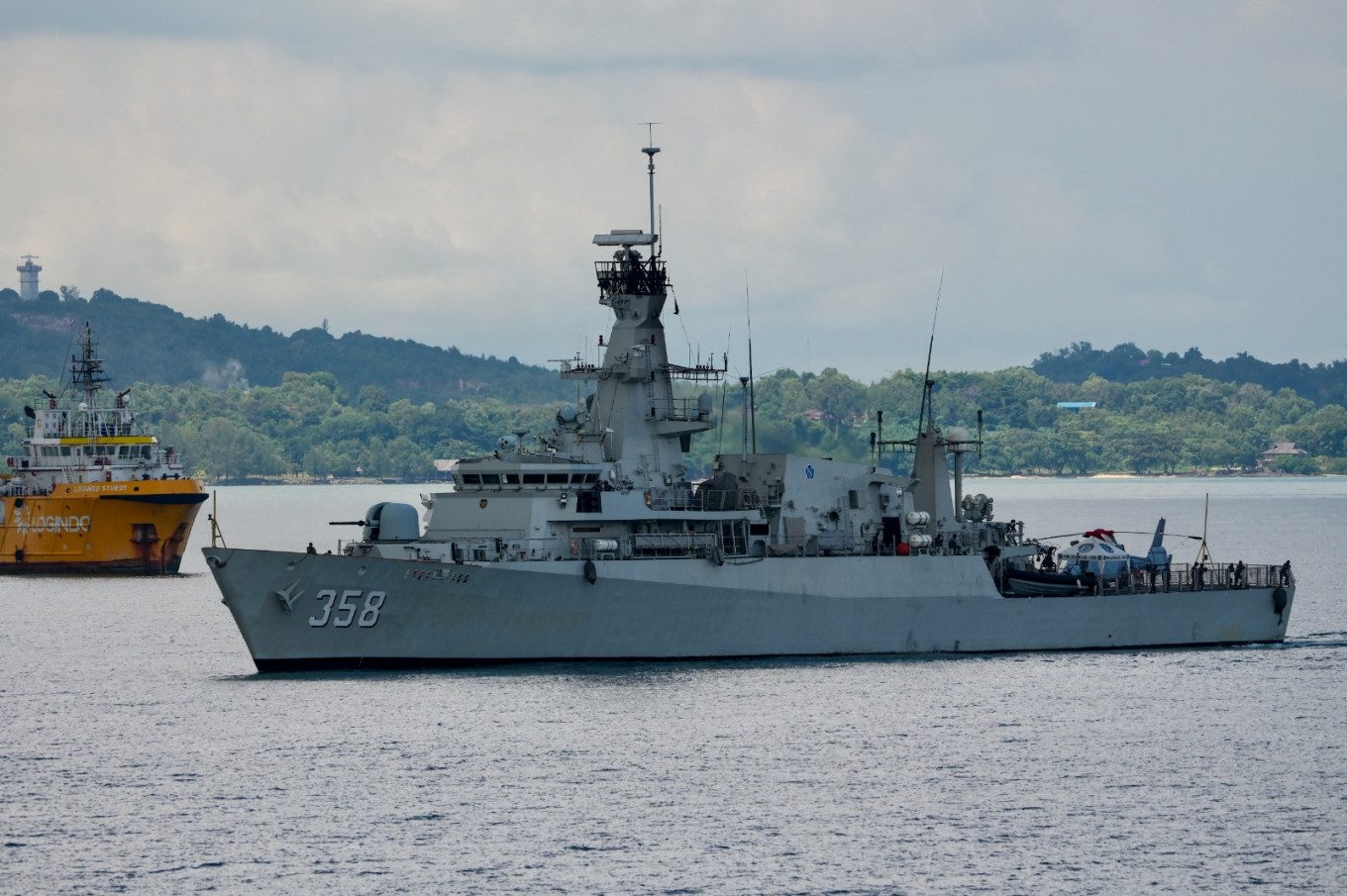 Show of solidarity: The Navy's Bung Tomo-class corvette, KRI John Lie, arrives at a naval base on Sept. 20, 2023, during the ASEAN Solidarity Exercise Natuna 2023 involving six countries. The medical and humanitarian exercise in the Natuna waters took place amid China's claims over the South China Sea. (AFP/Bay Ismoyo)
A
s the nation commemorates the Djuanda Declaration of Dec. 13, 1957, we are reminded of a transformative vision that redefined our maritime identity. The declaration asserted that Indonesia is not a collection of fragmented islands, but a unified archipelagic state whose seas are integral to its sovereignty.
This principle, later codified in the United Nations Convention on the Law of the Sea (UNCLOS), remains central to Indonesia’s strategic orientation. Today, however, as geopolitical pressures mount across the Indo-Pacific, the spirit of Djuanda demands renewal. It must serve not merely as a legal milestone, but as a call to craft a maritime strategy that fully leverages Indonesia’s archipelagic character in an increasingly contested region.
Indonesia’s vast archipelago, spanning thousands of islands between the Indian and Pacific Oceans, has long been portrayed as a strategic blessing. Yet, as competition intensifies across the Indo-Pacific, this same geography is becoming a demanding test of statecraft.
The country sits at the intersection of two increasingly divergent maritime theaters: the militarized South China Sea (SCS) and the fast-rising Indian Ocean Region (IOR). To remain economically resilient and strategically relevant, Indonesia needs a maritime doctrine that unifies these two oceanic spaces into a coherent national strategy.
Recent economic indicators underscore the urgency of such recalibration. Despite global disruptions, Indonesia recorded exports worth nearly US$267 billion in 2024, a 2.7 percent increase from the previous year.
The nation has continued its remarkable streak of trade surpluses, reflecting structural economic resilience even amid volatile supply chains. By the end of 2024, Indonesia had accumulated a surplus exceeding $31 billion, demonstrating that its industrial and trade foundations remain robust despite external pressures.

But beneath this resilience lies a strategic vulnerability: Indonesia’s trade flows remain heavily reliant on maritime corridors leading to the SCS. This dependence embeds the country in a space marked by coercive maneuvers, contested claims and the risk of rapid escalation.