TheJakartaPost
Please Update your browser
Your browser is out of date, and may not be compatible with our website. A list of the most popular web browsers can be found below.
Just click on the icons to get to the download page.


Popular Reads
Top Results
No results found. Please check your search term and try again
Can't find what you're looking for?
View all search results
Popular Reads
Top Results
No results found. Please check your search term and try again
Can't find what you're looking for?
View all search resultsNot just another tax: Preparing an SSB excise for impact
In 2023, diabetes was already the second-most common diagnosis referred from primary care facilities to higher-level referral hospitals.
Change text size
Gift Premium Articles
to Anyone
Share the best of The Jakarta Post with friends, family, or colleagues. As a subscriber, you can gift 3 to 5 articles each month that anyone can read—no subscription needed!
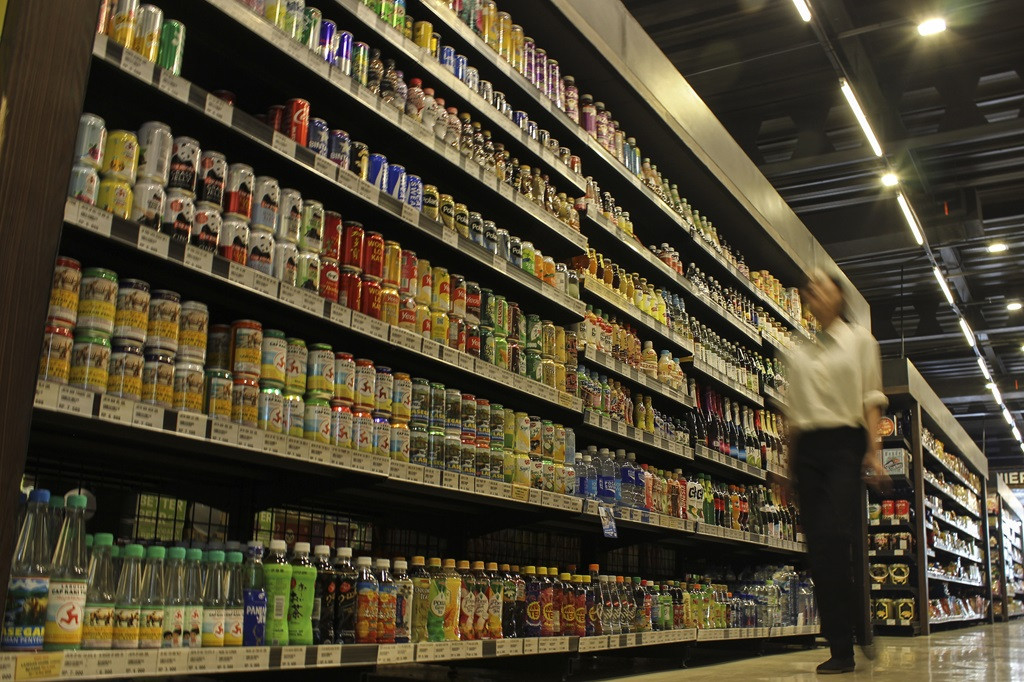 A customer passes by a rack of sweetened drinks in a retail supermarket in Jakarta on Dec. 14, 2023. A survey from the Indonesian Consumers Foundation (YLKI) revealed that 58 percent of 800 respondents support the plan to impose excise tax on sweetened beverages to control their consumption and prevent diabetes prevalence in children, which increased 70-fold in 2023 compared with 2010. (Antara/Cahya Sari)
A
s Indonesia debates an excise on sugar-sweetened beverages (SSBs), it is tempting to see it as just another tax. Yet, it is actually a health tax designed to curb excessive sugar intake and the chronic diseases it causes
The health case for an SSB excise is no longer controversial. Large cohort studies and meta-analyses show that higher consumption of SSBs is linked to greater weight gain, higher body mass index and a higher risk of type 2 diabetes. Systematic reviews in dentistry also find that frequent SSB intake increases the risk of dental caries and tooth erosion, especially in children and adolescents.
In Indonesia, the warning signs are already visible in both child health and the universal health coverage budget. Surveillance by the Indonesian Pediatric Society (IDAI) shows that by January 2023, there were 1,645 registered diabetes cases in children and adolescents across 13 cities, about 2 per 100,000, roughly 70 times the mark recorded in 2010.
At the same time, the 2023 Indonesia Health Survey (SKI) reports that 56.9 percent of Indonesians aged three and above have dental or oral problems. Cavities in children aged 3–5 are still at levels classified as “high” or “very high,” indicating how early sugar exposure is already harming teeth.
These conditions are also straining Indonesia’s universal health coverage. In 2023, diabetes was already the second-most common diagnosis referred from primary care facilities to higher-level referral hospitals. National health insurance provider BPJS Kesehatan’s spending on diabetes alone has risen from about Rp 6.5 trillion (US$390 million) in 2018 to Rp 7.5 trillion in 2022.
Indonesia is not starting from zero. Many countries already have SSB taxes, offering clear lessons from the United Kingdom, Mexico, and several United States cities. In the UK, the Soft Drinks Industry Levy (SDIL) drove large-scale reformulation, cutting sugar in soft drinks without shrinking the overall market.

A 2022 meta-analysis in JAMA Network Open, pooling 62 SSB tax evaluations worldwide, found that these policies increased prices and cut sugary-drink sales by around 15 percent on average, with no measurable negative effects on employment, a conclusion echoed by World Bank reviews.