TheJakartaPost
Please Update your browser
Your browser is out of date, and may not be compatible with our website. A list of the most popular web browsers can be found below.
Just click on the icons to get to the download page.


Popular Reads
Top Results
No results found. Please check your search term and try again
Can't find what you're looking for?
View all search results
Popular Reads
Top Results
No results found. Please check your search term and try again
Can't find what you're looking for?
View all search resultsPut kids' online safety first
For more than a decade, the warnings have been mounting. Children have taken their own lives after enduring relentless cyberbullying. Teenagers report rising anxiety and body dysmorphia driven by idealized online imagery, with some reports noting that children as young as ten express interest in using anti-ageing beauty products.
Change text size
Gift Premium Articles
to Anyone
Share the best of The Jakarta Post with friends, family, or colleagues. As a subscriber, you can gift 3 to 5 articles each month that anyone can read—no subscription needed!
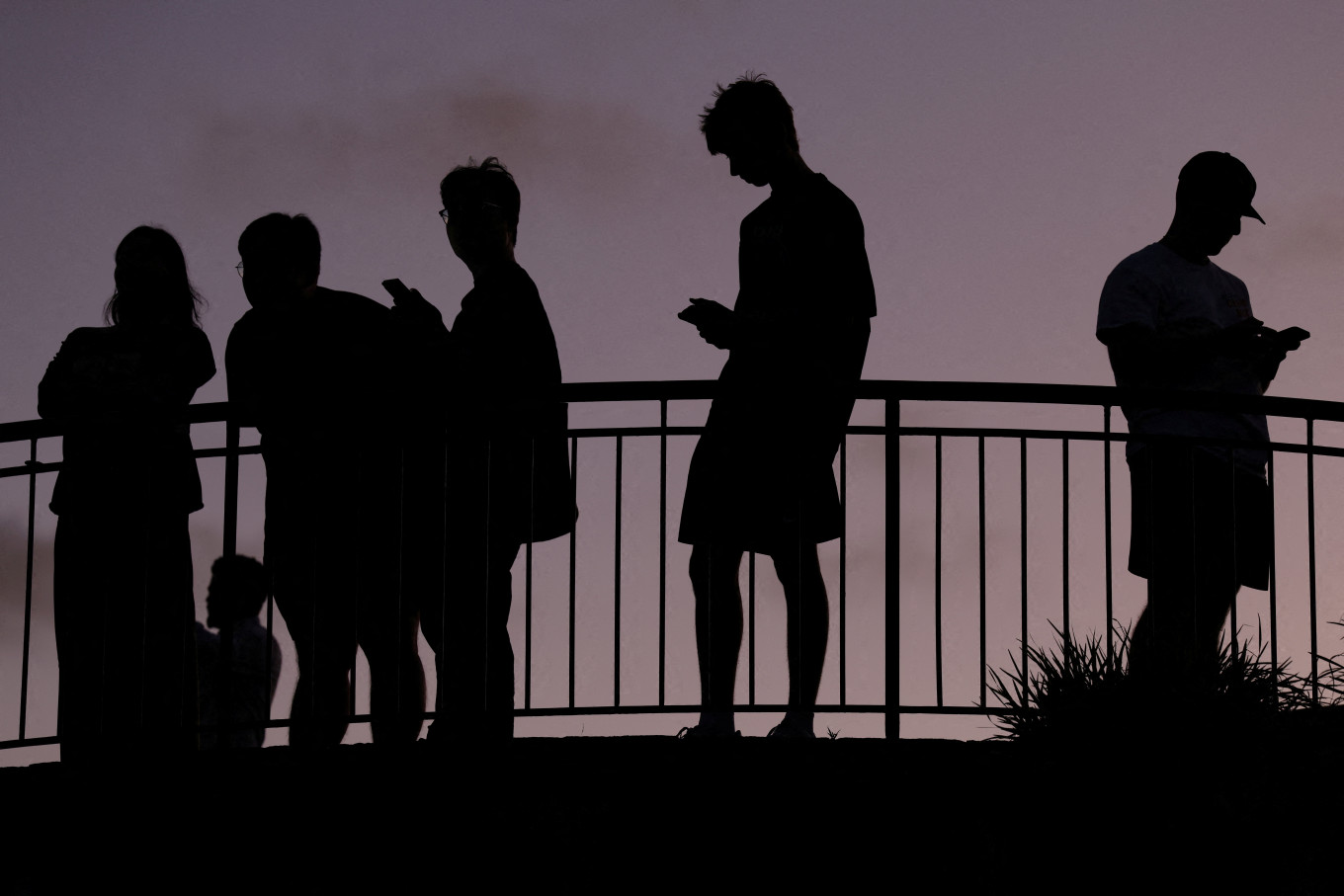 People use their mobile phones on Dec. 8, 2025, in Brisbane, Australia, ahead of a new law banning social media for users under 16. The social media ban is set to take effect, part of a broader global crackdown. (Reuters/Hollie Adams)
A
ustralia’s decision to ban social media for children under 16 has reverberated across the world, prompting countries to ask whether they have done enough to shield young people from the harms of the digital world.
Although controversial, the policy has forced an uncomfortable question into the spotlight: Are states failing to protect children from technologies that develop far faster than our ability to regulate them?
For more than a decade, the warnings have been mounting. Children have taken their own lives after enduring relentless cyberbullying. Teenagers report rising anxiety and body dysmorphia driven by idealized online imagery, with some reports noting that children as young as 10 express interest in using anti-aging beauty products.
There have also been numerous reports of children being preyed upon or blackmailed by online predators, and even cases of young people committing crimes after being radicalized by extreme ideologies.
Academic research, while still limited, reinforces these concerns. A 2022 Oxford University study involving 17,400 adolescents found a negative association between social media use and life satisfaction, particularly among girls aged 11–13 and boys aged 14–15.
More recently, a 2025 peer-reviewed study conducted by researchers at the Karolinska Institute in Sweden and Oregon Health & Science University in the United States tracked more than 8,300 children from ages 10 to 14 and linked increased social media use to rising inattention symptoms, suggesting possible effects on concentration and cognitive development.

Indonesia has not stood still amid these growing warnings. In March, President Prabowo Subianto signed a government regulation on child protection on digital platforms, with the Communications and Digital Ministry currently drafting technical guidelines for its implementation.