The Jakarta Post
Please Update your browser
Your browser is out of date, and may not be compatible with our website. A list of the most popular web browsers can be found below.
Just click on the icons to get to the download page.


Popular Reads
Top Results
No results found. Please check your search term and try again
Can't find what you're looking for?
View all search results
Popular Reads
Top Results
No results found. Please check your search term and try again
Can't find what you're looking for?
View all search resultsAn unhistorical history book
Rather than erasing dark chapters of Indonesian history, the government should allow marginalized voices to tell their stories, ensuring the younger generation learns comprehensively about what the nation did.
Change text size
Gift Premium Articles
to Anyone
Share the best of The Jakarta Post with friends, family, or colleagues. As a subscriber, you can gift 3 to 5 articles each month that anyone can read—no subscription needed!
 Set as preferred source
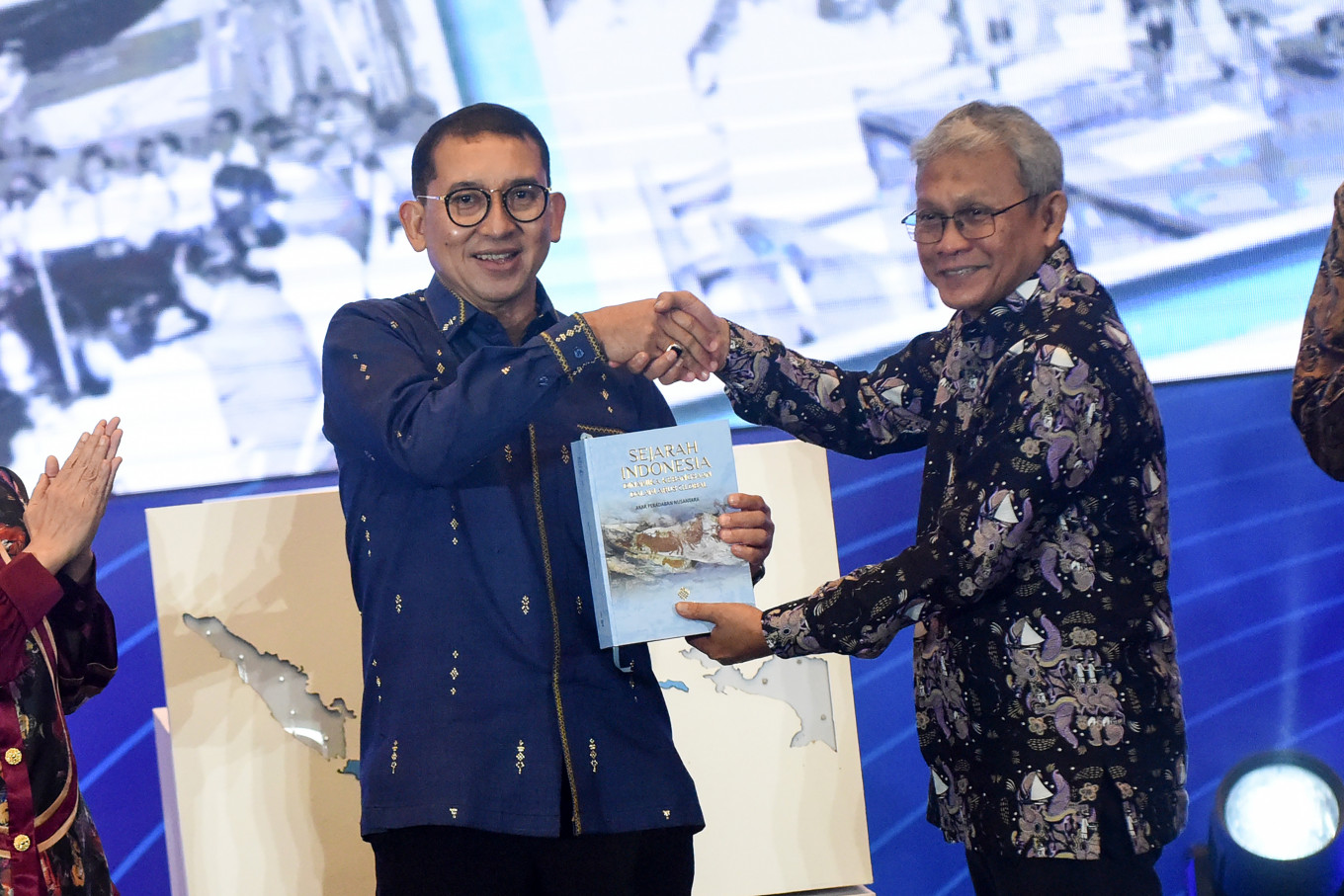 Indonesia’s Culture Minister Fadli Zon (left) receives a copy of the book “Sejarah Indonesia” from Susanto Zuhdi, chairman of the Indonesian history rewriting team, during the soft launch of “Sejarah Indonesia: Dinamika Kebangsaan dalam Arus Global” on Dec. 14, 2025, at Plaza Insan Berprestasi, the Ministry of Primary and Secondary Education complex, in Jakarta. The Culture Ministry launched the book as a reference to help Indonesians recall the nation’s collective historical memory. (Antara/Indrianto Eko Suwarso)
A
fter months of delays, the government has finally launched, after a fashion, the contentious volumes containing what politicians are calling the official historical narrative of the country.
In a modest ceremony in Jakarta on Sunday, Culture Minister Fadli Zon unveiled the 10-volume, 8,000-page collection covering Indonesia’s history from the prehistoric era to the early days of President Prabowo Subianto’s administration. According to the minister, the project, written and edited over the past year by more than 100 historians, aims to "enrich the public’s understanding of Indonesia’s journey up to the present day."
But despite the fanfare, no one can actually read the new history book. Not the public, nor historians outside the drafting team. One editor admitted the final draft is still undergoing a "refinement process".
The recent ceremony, Fadli explained, served merely as a "soft launch", with the final version to be published at an indefinite date in 2026. The event was timed to coincide with National History Day, which commemorates the inaugural Indonesian history seminar held in Yogyakarta on Dec. 14-17, 1957.
Fadli’s project has faced stark opposition from the start, with historians and activists criticizing its secretive nature. Little information about the draft or its methodology has been made public. The only time the text saw the light of day was in July, when the Culture Ministry held a series of brief public discussions in four universities.
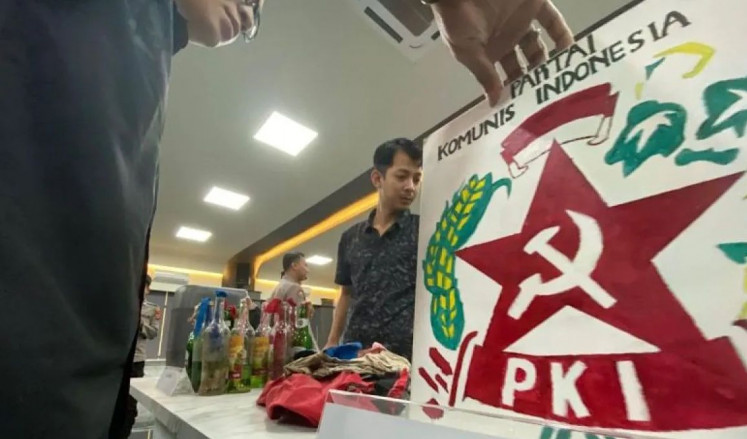
The government’s secrecy raises serious suspicions regarding this attempt to codify the country's official narrative. Critics argue the book is an attempt by Fadli and his office to whitewash Indonesia’s "dark chapters", specifically the mass rapes during the May 1998 riots near the end of the New Order regime, and the mass killings of members and sympathizers of the Indonesian Communist Party (PKI) in 1965-1966.

The latter event marked a start to Soeharto’s three-decade rule of Indonesia, and the former was part of events that predated his fall from grace. While Prabowo named his former father-in-law, Soeharto, a national hero last month.