TheJakartaPost
Please Update your browser
Your browser is out of date, and may not be compatible with our website. A list of the most popular web browsers can be found below.
Just click on the icons to get to the download page.


Popular Reads
Top Results
No results found. Please check your search term and try again
Can't find what you're looking for?
View all search results
Popular Reads
Top Results
No results found. Please check your search term and try again
Can't find what you're looking for?
View all search resultsForests, fuel and food: Is expanding oil palm to Papua worth the cost?
Forest loss to palm oil plantations directly weakens these dimensions by increasing disaster risk and exposing communities to instability.
Change text size
Gift Premium Articles
to Anyone
Share the best of The Jakarta Post with friends, family, or colleagues. As a subscriber, you can gift 3 to 5 articles each month that anyone can read—no subscription needed!
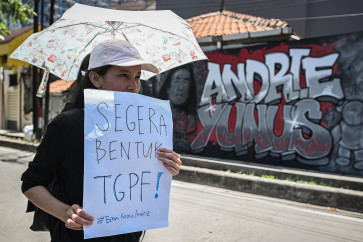
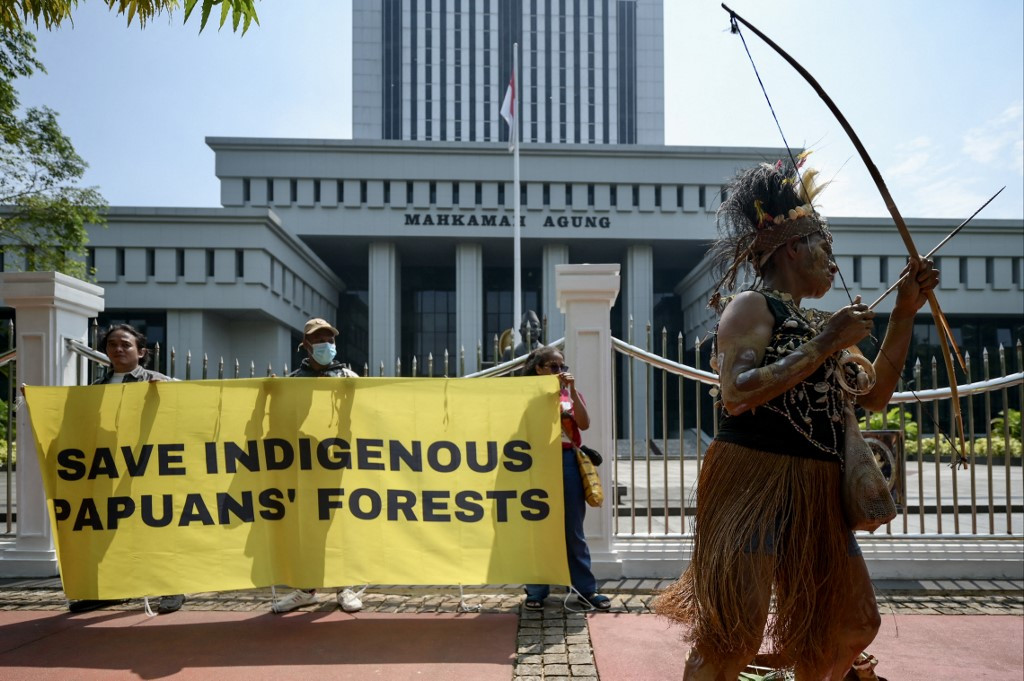 Representatives of the Awyu and Moi indigenous communities protest on May 27, 2024, in front of the Supreme Court building in Jakarta. They were calling for the country’s highest court to revoke the permits of palm oil companies that are set to operate in Papua, which could potentially clear approximately 300 square kilometers of customary forest. (AFP/Bay Ismoyo)
E
arlier this month, President Prabowo Subianto suggested that Papua should be planted with oil palm to boost biofuel production and reduce Indonesia’s dependence on imported fuel. The rationale is clear: Indonesia spends hundreds of trillions of rupiah annually on fuel subsidies and imports, making the strengthening of domestic energy supply a top policy priority.
At first glance, oil palm appears to offer an attractive solution. In 2023, Indonesia produced 47 million tonnes of crude palm oil, accounting for roughly 54 percent of global exports and reinforcing its position as the world’s largest producer. The crop delivers high yields per hectare, supports millions of livelihoods and serves as a strategic input for biodiesel. Compared to many alternatives, oil palm generates more output on less land, reinforcing its appeal from a narrow production perspective.
However, when expansion is proposed in forested regions such as Papua, the policy calculus fundamentally changes. The question is no longer simply how much fuel can be produced, but at what cost, and over what time horizon.
For a country like Indonesia, where 63 percent of the land is classified as forest, these landscapes are not "idle assets" waiting to be converted into more productive uses. They are complex ecological systems providing services essential to long-term food security and economic stability. These include regulating water flows, preventing soil erosion, storing carbon, moderating local climates and sustaining biodiversity.
In Papua, forests also underpin indigenous food systems, including sago cultivation, hunting and fishing, which remain central to local livelihoods and nutrition. Yet, these contributions rarely appear in GDP calculations or energy balance sheets. As a result, policies that prioritize short-term fuel output risk systematically undervaluing the broader economic and social worth of standing forests.
When forests are cleared, the costs tend to surface later. The loss of ecosystem services increases exposure to floods and droughts, reduces agricultural productivity and inflates public spending on disaster response and infrastructure repair.

Recent flooding disasters in parts of Sumatra, widely linked to extensive deforestation and land-use change, offer a stark illustration. These floods have claimed more than 1,000 lives, injured thousands and destroyed hundreds of thousands of homes. These are not abstract environmental risks; they are tangible human and fiscal consequences.