The Jakarta Post
Please Update your browser
Your browser is out of date, and may not be compatible with our website. A list of the most popular web browsers can be found below.
Just click on the icons to get to the download page.


Popular Reads
Top Results
No results found. Please check your search term and try again
Can't find what you're looking for?
View all search results
Popular Reads
Top Results
No results found. Please check your search term and try again
Can't find what you're looking for?
View all search resultsThe limits of responsible business labels in nickel industry
Nickel smelter companies have increasingly worked with major national outlets such as Kompas, CNN Indonesia, and Tempo to run advertorials and sponsored content.
Change text size
Gift Premium Articles
to Anyone
Share the best of The Jakarta Post with friends, family, or colleagues. As a subscriber, you can gift 3 to 5 articles each month that anyone can read—no subscription needed!
 Set as preferred source
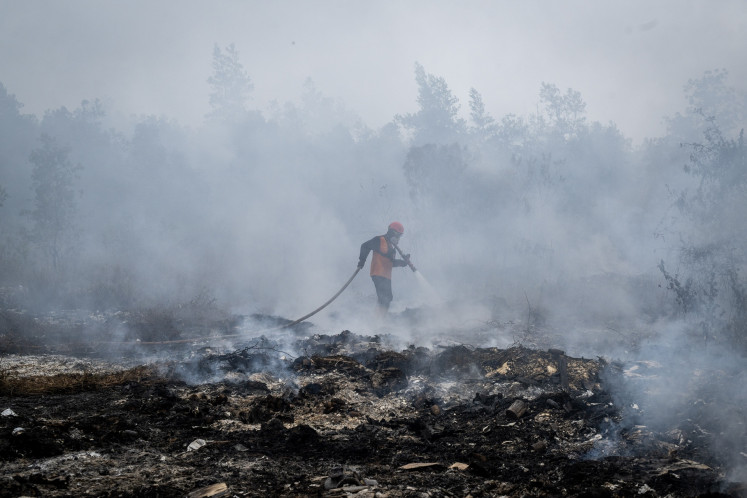
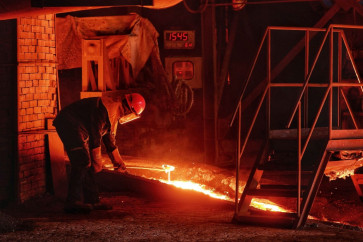
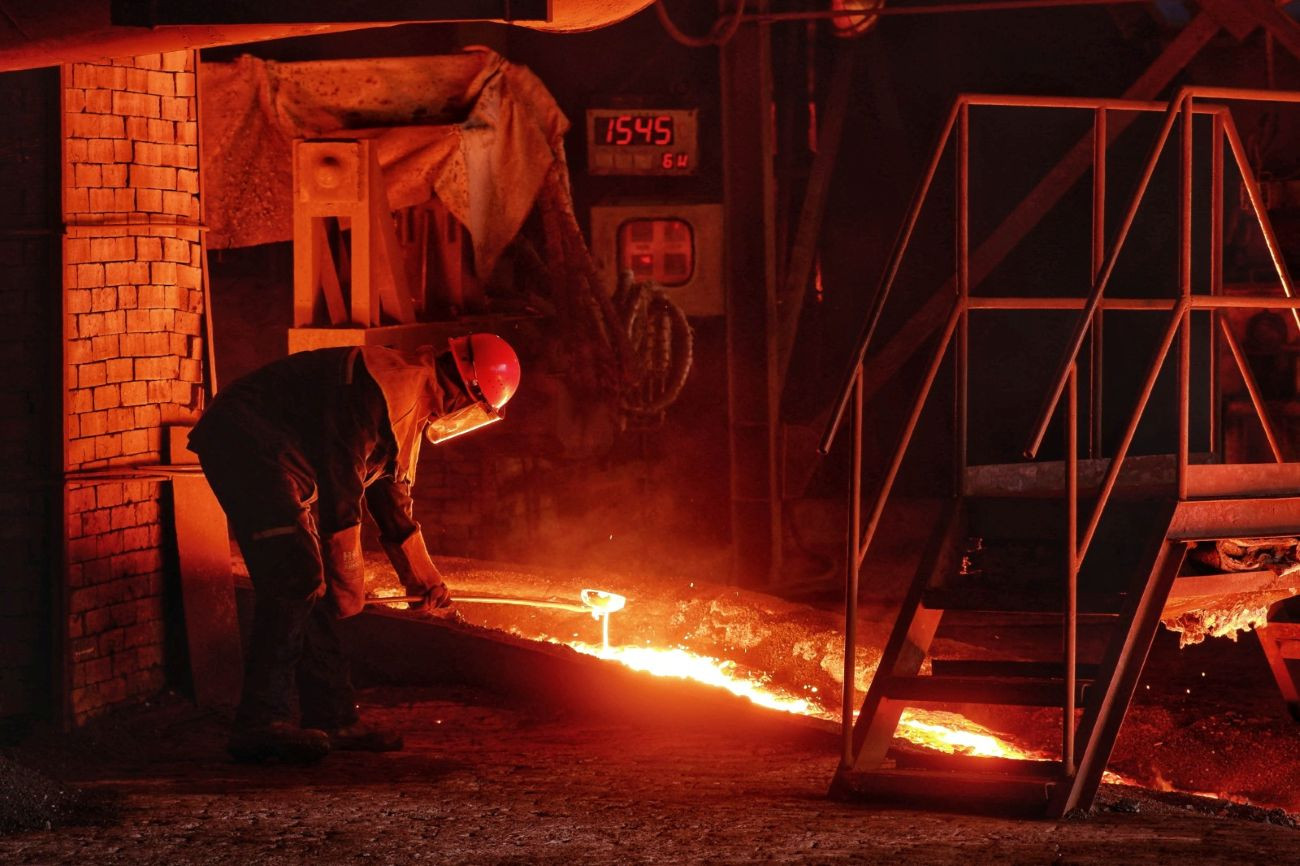 Playing with fire: A worker in protective gear uses a tool to scoop molten metal on Sept. 16, 2025 at Harita Nickel’s smelting facility on Obi Island in South Halmahera, North Maluku. (AFP/Daeng Mansur)
O
n Nov. 26, the SETARA Institute, a human rights monitoring organization, presented its 2025 Business and Human Rights Award (BHAM) to PT Trimegah Bangun Persada (TBP), a key entity within the Harita Nickel group, one of the major players in nickel mining and smelting. TBP received a score of 65, rating B, and was classified as a Business and Human Rights (BHR) Early Adopting Company.
The award is based on the Responsible Business Conduct (RBC) Benchmark, which evaluates corporate performance in the palm oil and mining sectors. The benchmark assesses impacts across three critical pillars: indigenous peoples and local communities, including Free, Prior and Informed Consent, land conflicts, and relocation; the environment; and workers’ rights, covering freedom of association, safety, wages and social security.
However, the methodology has inherent gaps. Paper-based indicators dominate the assessment and account for 60 percent of the weighting. This approach prioritizes paperwork, including written policies, institutional frameworks, due diligence procedures and grievance mechanisms.
On-the-ground indicators, which assess real risks and impacts by examining allegations of serious violations, make up only 40 percent. In practice, a company’s score can rise through administrative completeness even when performance in the field remains contested.
A further problem, one not explicitly addressed in the methodology but crucial to the context, is the scope of the assessment. TBP is only one part of Harita Nickel’s integrated operation on Obi Island, North Maluku. The group functions as a complex corporate network in which subsidiaries and joint ventures share supply chains, energy resources and processing stages.
In practice, granting awards on a partial basis is ineffective. It allows corporations to use one “compliant” entity to project ethical leadership, while externalizing environmental liabilities and “dirty work” to other entities within the same corporate group.

The SETARA Award and Harita’s claimed "compliance" deserve closer scrutiny, as both reflect the broader realities shaping Indonesia’s nickel sector today.