The Jakarta Post
Please Update your browser
Your browser is out of date, and may not be compatible with our website. A list of the most popular web browsers can be found below.
Just click on the icons to get to the download page.


Popular Reads
Top Results
No results found. Please check your search term and try again
Can't find what you're looking for?
View all search results
Popular Reads
Top Results
No results found. Please check your search term and try again
Can't find what you're looking for?
View all search resultsHow to deal with involution in China
Multiple factors have contributed to overcapacity in China due to intense domestic competition, and though the government has several anti-involution measures in place, it will take time before they begin effecting any change.
Change text size
Gift Premium Articles
to Anyone
Share the best of The Jakarta Post with friends, family, or colleagues. As a subscriber, you can gift 3 to 5 articles each month that anyone can read—no subscription needed!
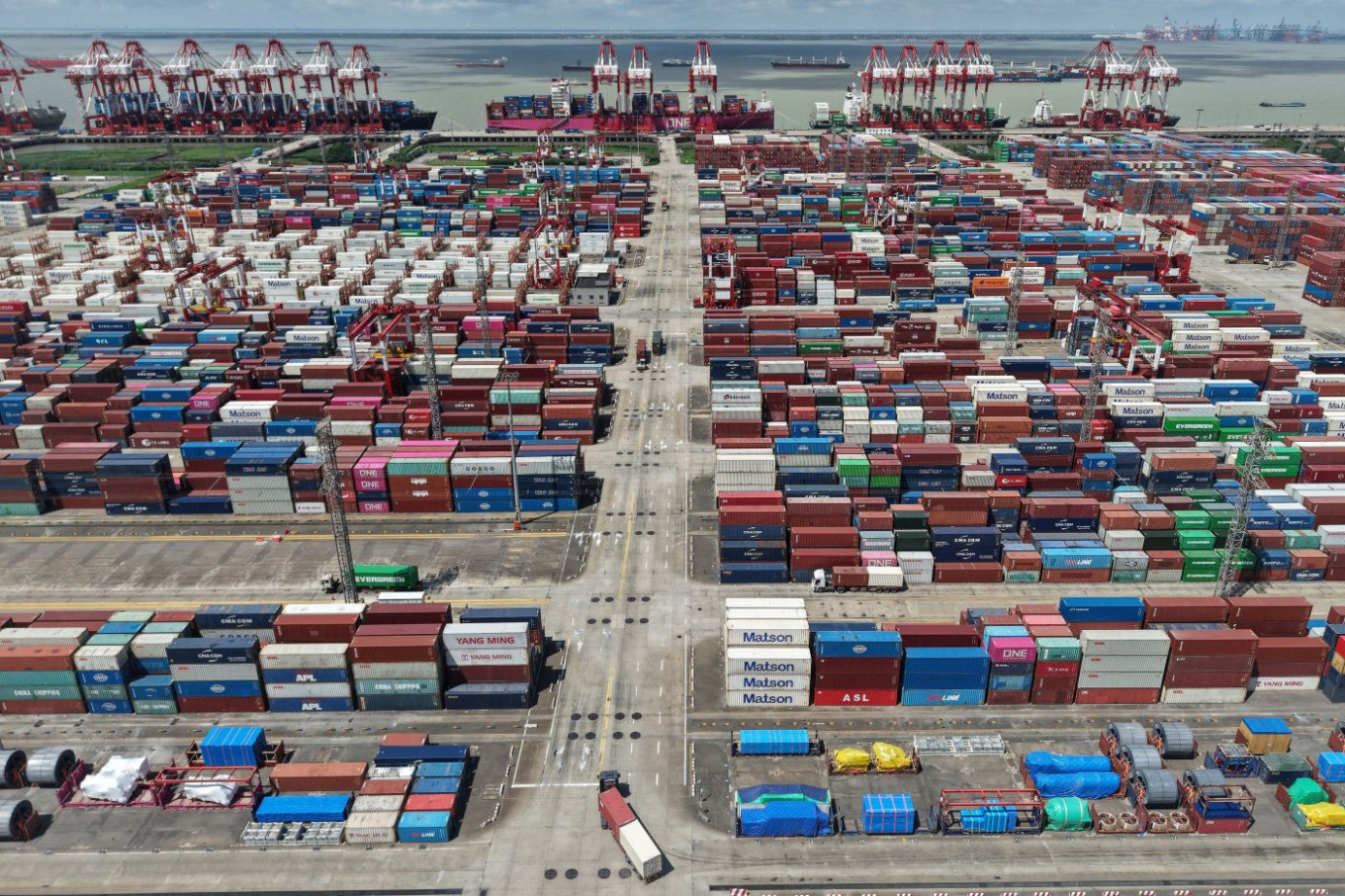 Pile it up: Stacks of containers are seen during routine export and import operations at the Shanghai International Port in China on Nov. 7, 2025. (AFP/Stringer)
The term “involution”, meaning curling inward, became common slang in China in the 2020s to reflect excessive competition in social and economic life, where students, workers and even business leaders felt overworked, stressed and unable to get out of huge external and internal stresses.
The concept of involution was coined by sociologists and anthropologists to describe conditions in rural societies whereby increasing labor inputs did not seem to yield tangible benefits.
The term surfaced on Chinese social media in 2020 to become one of the top 10 buzzwords, particularly relating to students who are pushed by eager parents to spend more time on preparing for competitive examinations. Gig workers operating “996” (9 a.m. to 9 p.m., six days a week), who felt the intense pressure of making deliveries on time while not appearing to get more income, also used this term to explain their dilemma.
The Chinese capacity to work hard and longer hours than everybody else has been attributed to the nation’s resurgence in competitiveness in export industries, notably in electronics, consumer products, EVs, batteries and the like.
At roughly the same time, the slang phrase “tang ping” (lying flat) emerged on social media among the youth, signaling a passive resistance movement to 996 or even worse, the 007 (midnight to midnight, seven days a week) working condition.

After the COVID-19 pandemic, when China emerged even more competitive globally in manufacturing, the term involution became associated with overproduction, price wars and cutthroat competition.