TheJakartaPost
Please Update your browser
Your browser is out of date, and may not be compatible with our website. A list of the most popular web browsers can be found below.
Just click on the icons to get to the download page.


Popular Reads
Top Results
No results found. Please check your search term and try again
Can't find what you're looking for?
View all search results
Popular Reads
Top Results
No results found. Please check your search term and try again
Can't find what you're looking for?
View all search resultsInternational aid and the state: Nargis Myanmar vs Senyar Aceh
In the aftermath of the disaster devastating parts of Sumatra, the lesson of Nargis is relevant not because Indonesia is on the brink of total failure, but because the moral test is identical.
Change text size
Gift Premium Articles
to Anyone
Share the best of The Jakarta Post with friends, family, or colleagues. As a subscriber, you can gift 3 to 5 articles each month that anyone can read—no subscription needed!
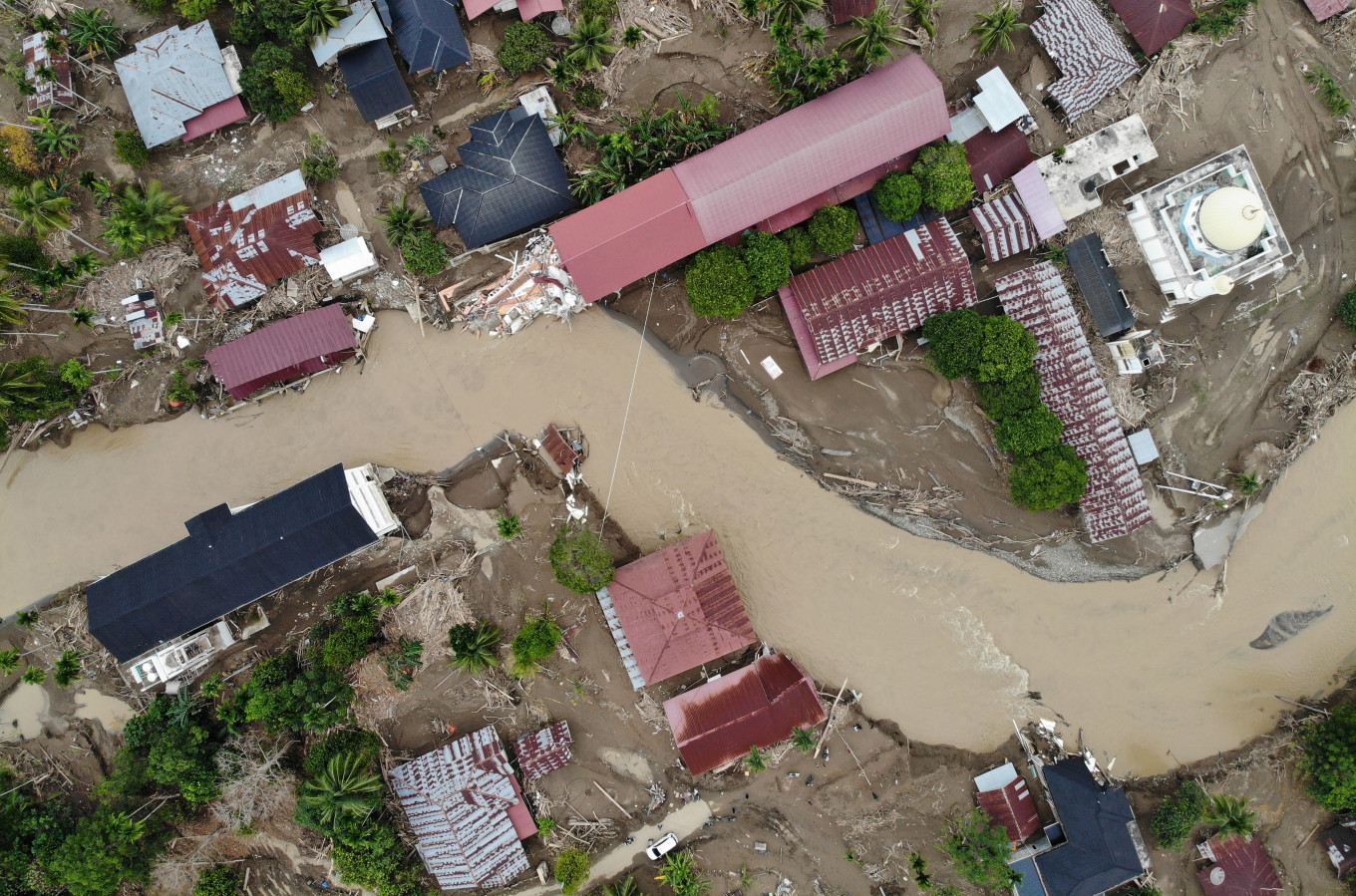 An aerial photo shows a newly formed river cutting through a residential area in Pidie Jaya, Aceh, on Dec. 18, 2025. Flash floods and the overflow of the Meureudu River on Nov. 26, 2025, caused the formation of the new waterway that split the neighborhood. (Antara/Irwansyah Putra)
H
istory rarely repeats itself exactly, but it has a grim habit of repeating the same moral tests. The actors change and the locations shift, yet the question remains identical: when disaster strikes, does the state choose humility and cooperation, or suspicion and control?
Cyclone Nargis, which struck Myanmar in 2008, provides the clearest example of how the wrong answer can turn a natural catastrophe into a man-made tragedy.
Nargis hit the Irrawaddy Delta with devastating force. Entire villages vanished within hours, rice fields turned into saline wastelands, and over 130,000 people were killed or went missing. Nature was indeed ruthless, but not unique. What made Nargis different was what happened after the storm passed. The international community moved quickly, mobilizing medical teams, logistics and expertise. The global humanitarian infrastructure worked as intended. What failed was the state.
Myanmar’s military junta chose to close its doors. Visas for volunteers were delayed, access to affected areas was restricted and aid distribution was placed entirely under military control. In those critical first weeks, when rapid assistance meant the difference between life and death, the state became the primary obstacle. Thousands who survived the wind and water eventually succumbed to hunger, disease and neglect. These deaths were not the result of the cyclone; they were the result of policy.
Historians often deal in counterfactuals. In the case of Nargis, the haunting question is simple: How many lives could have been saved if aid had been allowed to flow unimpeded? While the exact number remains unknowable, experience suggests the difference would have been immense. Nargis thus stands as a stark monument to how political choices can exacerbate human suffering.
The junta justified its obstruction in the name of sovereignty and national security. They viewed foreign aid not as solidarity, but as a threat. This logic is familiar to regimes built on fear: control is valued above capacity, image above safety. Success is measured not by lives saved, but by the appearance of uncompromised sovereignty.

The international response was swift and forceful. The United Nations issued public condemnations; the United States and European Union questioned the legitimacy of the restrictions. Human rights organizations argued that the junta’s policy constituted a violation of the right to life. There was even serious debate over whether such obstructionism qualified as a crime against humanity.