The Jakarta Post
Please Update your browser
Your browser is out of date, and may not be compatible with our website. A list of the most popular web browsers can be found below.
Just click on the icons to get to the download page.


Popular Reads
Top Results
No results found. Please check your search term and try again
Can't find what you're looking for?
View all search results
Popular Reads
Top Results
No results found. Please check your search term and try again
Can't find what you're looking for?
View all search resultsWhat the Philippines chairmanship means for ASEAN
ASEAN as a liberal institutionalist entity continues to suffer from political realist power plays which strain ASEAN unity.
Change text size
Gift Premium Articles
to Anyone
Share the best of The Jakarta Post with friends, family, or colleagues. As a subscriber, you can gift 3 to 5 articles each month that anyone can read—no subscription needed!
 Set as preferred source
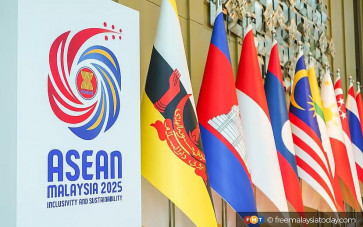
 At the 47th ASEAN Summit in early November, Malaysia concluded its chairmanship of the bloc, passing the baton to the Philippines. (Image courtesy of Free Malaysia Today)
W
ith the Philippines as the 2026 ASEAN chair, it might impress upon many that security issues central to the Philippines like the South China Sea (SCS) will take center stage in the ASEAN’s agenda.
Now that the ball is in the Philippines’ court, there is a natural expectation from its domestic audience that there will be substantial progress on the Code of Conduct of (COC) in the SCS to prevent further incidents such as restrictions of fishing activities and resupply missions, water-cannoning usage and ramming maneuvers.
As chair, therefore, the Philippine government would be remiss not to maximize its convening powers to shape the outcome of the COC. No less than Philippine President Ferdinand Marcos Jr. has expressed his hope for the COC to be finalized and for Chinese President Xi Jinping to be present in Manila in its signing.
Notably, regardless of the chairmanship, the Philippines has consistently advocated for a legally binding COC to enhance regional stability, which also redounds to the benefit other Southeast Asian claimant-states and maritime stakeholders such as Malaysia, Vietnam and Indonesia. With an effective COC and stable SCS, there will be less incentive for extra-regional powers to intensify their military posturing and minilateral activities.
Certainly, Southeast Asia or ASEAN is not just about the SCS or high politics. A wide range of issues affects individual member states and the region as a whole. Against this backdrop, the Philippines must strike a balance in setting the agenda and ensure that its plans and programs align with the ASEAN Community Vision 2045.
The Philippines’ chairmanship will be shaped by three main factors: its own concerns, interests and priorities; continuity with Malaysia’s agenda as 2025 ASEAN chair and ongoing intra-ASEAN, regional and global challenges.

At the official launch of the Philippines’ ASEAN chairmanship in Manila last November, under the theme “Navigating Our Future Together”, President Marcos Jr outlined three strategic priorities: peace and security anchors, prosperity corridors and people empowerment.