The Jakarta Post
Please Update your browser
Your browser is out of date, and may not be compatible with our website. A list of the most popular web browsers can be found below.
Just click on the icons to get to the download page.


Popular Reads
Top Results
No results found. Please check your search term and try again
Can't find what you're looking for?
View all search results
Popular Reads
Top Results
No results found. Please check your search term and try again
Can't find what you're looking for?
View all search resultsFragmented governance the hallmark of Prabowo’s presidency
As long as Jokowi loyalists remain within Prabowo’s government—not merely to sustain influence but to survive politically ahead of 2029—fragmented governance is likely to persist.
Change text size
Gift Premium Articles
to Anyone
Share the best of The Jakarta Post with friends, family, or colleagues. As a subscriber, you can gift 3 to 5 articles each month that anyone can read—no subscription needed!
 Set as preferred source
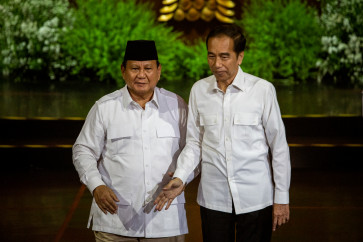
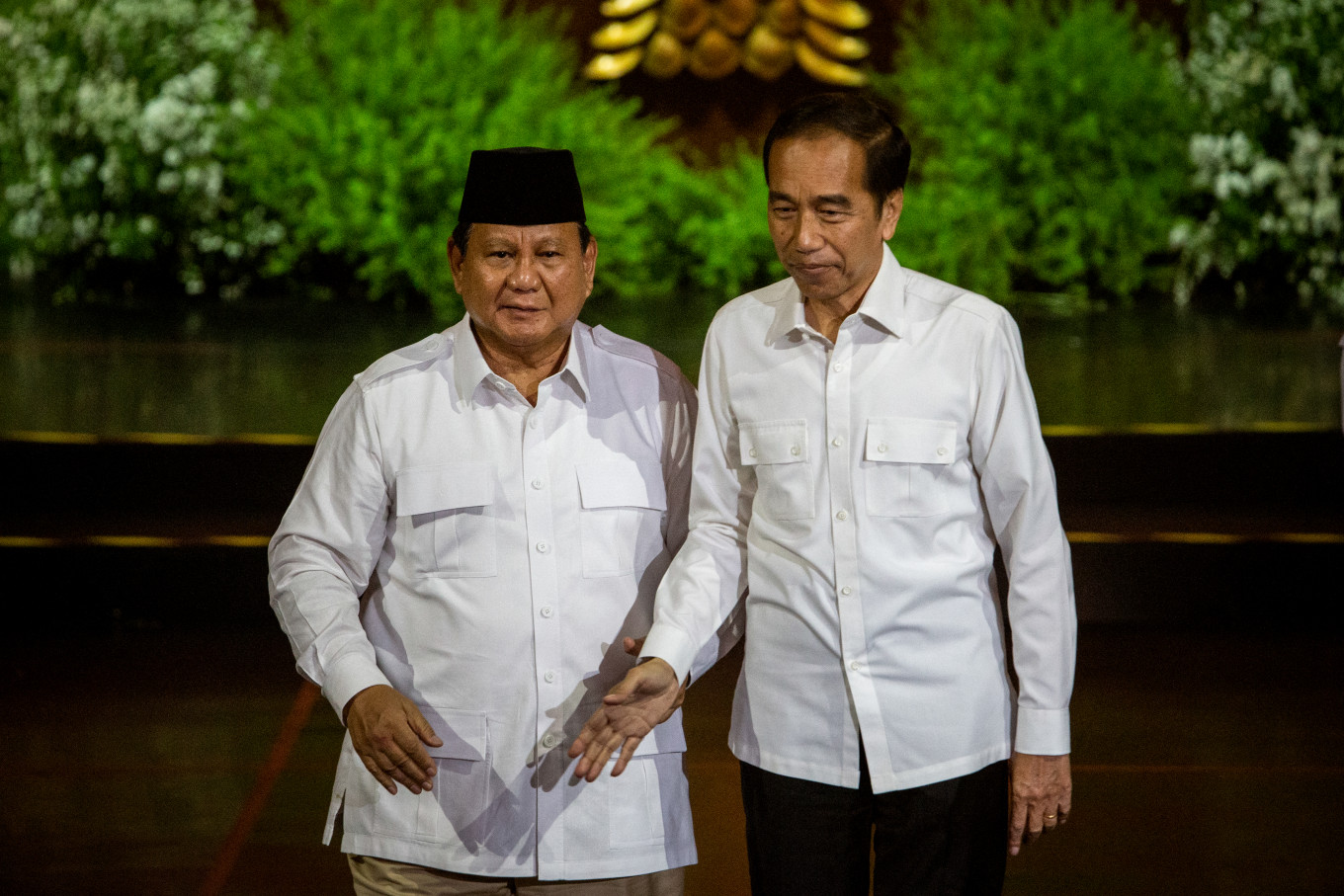 Doubleheaders: President Prabowo Subianto (left), who also chairs the Gerindra Party, and former president Joko “Jokowi“ Widodo pose on stage during the party's 17th anniversary in Bogor, West Java, on Feb. 15, 2025. (AFP/Aditya Aji)
W
hen Prabowo Subianto won the 2024 presidential election with Gibran Rakabuming Raka, many analysts described the 2024–2029 cabinet as a “joint venture” government. It was not merely a coalition of parties, but a coalition of loyalties: Some ministers represent former president Joko “Jokowi” Widodo’s political network, others are Prabowo’s direct picks and the rest are elite compromises that exchange political stability for cabinet seats and access to state budgets.
Early cabinet attempts to align visions demonstrate that the state could perform as one orchestra. Yet, after the first year, what has emerged instead is fragmentation.
This year's frequent inter-ministerial disputes show the reality of this fragmentation. The Morowali special airport case highlighted tension between the Transportation Ministry and the local government over permits and location. The debt of the Whoosh, the Jakarta-Bandung high-speed rail, sparked an open disagreement: Finance Minister Purbaya refused to absorb additional fiscal burden, while the Transportation Ministry insisted on safeguarding a strategic national asset.
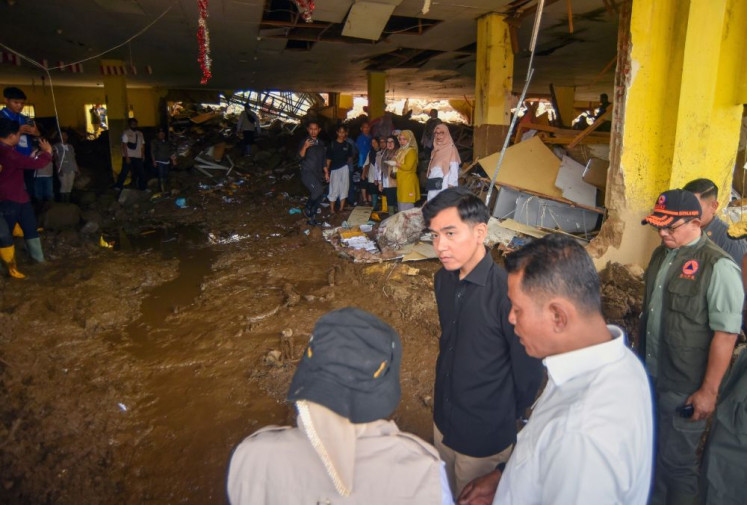
the Forestry Ministry, the National Disaster Mitigation Agency (BNPB) and regional governments clashed over Sumatra logwood disaster management. Idle regional funds triggered public reprimands from Purbaya, while Home Affairs Minister Tito Karnavian attempted to diffuse tensions without humiliating local officials.
And the clearest discrepancy surfaced when the bailout of Garuda Indonesia, seen by the State-owned Enterprises Ministry as vital to national reputation, was interpreted by the Finance Ministry as a long-term fiscal risk.
Graham Allison, in Essence of Decision, warned that “government does not act as a single rational unit, but as the product of bargaining among organizations with competing interests.” In Indonesia in 2025, the adage is no longer theoretical, it mirrors reality.

When Purbaya rejected the Whoosh debt, he was not defying the President; he was defending fiscal jurisdiction. When Energy Minister Bahlil Lahadalia projects investor confidence while Purbaya raises alarms on governance, the divide is not merely about data, but also about political positioning and institutional responsibility. This is fragmented governance in full display.