TheJakartaPost
Please Update your browser
Your browser is out of date, and may not be compatible with our website. A list of the most popular web browsers can be found below.
Just click on the icons to get to the download page.


Popular Reads
Top Results
No results found. Please check your search term and try again
Can't find what you're looking for?
View all search results
Popular Reads
Top Results
No results found. Please check your search term and try again
Can't find what you're looking for?
View all search resultsJETP waits for takeoff
One of the JETP’s most ambitious and politically sensitive flagship goals, the early retirement of the Cirebon-1 coal-fired power plant, now appears to be effectively off the table.
Change text size
Gift Premium Articles
to Anyone
Share the best of The Jakarta Post with friends, family, or colleagues. As a subscriber, you can gift 3 to 5 articles each month that anyone can read—no subscription needed!
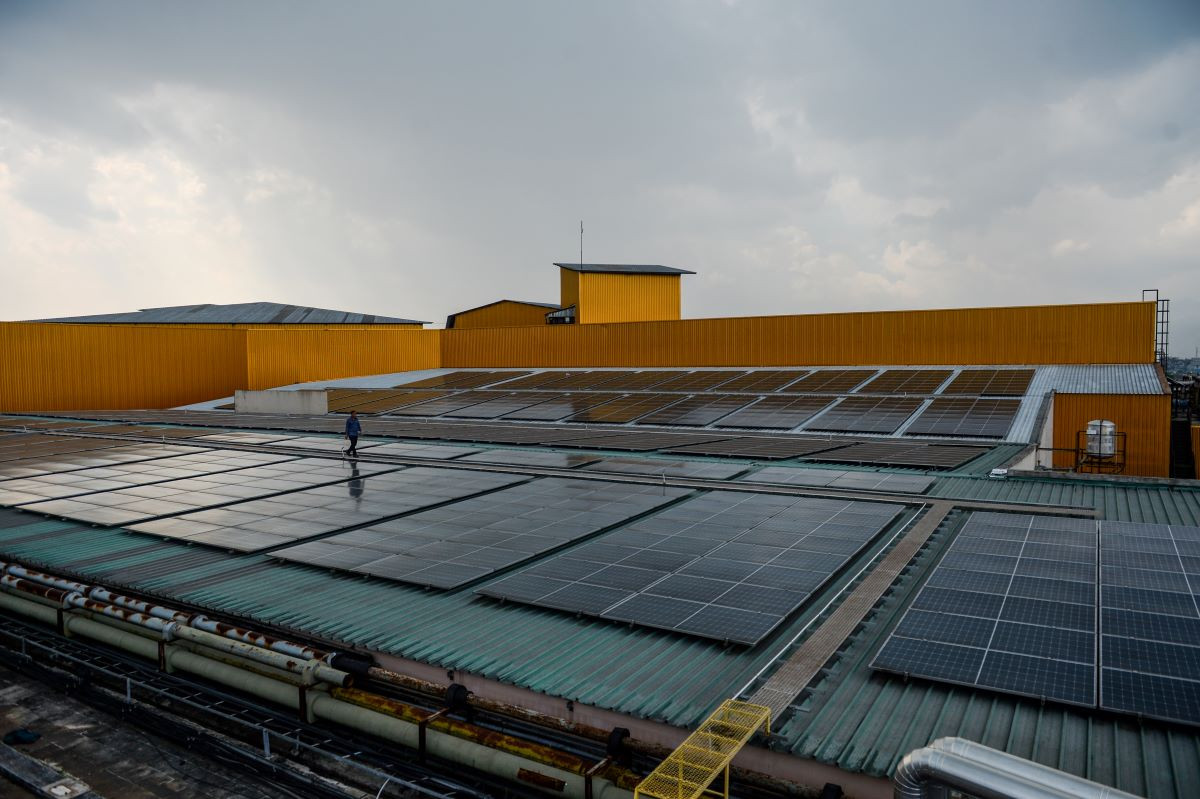 A technician inspects a rooftop solar power plant (PLTS) on Sept. 8, 2025 at Trans Studio Mall in Bandung, West Java. Data from the Energy and Mineral Resources Ministry show that as of July 2025, rooftop PLTS had reached a combined installed capacity of 538 megawatt peak across 10,882 customers.
(Antara/Raisan Al Farisi)
A technician inspects a rooftop solar power plant (PLTS) on Sept. 8, 2025 at Trans Studio Mall in Bandung, West Java. Data from the Energy and Mineral Resources Ministry show that as of July 2025, rooftop PLTS had reached a combined installed capacity of 538 megawatt peak across 10,882 customers.
(Antara/Raisan Al Farisi)

When the Just Energy Transition Partnership (JETP) was unveiled amid the fanfare of the Group of 20 Leaders’ Summit in Bali more than three years ago, it was billed as a landmark moment for Indonesia’s energy transition.
Backed by a US$21.6 billion financing pledge from advanced economies and multilateral lenders, the initiative raised hopes that Indonesia could accelerate its shift away from coal, double the renewable share of its energy mix to 34 percent by 2030, and achieve net-zero emissions in the power sector by 2050.
Three years on, however, the optimism has largely faded. For a program meant to serve as a catalyst for Indonesia’s energy transition, the JETP has so far shown modest progress on the ground.
According to a progress report published by the JETP Secretariat on Oct. 24, only $2.85 billion in financing had been approved as of September, with another $6.2 billion still in the approval pipeline. Even if those funds materialize, the combined amount would fall well short of half the original pledge.
More telling is where the money has gone. The single largest share of approved financing, around $1 billion, has been allocated to the MRT Jakarta East-West Line project, followed by $764.5 million earmarked in 2022 for the North-South Line. While mass transit is critical to reducing urban emissions, these projects were already part of Indonesia’s long-term infrastructure plans, raising questions about how transformative JETP funding has truly been.
Other allocations include lending programs and geothermal expansion in West Sumatra, alongside smaller renewable energy projects. Yet one of the JETP’s most ambitious and politically sensitive flagship goals, the early retirement of the Cirebon-1 coal-fired power plant, now appears to be effectively off the table, underscoring the difficulty of tackling coal head-on.

Global politics have also weighed heavily on the partnership. The United States’ withdrawal as a donor in March dealt a significant blow to momentum. Although Germany and Japan stepped in as coleads, the shift has yet to yield tangible progress on the ground.