TheJakartaPost
Please Update your browser
Your browser is out of date, and may not be compatible with our website. A list of the most popular web browsers can be found below.
Just click on the icons to get to the download page.


Popular Reads
Top Results
No results found. Please check your search term and try again
Can't find what you're looking for?
View all search results
Popular Reads
Top Results
No results found. Please check your search term and try again
Can't find what you're looking for?
View all search resultsWe don’t have to choose between sovereignty and humanity
The debate about foreign assistance is a proxy for a deeper question of whether the state can make fast, clear, citizen-first decisions under pressure.
Change text size
Gift Premium Articles
to Anyone
Share the best of The Jakarta Post with friends, family, or colleagues. As a subscriber, you can gift 3 to 5 articles each month that anyone can read—no subscription needed!
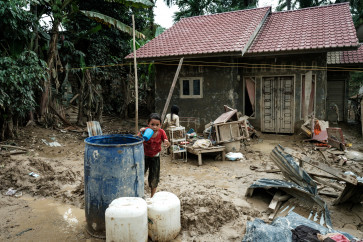
 A girl draws water from a storage tank on Dec. 15, 2025, in Babo, Aceh Tamiang, Aceh, following a flash flood. (AFP/Yasuyoshi Chiba)
F
ew issues touch our national nerve as quickly as the phrase “foreign assistance”. In the public imagination, it rarely lands as a purely humanitarian matter. It collides immediately with sovereignty, dignity and an old historical memory of outside powers arriving with a smile and staying with leverage.
That is why a discussion that should be practical, about water, medicine, electricity, shelter, often turns symbolic: who sounds toughest, who looks most “national”, who appears least dependent. The tragedy is that, in the middle of a real flood, symbolism is the most expensive currency a nation can spend.
There are, broadly, two instincts at work.
The first treats accepting help as a sign of weakness or worse, a gateway for external interests, political influence, special access, quiet pressure and diplomatic “billing” after the fact. This is not paranoia without context. Many nations, especially those with a long memory of intervention, carry a reflex to guard the gates.
The second instinct is more operational: the state is not “present” because it can do everything alone, but because it can organize every available resource, domestic and international, under a clear command, a strict protocol and transparent accountability.
In a major disaster, the state’s presence is measured less by statements and more by outcomes: how quickly clean water reaches a cut-off village, how fast a generator arrives, how soon evacuation can move the vulnerable and how reliably supplies keep flowing when roads are broken and bridges are gone.

This controversy grows when the confident phrase “we can handle it” meets the hard reality of a flood that severs supply lines and turns basic needs into an hourly countdown. Victims in evacuation posts do not debate sovereignty as a concept. They wait for tents, hygiene kits, medicine, baby food, safe drinking water and the reassurance that tomorrow will not be worse than today.