The Jakarta Post
Please Update your browser
Your browser is out of date, and may not be compatible with our website. A list of the most popular web browsers can be found below.
Just click on the icons to get to the download page.


Popular Reads
Top Results
No results found. Please check your search term and try again
Can't find what you're looking for?
View all search results
Popular Reads
Top Results
No results found. Please check your search term and try again
Can't find what you're looking for?
View all search resultsAnalysis: The shadow coup within NU: A paradox of power
Change text size
Gift Premium Articles
to Anyone
Share the best of The Jakarta Post with friends, family, or colleagues. As a subscriber, you can gift 3 to 5 articles each month that anyone can read—no subscription needed!
 Set as preferred source
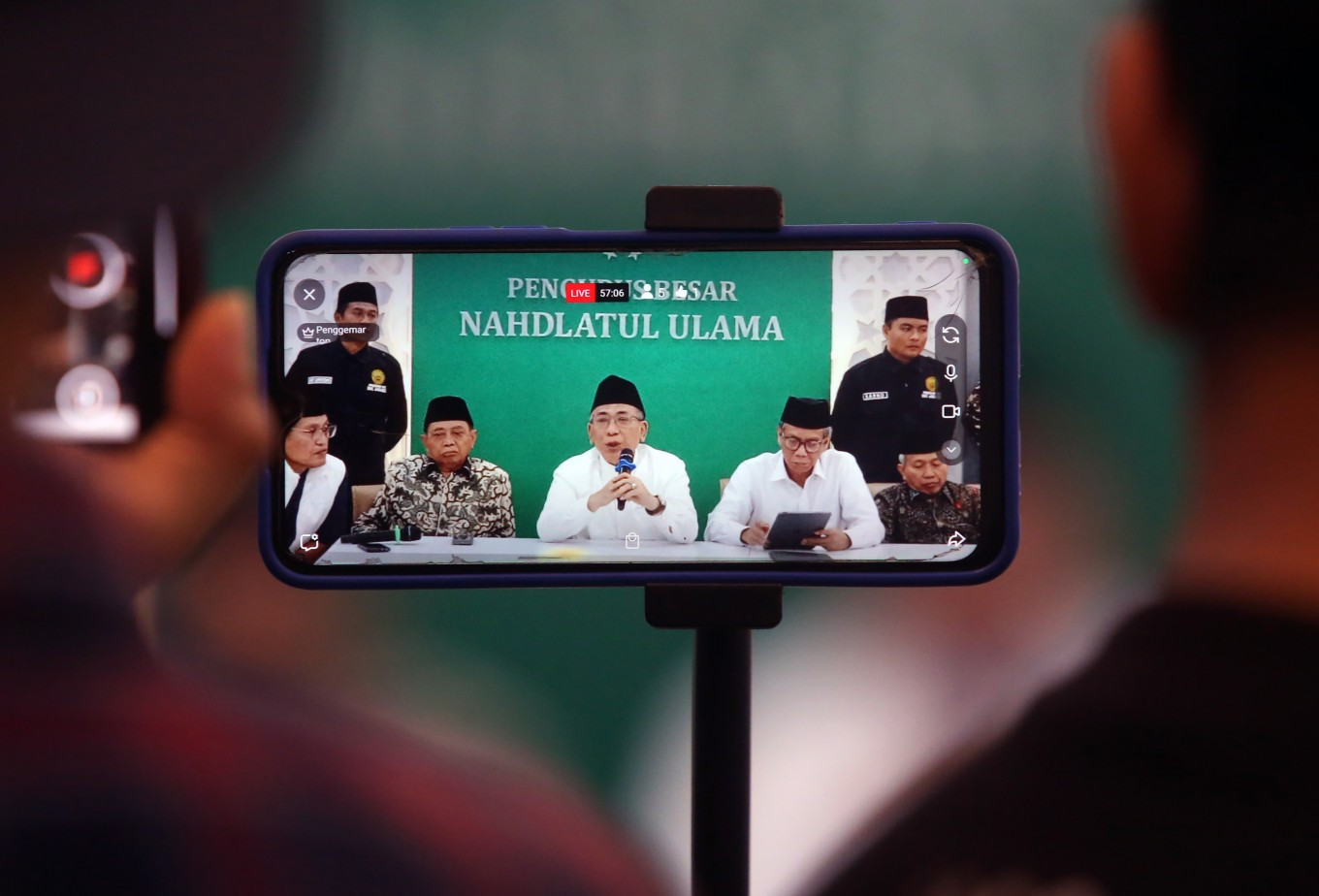 Indonesia’s largest Islamic organization Nahdlatul Ulama (NU) chairman Yahya Cholil Staquf (center), accompanied by the organization’s deputy chairman Masyhuri Malik (second left) and secretary-general Amin Said Husni (second right), gives a press statement on Dec. 3, 2025, regarding the refusal to step down as chairman in Jakarta. (Antara/Muhammad Iqbal)
I
n a surprising turn of events to cap off the year, Nahdlatul Ulama (NU), Indonesia's largest Muslim organization, has been shaken by turmoil that many observers are calling an internal coup. At the center of the storm is the sudden political ousting of Yahya Cholil Staquf as chairman of NU’s executive body Tanfidziyah.
The catalyst for his removal was Yahya's invitation of Peter Berkowitz, an academic described by critics as having ties to an "international Zionist network", to an internal NU event in August. Yahya, who has a history of engagement with Israel, apologized for the invitation, but it was to no avail.
While Yahya has refused to yield his position, the Syuriah, the organization’s supreme council, moved unilaterally. In an official plenary session held in Jakarta on Dec. 9, the council named senior NU cleric Zulfa Mustofa as the group's acting chairman. The move carried significant political weight, evidenced by the attendance of high-profile government officials and senior NU members: Religious Affairs Minister Nasaruddin Umar, Social Affairs Minister Saifullah Yusuf and East Java Governor Khofifah Indar Parawansa.
At face value, the move against Yahya appears paradoxical. Since his election as chairman of PBNU’s Tanfidziyah in 2021, Yahya has been widely perceived as a staunch ally of the ruling government. Under his leadership, NU has taken pragmatic, some say controversial, steps to align with state policies. Most notably, this included accepting mining concessions under a government scheme allowing mass organizations to manage coal mines.
This concession was formalized through a controversial revision of the Mining Law earlier this year. The law was ratified in just three days without meaningful public or expert consultation, sparking significant backlash. Supporters framed the deal as a path to financial independence for NU, while critics viewed it as a moral compromise that tethered the religious organization too closely to extractive interests and state patronage.
That said, internal power struggles are not new to the current political climate. Late last year, when President Prabowo Subianto was still president-elect, the Indonesian Chamber of Commerce and Industry (Kadin) underwent a similar upheaval. Its then-chairman, Arsjad Rasjid, who had led rival candidate Ganjar Pranowo's campaign, was ousted in favor of the Prabowo-backed Anindya Bakrie. Arsjad initially contested the move as unconstitutional but eventually stepped aside after a compromise was reached.

However, the current NU debacle presents a crucial difference. The Kadin coup was a move against a political rival. Yahya, by contrast, has given no indication of opposing state authority. If Yahya is indeed aligned with the government, why has he become the target of an internal purge?