The Jakarta Post
Please Update your browser
Your browser is out of date, and may not be compatible with our website. A list of the most popular web browsers can be found below.
Just click on the icons to get to the download page.


Popular Reads
Top Results
No results found. Please check your search term and try again
Can't find what you're looking for?
View all search results
Popular Reads
Top Results
No results found. Please check your search term and try again
Can't find what you're looking for?
View all search resultsMyanmar’s vote and the real contest in the north
Rather than the national polls, the outcome of the ongoing dynamics in Upper Myanmar between the KIA and the junta is a better political barometer for the country's course next year.
Change text size
Gift Premium Articles
to Anyone
Share the best of The Jakarta Post with friends, family, or colleagues. As a subscriber, you can gift 3 to 5 articles each month that anyone can read—no subscription needed!
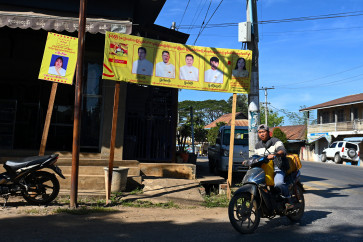
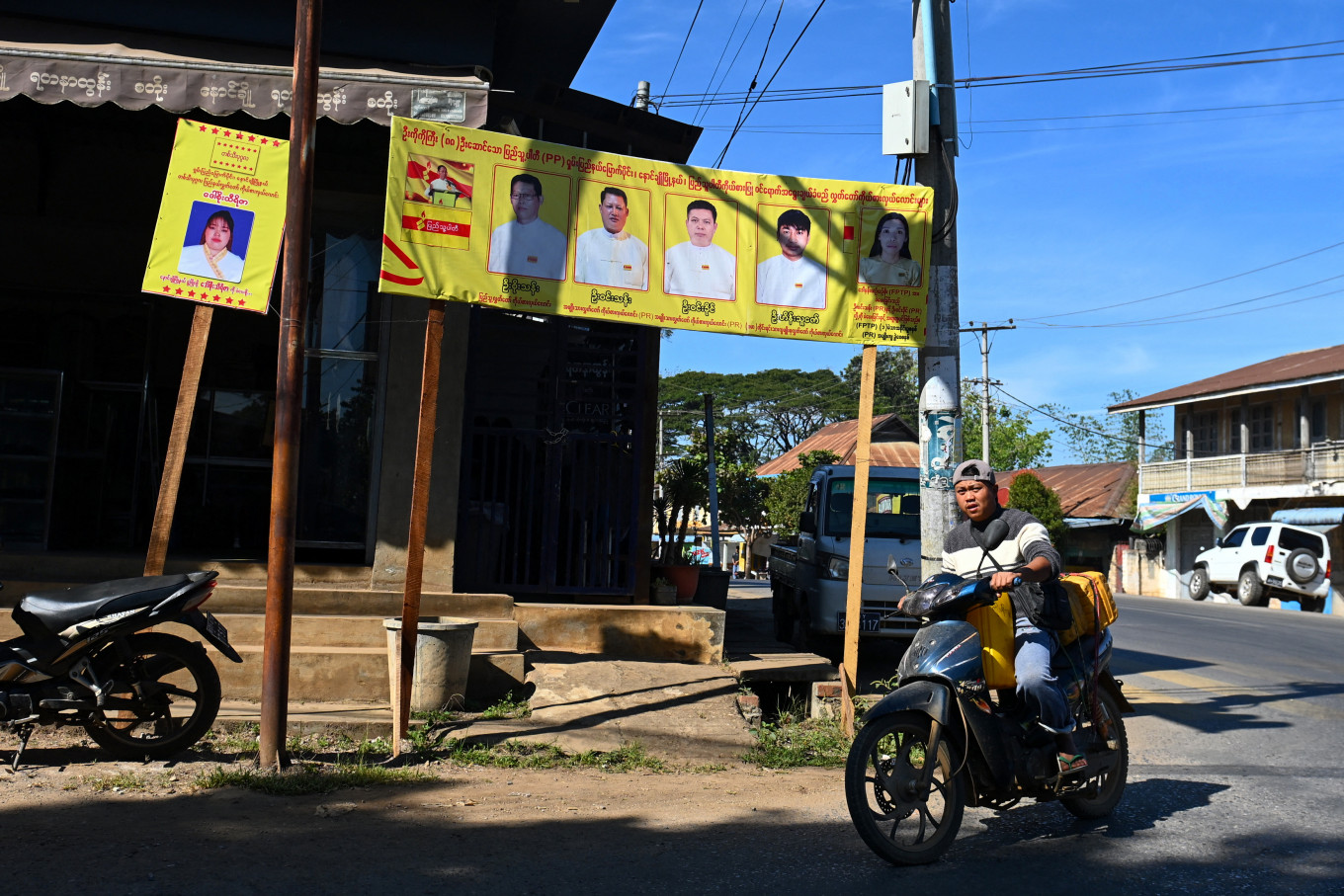 A motorcyclist rides past an election campaign banner on Dec. 9, 2025, in Nawnghkio, Shan state, ahead of the first phase of Myanmar’s general election set to take place on Dec. 28. (AFP/Sai Aung Main)
T
he majority of Myanmar’s citizens will not head to the polls set to be held in four days. Rather than the national vote, a more reliable indicator of political trajectories in 2026 is whether the Kachin Independence Army (KIA) is pushed toward or can hold out against a bilateral ceasefire in Kachin state.
The first phase of the junta regime’s elections, managed by the State Security and Peace Commission (SSPC) and scheduled for Dec. 28, as reported by the Associated Press, will take place in around a third of townships, the basic administrative unit in Myanmar. The elections are unlikely to end the conflict and instead coincide with resistance groups disrupting the polls while the military targets civilians with violence.
The junta’s influence is even more limited north of Mandalay, the main gateway to Upper Myanmar’s Sagaing region, Kachin state and Shan state. There, only a fraction of the population in the townships will be able to vote as SSPC governance, where it exists, will be mostly confined to fortified local compounds.
Indonesia, for its part, understands the limited stakes, with Foreign Minister Sugiono saying on Nov. 5 that the country was undecided on whether to send election observers to Myanmar, as reported by Tempo.co. There does not seem to have been an update since then.
That elections are happening at all is testament to the pressure Myanmar junta leader Min Aung Hlaing is under from factions within the military and from Beijing to dilute what many view as his incompetently managed emergency rule.
Reshuffles and promotions within the military and its affiliated Union Solidarity and Development Party (USDP) point to Min Aung Hlaing’s efforts to retain control in 2026, even as the elections are expected to open up other positions of authority such as the presidency, as Naing Min Khant has noted in his Dec. 11 article published by the Stimson Center, a United States think tank.

And that is without an unforeseen internal coup, which would be a surer way to alter the country’s trajectory.