TheJakartaPost
Please Update your browser
Your browser is out of date, and may not be compatible with our website. A list of the most popular web browsers can be found below.
Just click on the icons to get to the download page.


Popular Reads
Top Results
No results found. Please check your search term and try again
Can't find what you're looking for?
View all search results
Popular Reads
Top Results
No results found. Please check your search term and try again
Can't find what you're looking for?
View all search resultsA model to keep multilateralism alive
As countries shift away from multilateral cooperation as the world grows more multipolar, organizations that are mission-driven, involve multiple stakeholders and founded on a spirit of partnership will become ever more necessary to face contemporary challenges.
Change text size
Gift Premium Articles
to Anyone
Share the best of The Jakarta Post with friends, family, or colleagues. As a subscriber, you can gift 3 to 5 articles each month that anyone can read—no subscription needed!
 Set as preferred source
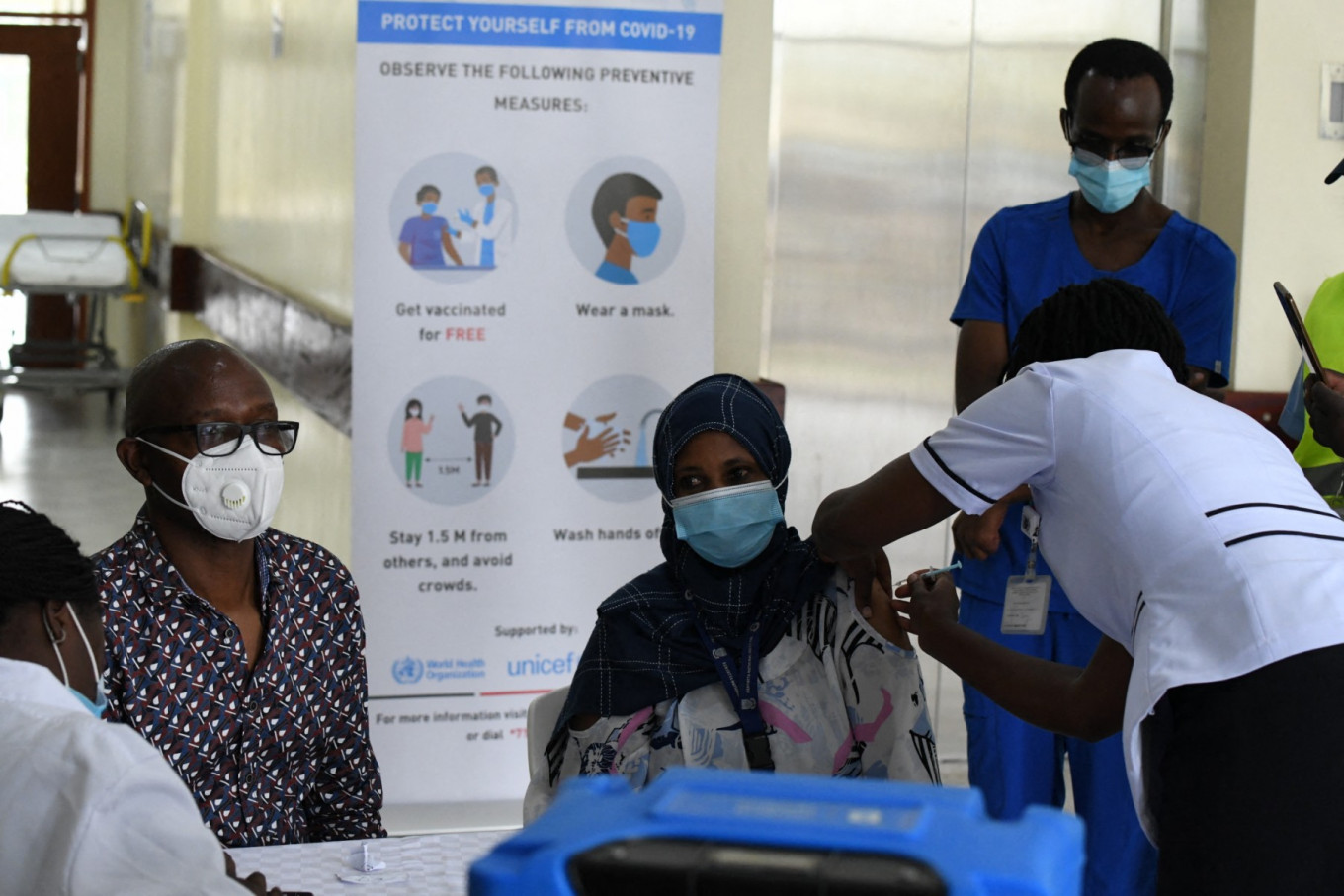 A health worker (right) administers a dose of the Oxford-AstraZeneca vaccine to a colleague at the Kenyatta National Hospital in Nairobi on March 5, 2021, under the COVID-19 Vaccines Global Access (COVAX) initiative from Gavi, the Vaccine Alliance, to combat the pandemic. (AFP/Simon Maina)
F
ew would deny that there has been a shift away from multilateral cooperation in recent years. As the world becomes more multipolar, geopolitical tensions are hampering efforts to devise common solutions to shared problems, while rising nationalism and fiscal crises within many traditional donor countries are threatening the institutions on which multilateralism depends.
As a realist, I recognize that today’s world is more dangerous than the one we inhabited not so long ago. But I am also confident that possibilities for long-term global collaboration remain. I have seen firsthand that multilateral cooperation often delivers results that otherwise would not be attained.
My confidence stems from my experience as the chair of Gavi, the Vaccine Alliance. As my five-year tenure draws to a close, I find myself reflecting on what has underpinned Gavi’s success over the past 25 years, and what this experience can teach us about adapting multilateralism for a rapidly changing world.
The first lesson may sound simple but it is too often forgotten: Always be mission-driven.
Gavi exists to save lives and protect health by expanding access to vaccines in lower-income countries. It is this clarity of purpose that has helped halve child mortality in 78 countries and protect every one of us against the threat of infectious diseases. Nor is there any secret to our success. We have done it by uniting a multitude of public and private stakeholders, many with divergent interests, behind a common purpose.
Gavi has always been a coalition of the willing, bringing together national governments, United Nations agencies, philanthropies, vaccine manufacturers, innovators, development banks, research institutions and civil society. With its diverse skill set, expertise and political clout, it has protected over half the world’s children against preventable diseases in any given year, as well as provided the world with core competencies during crises like the COVID-19 pandemic, when we led the global vaccine response.

In a more multipolar world, similar approaches will be needed to drive progress in other areas where the provision of public goods (conflict resolution, education, health security, equitable access to AI) is too important to be held hostage by adversarial politics and sectional interests.