The Jakarta Post
Please Update your browser
Your browser is out of date, and may not be compatible with our website. A list of the most popular web browsers can be found below.
Just click on the icons to get to the download page.


Popular Reads
Top Results
No results found. Please check your search term and try again
Can't find what you're looking for?
View all search results
Popular Reads
Top Results
No results found. Please check your search term and try again
Can't find what you're looking for?
View all search resultsThe Sumatra disaster and Indonesia’s diplomatic dilemma
Why does Indonesia appear so keen to protect its pride by refusing bilateral assistance?
Change text size
Gift Premium Articles
to Anyone
Share the best of The Jakarta Post with friends, family, or colleagues. As a subscriber, you can gift 3 to 5 articles each month that anyone can read—no subscription needed!
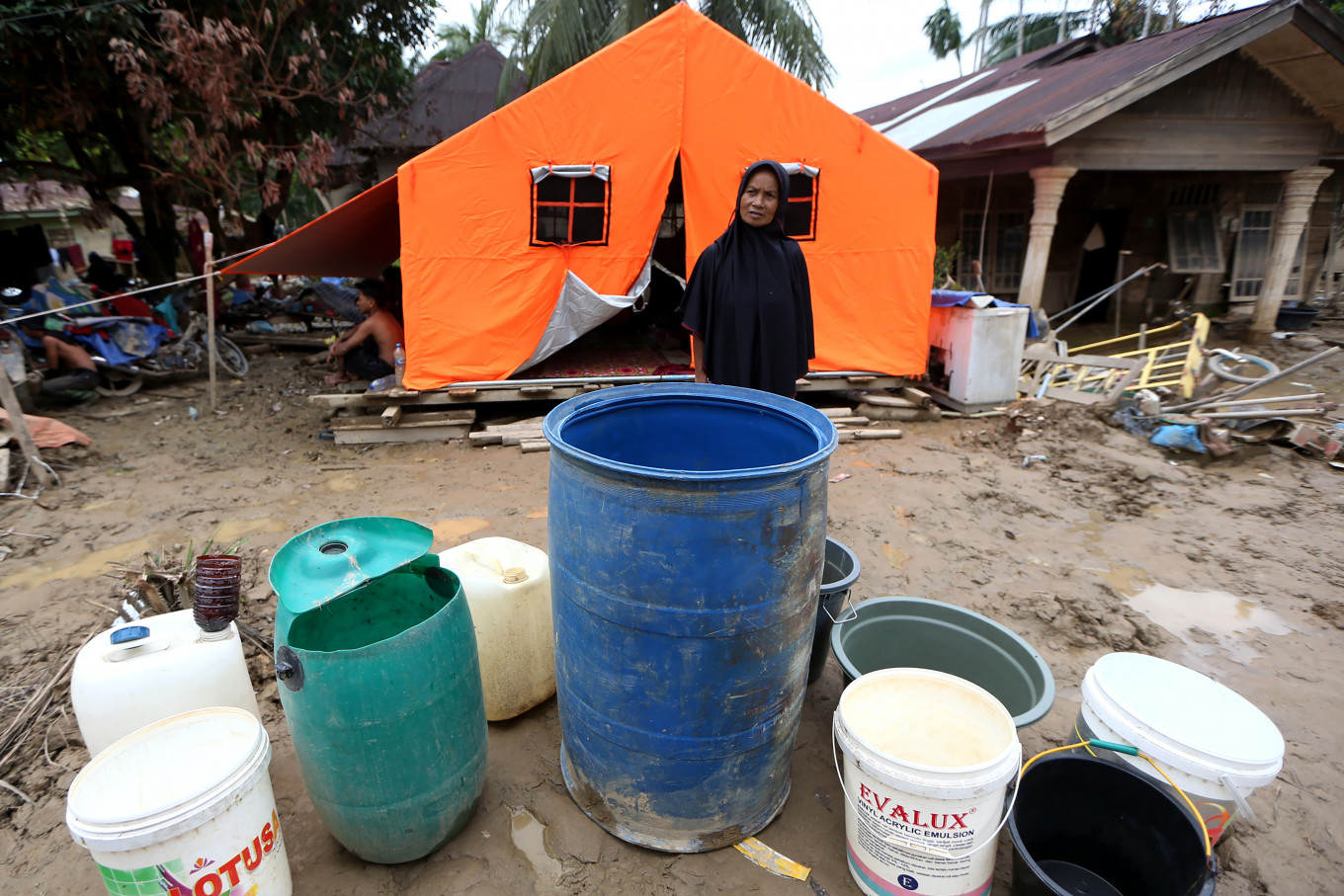 A woman waits for clean water on Dec. 28 in Lubuk Sidup village, Aceh Tamiang, Aceh. 32 days after flash floods caused by the overflow of the Tamiang River, access to clean water and sanitation remains an urgent problem for residents and evacuees in Aceh Tamiang regency, despite ongoing efforts by the government and nonprofits to respond to needs. (Antara/Irwansyah Putra)
T
he Sumatra disaster has not only brought grief, but also a war of words. As flash floods struck three provinces, Aceh, North Sumatra and West Sumatra, at the end of November, forcing residents to flee in panic, the country’s political elites appeared preoccupied with carefully choosing words to safeguard national pride.
Indonesia received numerous offers of assistance from friendly countries to help ease the burden of the disaster. President Prabowo Subianto rejected these offers on Dec. 15, asserting that Indonesia could manage the crisis independently. Following public debate, Home Minister Tito Karnavian clarified on Dec. 19 that foreign assistance was not entirely ruled out, provided it came from non-governmental sources, effectively limiting aid to channels routed through international organizations rather than bilateral arrangements.
This raises an important question: why does Indonesia appear so keen to protect its pride by refusing bilateral assistance? From a diplomatic and foreign policy perspective, decisions on accepting international aid are driven by strategic considerations, both humanitarian and sovereign.
The humanitarian dimension reflects respect for global solidarity, acknowledging the goodwill of friendly nations offering help in times of crisis. Sovereignty, meanwhile, relates to preserving the dignity of a state that is deemed capable of managing its own domestic disasters. Yet sovereignty here goes far beyond mere national pride.
The government’s decision to accept disaster assistance only through international organizations, rather than directly through bilateral channels, reflects a rational political-diplomatic calculation.
How so? First, multilateral mechanisms provide a normative and political shield that better protects Indonesia’s sovereignty, as they generally carry less political pressure than bilateral aid, especially when assistance comes from powerful states. The United States’ preference for acting outside multilateral frameworks to exert influence illustrates this dynamic. Viewed through this lens, Indonesia’s reliance on multilateral aid is understandable, as it reduces the risk of political pressure disguised as humanitarian assistance.

Second, because aid channeled through international organizations carries fewer political strings, Indonesia retains greater control over distribution, personnel deployment and priority-setting during reconstruction and rehabilitation. From the standpoint of diplomatic propriety, the dominant role of the recipient state in managing multilateral assistance is crucial, as it prevents domestic perceptions of “intervention” by specific foreign powers.