TheJakartaPost
Please Update your browser
Your browser is out of date, and may not be compatible with our website. A list of the most popular web browsers can be found below.
Just click on the icons to get to the download page.


Popular Reads
Top Results
No results found. Please check your search term and try again
Can't find what you're looking for?
View all search results
Popular Reads
Top Results
No results found. Please check your search term and try again
Can't find what you're looking for?
View all search resultsA decisive year for ocean conservation
Over the next five years, we have an opportunity to pull back from the brink and ensure that the ocean continues to stabilize the climate, feed billions of people and support the livelihoods of coastal communities.
Change text size
Gift Premium Articles
to Anyone
Share the best of The Jakarta Post with friends, family, or colleagues. As a subscriber, you can gift 3 to 5 articles each month that anyone can read—no subscription needed!
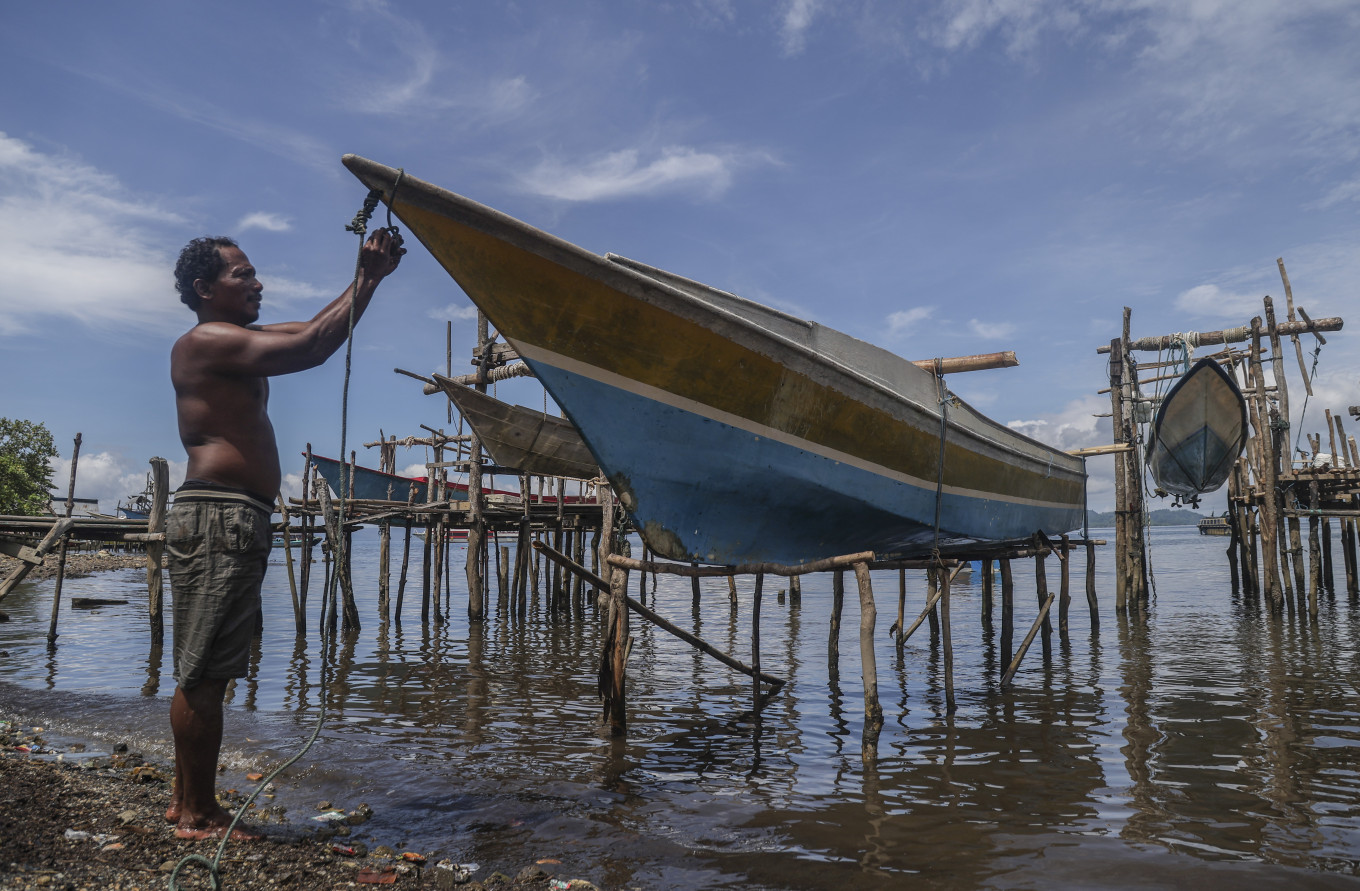 A fisherman parks his fishing boat on Nov. 11 in Kupal village, on Bacan Island, South Halmahera regency, North Maluku. Fishermen in the area have a tradition of hanging their boats using a pulley after going out to sea to make them easier to use again and to protect them from waves that can damage the hull. (Antara/Andri Saputra)
W
hile the ocean’s health is perilously close to a tipping point, 2025 offered reasons for hope. In fact, over the next five years, we have an opportunity to pull back from the brink and ensure that the ocean continues to stabilize the climate, feed billions of people and support the livelihoods of coastal communities. If we fail to seize this chance, the consequences will be dire for generations to come.
As a Fijian, I understand that the ocean’s irreversible degradation is not an abstract concern. Pacific Islanders live with the reality of rising sea levels claiming more of our coastline every year and contaminating the aquifers we use for agriculture and drinking water. Warming waters supercharge tropical cyclones and destroy the coral reefs that provide food security and coastal protection.
But amid these challenges, and following years of incrementalism, international efforts to protect the ocean gained momentum in 2025, leading to some landmark decisions. Despite the strains being put on multilateralism, it is now widely acknowledged that the ocean’s health is at the heart of global stability, climate resilience, and economic prosperity.
In June, we witnessed how powerful this recognition is at the third United Nations Ocean Conference cohosted by France and Costa Rica in Nice. Some 15,000 people, including more than 60 heads of government and 100 ministers, participated in UNOC3, which also welcomed nearly 100,000 visitors. Attendees were united in demanding expanded marine protection, increased efforts to mitigate ocean pollution, high seas regulation and financial support for vulnerable coastal and island communities.
Another historic achievement was the ratification of the UN High Seas Treaty, which will enter into force in January. For the first time, humanity has a framework for protecting biodiversity in marine areas beyond national jurisdictions, half of the planet’s surface. Likewise, the World Trade Organization’s Agreement on Fisheries Subsidies entered into force, prohibiting subsidies for illegal, unreported and unregulated fishing activities, which have long undermined sustainable fisheries management and threatened marine ecosystems.
Moreover, ocean-based climate action featured more prominently in many of the updated nationally determined contributions that countries were required to submit this year under the Paris climate agreement. Governments are now embracing the powerful climate solutions that the ocean offers, from offshore renewable energy to low-carbon shipping and mangrove restoration.

But policymakers are not the only ones seeking to harness the ocean’s potential. In June, the world moved significantly closer to a regenerative and sustainable blue economy at the Blue Economy and Finance Forum, a special meeting of UNOC3 held in Monaco. Understanding that healthy marine ecosystems underpin economic growth and resilience, private investors, public banks and philanthropies committed to investing US$10.2 billion in a sustainable blue economy by 2030. Across the Global South, innovative finance models have started to channel capital to coastal protection, community-led conservation and nature-based infrastructure.