TheJakartaPost
Please Update your browser
Your browser is out of date, and may not be compatible with our website. A list of the most popular web browsers can be found below.
Just click on the icons to get to the download page.


Popular Reads
Top Results
No results found. Please check your search term and try again
Can't find what you're looking for?
View all search results
Popular Reads
Top Results
No results found. Please check your search term and try again
Can't find what you're looking for?
View all search resultsBeware, data credibility remains Indonesia’s weakest link
It has been proven throughout history that statistics is essential to statecraft and in the Indonesian context of today's digital era, greater openness is key to building credibility and trust.
Change text size
Gift Premium Articles
to Anyone
Share the best of The Jakarta Post with friends, family, or colleagues. As a subscriber, you can gift 3 to 5 articles each month that anyone can read—no subscription needed!
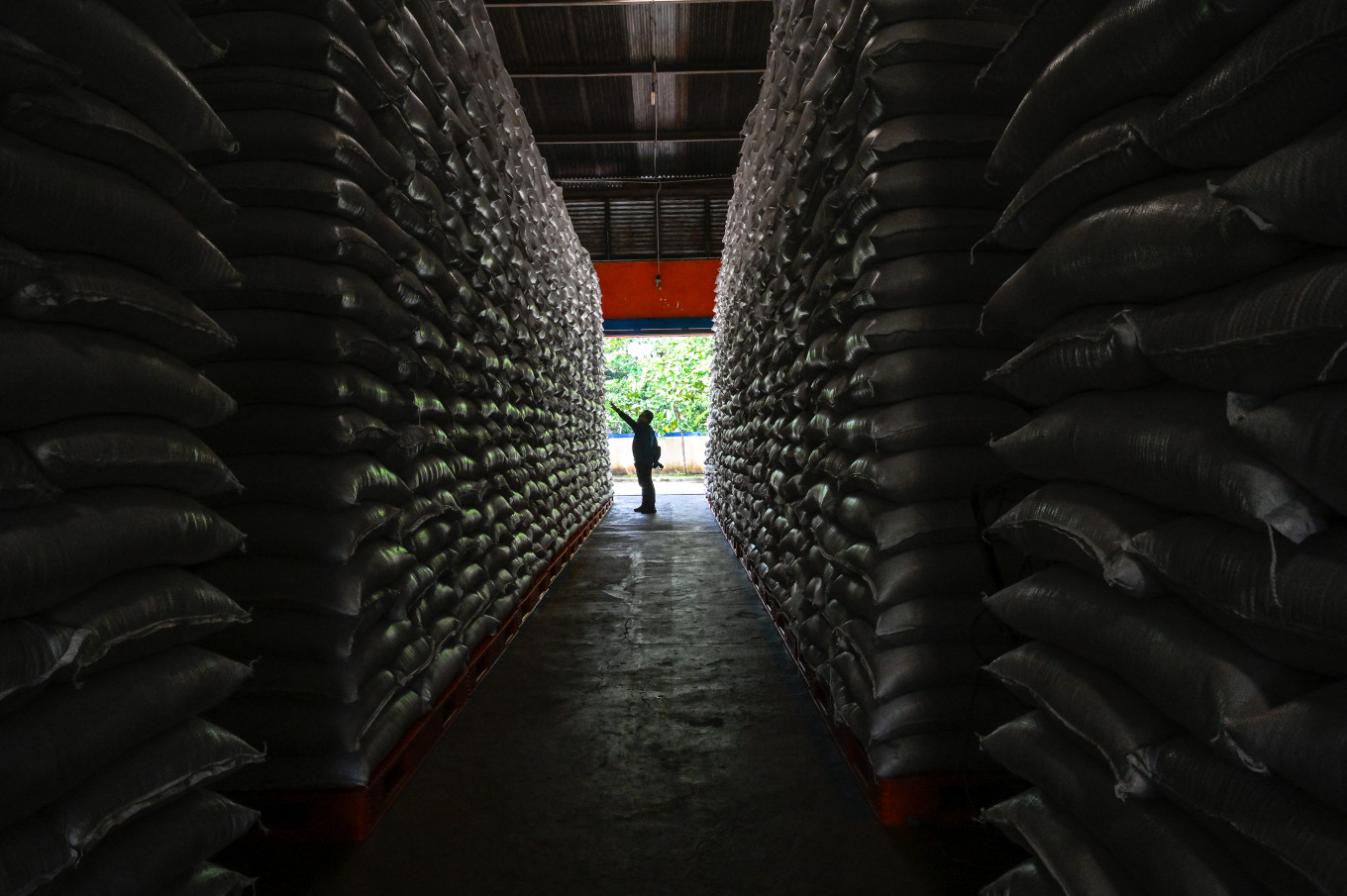 A worker inspects sacks of rice on Dec. 29, 2025, at the State Logistics Agency (Bulog) warehouse in Lambaro, Aceh. (AFP/Chaideer Mahyuddin)
R
eliable data is the oxygen of modern policymaking. Without it, governments lose direction, markets lose confidence and citizens lose trust. Yet we often forget that data is not a neutral artifact. It is the product of institutions. It requires investment, competence and above all, integrity.
This is why the recent controversy over the revision to Indonesia’s second-quarter (Q2) GDP, initially overestimated by a wide margin, should be treated not as a minor statistical slip but as an early warning of a deeper institutional problem.
The global debate on data credibility is hardly new. As Diane Coyle notes in her powerful op-ed, statistics has always been an instrument of statecraft, from William the Conqueror’s Domesday Book to the wartime GDP calculations that gave the United States and the United Kingdom a strategic edge over Germany. Countries that understand their economic capacity can plan, execute and win, while countries that do not stumble blindly.
Indonesia today risks falling into the second category.
For decades, Statistics Indonesia (BPS) has been rightly regarded as an island of professionalism within the bureaucracy. In fact, BPS has demonstrated institutional courage in undertaking politically sensitive reforms. The most notable example is the overhaul of rice production data that had long been plagued by overestimation due to obsolete land measurement practices and political interests.
For years, the Agriculture Ministry defended inflated figures, partly because high production numbers justified program budgets, subsidies and procurement targets. Against heavy political pressure, BPS launched a landmark reform using an area sampling framework (KSA), improved digital imaging and satellite data as well as intensive field validation.

The result was a dramatic correction that was painful for some ministries but transformative for national policy. It was also an institutional victory for evidence over convenience.