TheJakartaPost
Please Update your browser
Your browser is out of date, and may not be compatible with our website. A list of the most popular web browsers can be found below.
Just click on the icons to get to the download page.


Popular Reads
Top Results
No results found. Please check your search term and try again
Can't find what you're looking for?
View all search results
Popular Reads
Top Results
No results found. Please check your search term and try again
Can't find what you're looking for?
View all search resultsThe wild, wild waste
Landfills should operate only for residual waste, making disposal a last resort rather than a primary solution.
Change text size
Gift Premium Articles
to Anyone
Share the best of The Jakarta Post with friends, family, or colleagues. As a subscriber, you can gift 3 to 5 articles each month that anyone can read—no subscription needed!
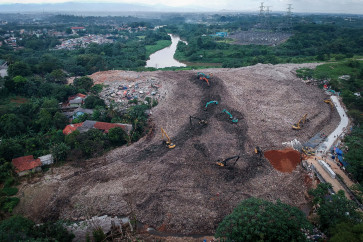
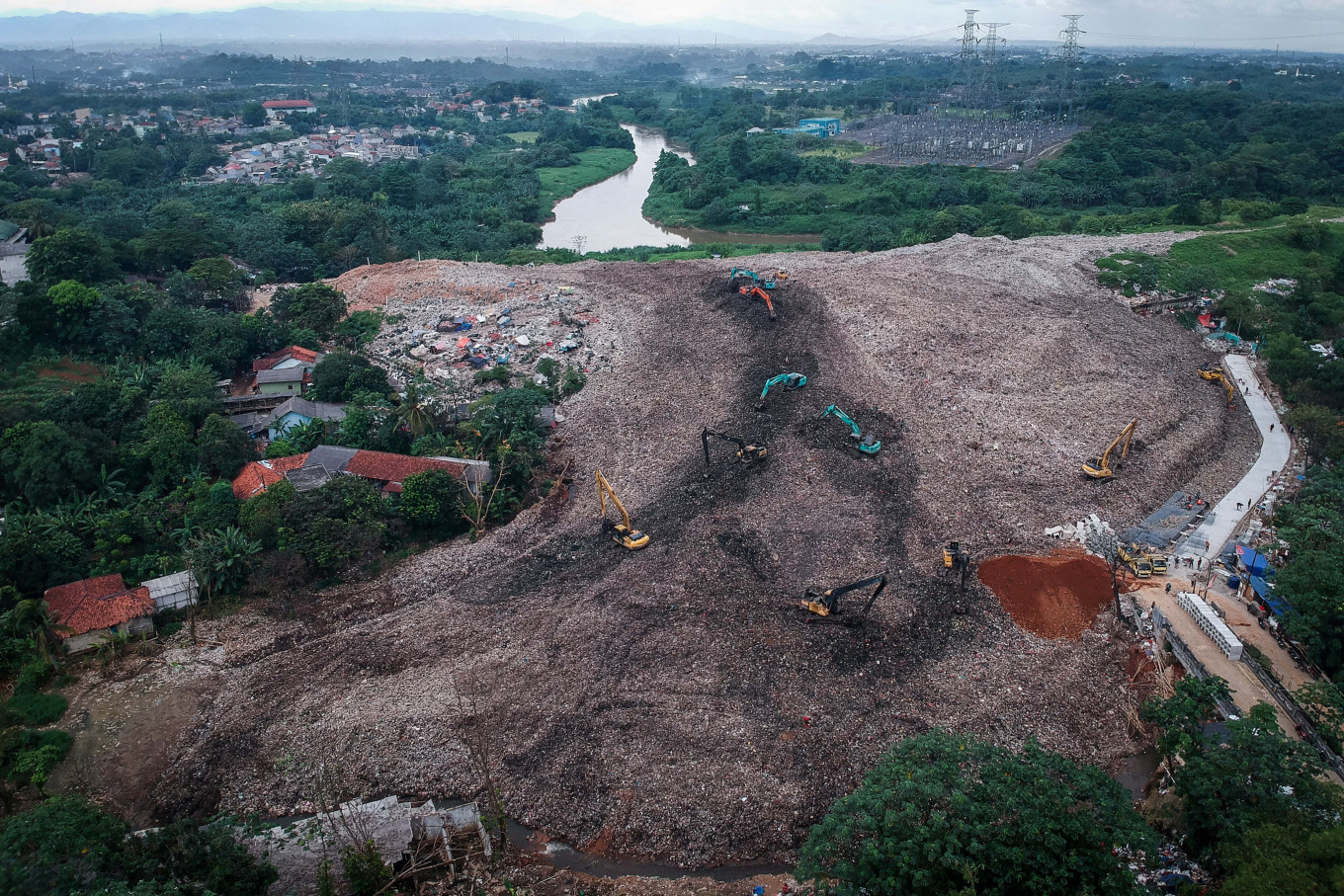 Workers use excavators to remove waste on Dec. 26, 2025, at the Cipeucang final disposal site (TPA) in South Tangerang, Banten. The city administration has declared a waste management emergency, effective from Dec. 23, 2025, to Jan. 5, 2026, to speed up waste handling efforts and reduce risks to residents’ health. (Antara/Putra M. Akbar)
U
nmanaged waste, a chronic problem long ignored, has once again seized the national spotlight as piles of garbage choke street corners across South Tangerang - one of Jakarta’s satellites and home to more than 1.4 million people.
With carefully planned townships and exclusive residential areas such as Alam Sutera, Bintaro Jaya and Bumi Serpong Damai, South Tangerang has marketed itself as a “modern city,” offering comprehensive facilities ranging from international-standard schools and hospitals to shopping centers and business hubs.
Yet, beneath this veneer of progress lies a glaring failure in urban governance: waste management.
A city cannot claim modernity while failing at basic sanitation. Effective waste management lies at the heart of public health, environmental protection and urban resilience.
In advanced cities worldwide, waste is tackled systematically. It is reduced at the source, separated and composted at the household and community levels and then recycled, reused or converted into energy to achieve a zero-waste target. Landfills operate only for residual waste, making disposal a last resort rather than a primary solution.
In South Tangerang, as in most parts of Indonesia, the reality is starkly different. Most waste is dumped haphazardly in landfills, while a significant portion remains entirely unmanaged.

Data from the Environment Ministry’s National Waste Management Information System (SIPSN) revealed that in 2025, only around a third of the nation’s 16.63 million tonnes of waste was managed. The remainder went unmanaged, often ending up along riversides or in canyons. The same data indicates that while sanitary landfills handled about 2.6 million tonnes of waste last year, open dumping sites received nearly twice that amount.