TheJakartaPost
Please Update your browser
Your browser is out of date, and may not be compatible with our website. A list of the most popular web browsers can be found below.
Just click on the icons to get to the download page.


Popular Reads
Top Results
No results found. Please check your search term and try again
Can't find what you're looking for?
View all search results
Popular Reads
Top Results
No results found. Please check your search term and try again
Can't find what you're looking for?
View all search resultsIntellectual leadership matters for NU in its second century
The intellectual capacity of NU leadership is essential if the group is to formulate substantive responses to extremism, social inequality and the ethical challenges of technological change.
Change text size
Gift Premium Articles
to Anyone
Share the best of The Jakarta Post with friends, family, or colleagues. As a subscriber, you can gift 3 to 5 articles each month that anyone can read—no subscription needed!
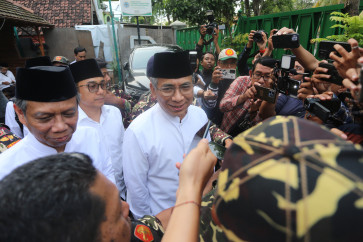
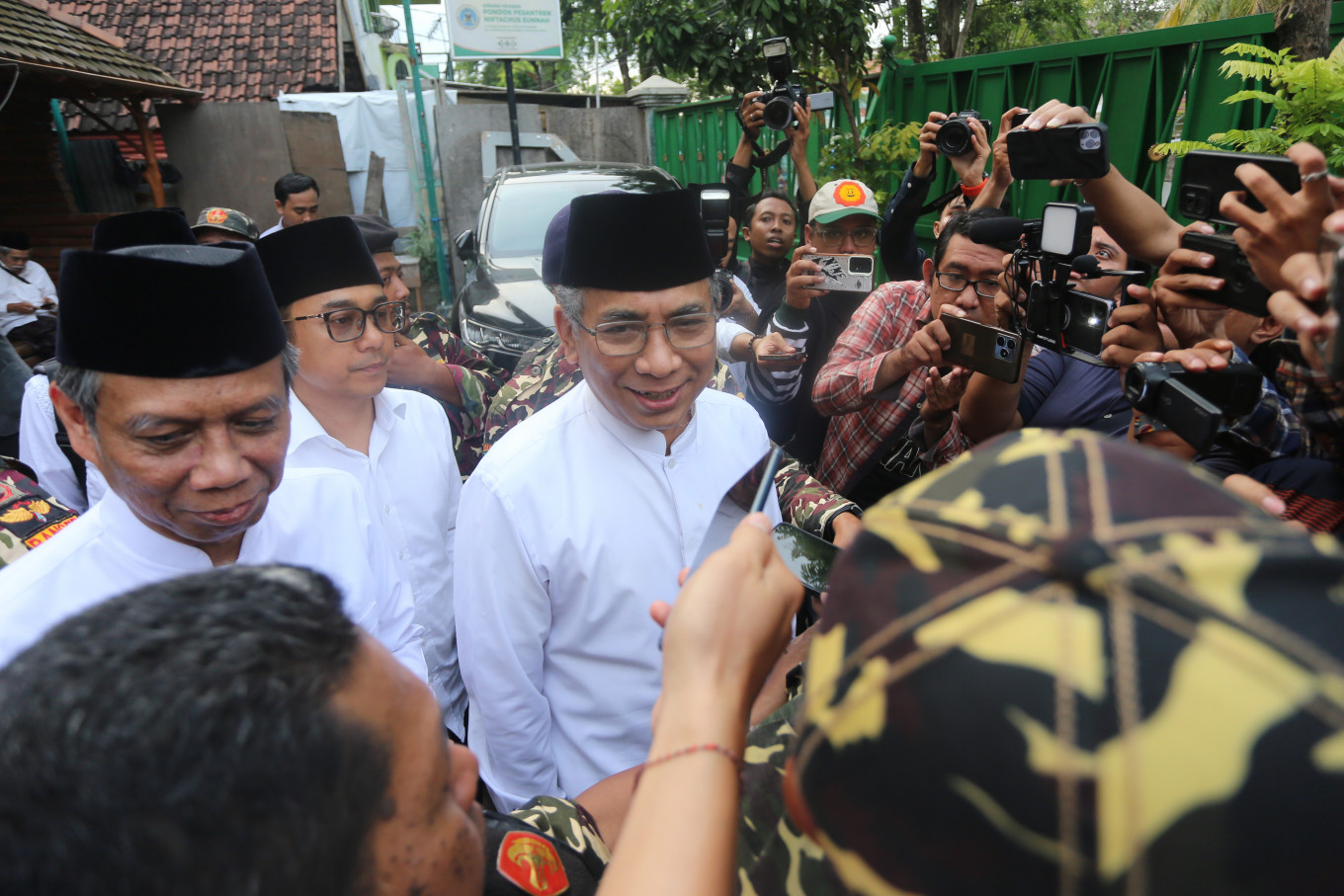 Reconciliation mood: Nahdlatul Ulama chairman Yahya Cholil Staquf (center) speaks to reporters on Dec. 28 after a closed-door meeting with senior figures of the organization at the Miftachus-sunnah Islamic boarding school in Surabaya. (Antara/Moch Asim)
N
ahdlatul Ulama (NU), the world’s largest Muslim organization, stands at a critical juncture in its long history. As Indonesia enters a new political chapter and NU approaches its second century, the recent internal leadership disputes within its central board have exposed deeper structural challenges that can no longer be ignored.
At stake is not merely organizational harmony, but NU’s capacity to remain a moral anchor for the nation and a global reference for moderate Islam.
Recent developments, including intensive deliberations among senior clerics, such as former vice president Ma’ruf Amin, at the Lirboyo Islamic boarding school (pesantren) in Kediri, East Java, reflect a genuine concern that prolonged internal conflict could erode NU’s authority and social cohesion. While vigorous debate is natural in a democratic and scholarly organization, an unresolved deadlock at the top risks weakening NU’s ability to respond effectively to the challenges of the present.
These concerns culminated in a meeting on Dec. 25 that resulted in islah (reconciliation), during which NU’s powerful supreme religious council agreed to reinstate Yahya Cholil Staquf as chairman. Both sides also agreed to convene a national congress in the near future. Yahya’s term is set to end in November of this year following his election at the NU national congress in Lampung in 2021.
Historically, NU has survived internal tensions through islah, reconciliation rooted in humility, collective wisdom, and a commitment to the greater good of the jamaah (congregation).
Yet, today’s context is markedly different from previous eras. NU now operates in an environment shaped by digital disruption, global geopolitics, ideological polarization and increasingly complex socio-economic challenges. Addressing these realities requires more than moral authority alone; it demands leadership capacity that combines religious depth with intellectual breadth and global engagement.

NU is rich in intellectual capital. The organization boasts more than 3,000 professors and thousands of doctorate holders across disciplines ranging from Islamic studies and social sciences to economics, technology and international relations. This is a remarkable asset, yet one that has not been fully translated into strategic leadership at the organizational level.