TheJakartaPost
Please Update your browser
Your browser is out of date, and may not be compatible with our website. A list of the most popular web browsers can be found below.
Just click on the icons to get to the download page.


Popular Reads
Top Results
No results found. Please check your search term and try again
Can't find what you're looking for?
View all search results
Popular Reads
Top Results
No results found. Please check your search term and try again
Can't find what you're looking for?
View all search resultsVenezuela and the persistence of hierarchy in global politics
Calling the US invasion of Venezuela a “realist moment” may sound appealing, but it risks becoming a vocabulary that affirms power rather than a tool for understanding it.
Change text size
Gift Premium Articles
to Anyone
Share the best of The Jakarta Post with friends, family, or colleagues. As a subscriber, you can gift 3 to 5 articles each month that anyone can read—no subscription needed!
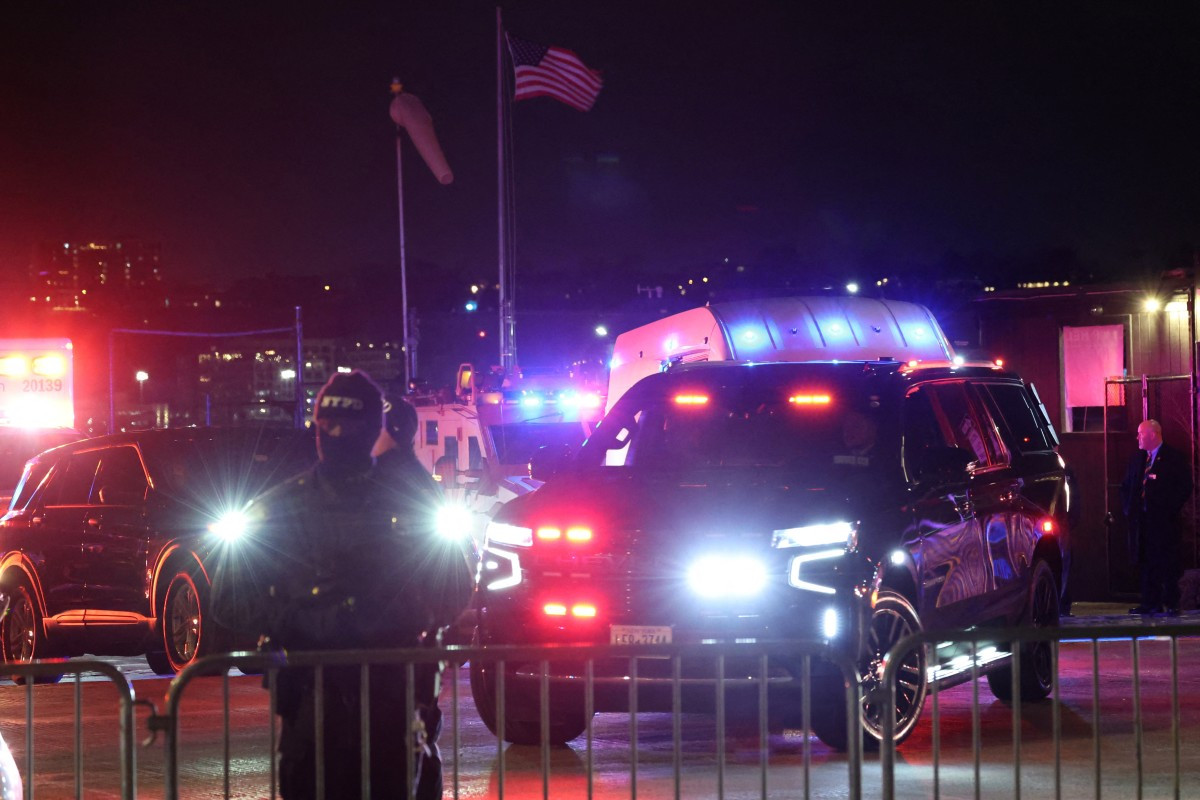 A motorcade carrying Venezuelan President Nicolas Maduro leaves the Westside Heliport on Jan. 3, 2026, in New York, the United States. Maduro, who was captured by US forces in Caracas, arrived in New York on Saturday evening. Maduro was seen surrounded by FBI agents as he descended the boarding stairs of a US government plane at a state National Guard facility, and was slowly escorted along the tarmac. (AFP/Angela Weiss)
T
he Jan. 3 United States military operation in Venezuela may prompt a swift and confident response from many commentators: This, we may be told, is a “realist moment”. The phrase travels easily. It sounds sober, unsentimental and mature.
Yet the depth and relevance with which it is deployed should give us pause. In an increasingly uncertain world, making sense of dramatic events is essential, but relying on shorthand theoretical labels may obscure more than it clarifies.
The uncertainty we face today is not limited to shifts in interstate relations. Global politics is unfolding through the interaction of technological acceleration, industrial and supply-chain restructuring and changing state-society relations across regions.
Military power is increasingly intertwined with surveillance systems, energy markets, digital infrastructures and domestic political legitimacy. Therefore, events such as those in Venezuela cannot be understood simply as force crossing borders. They are expressions of deeper transformations in how authority, vulnerability and exception operate in a tightly interconnected system. Explaining them requires analytical care, not conceptual shortcuts.
International relations theories are analytical tools, not moral verdicts or conclusions. Realism, in particular, is a broad paradigm encompassing diverse and sometimes conflicting theories. To label an event “realist” without specifying which causal logic is at work, whether deterrence, balance of power calculation, domestic coalition politics or leader psychology, does little analytical work. It compresses complexity rather than explaining it.
At its core, the realist paradigm rests on the assumption of international anarchy, the absence of overarching authority among formally equal states. This assumption sits uneasily with episodes like Venezuela, where hierarchy, not anarchy, appears to structure outcomes.

More importantly, such labeling performs a social and political function. Declaring an event a “realist moment” can act as a psychological shield. It reassures us that hierarchy and coercion are simply how the world works. In doing so, it distances us from uncomfortable questions about legality, legitimacy and consequence. Realism, used this way, becomes an anesthetic: It dulls critical reflection at precisely the moment when reflection is most necessary.