TheJakartaPost
Please Update your browser
Your browser is out of date, and may not be compatible with our website. A list of the most popular web browsers can be found below.
Just click on the icons to get to the download page.


Popular Reads
Top Results
No results found. Please check your search term and try again
Can't find what you're looking for?
View all search results
Popular Reads
Top Results
No results found. Please check your search term and try again
Can't find what you're looking for?
View all search resultsBeyond wage hikes
Instead of simply calculating minimum wages that will support a decent standard of living per worker per region, the government must do more in implementing an integrated policy approach that focuses on cost of living relief for households.
Change text size
Gift Premium Articles
to Anyone
Share the best of The Jakarta Post with friends, family, or colleagues. As a subscriber, you can gift 3 to 5 articles each month that anyone can read—no subscription needed!
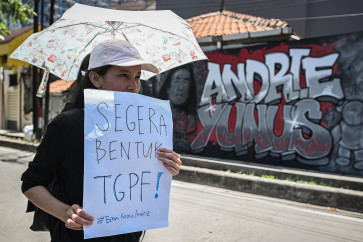
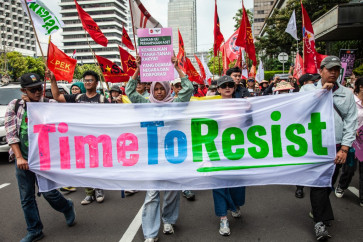
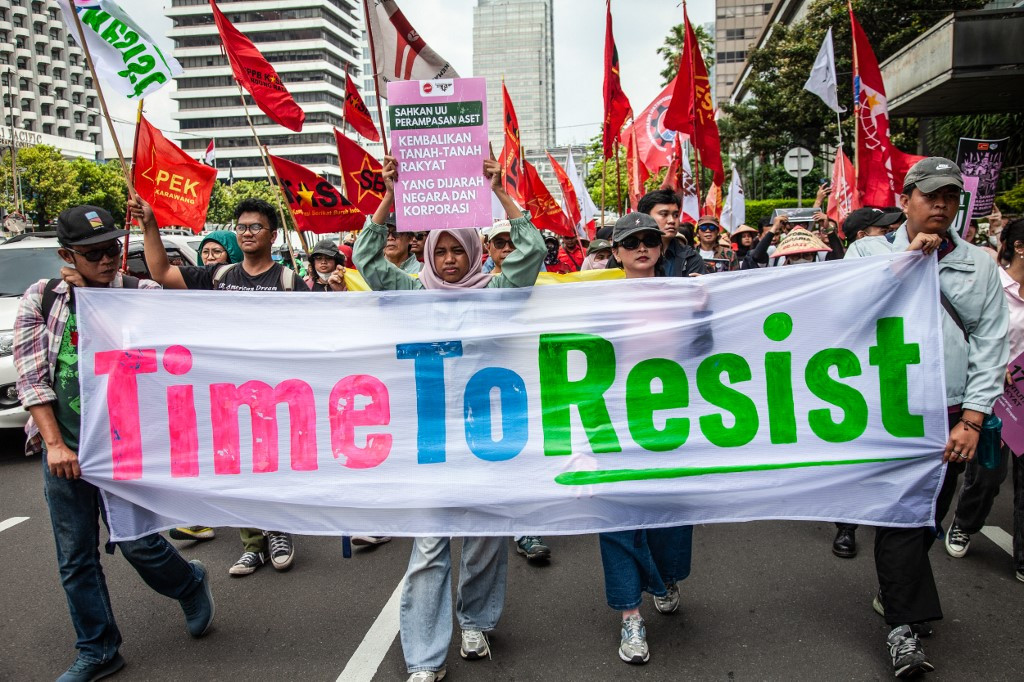 Activists from Gerakan Buruh Bersama Rakyat (Gebrak), an alliance between labor unions and civil groups, join a peaceful march along Jl. Thamrin in Central Jakarta on Sept. 4, 2025, to during protests against police brutality and repression in several major cities across the country. (AFP/Aditya Irawan)
A
mid last week’s New Year revelry, Indonesia greeted 2026 with a far less festive ritual: perennial friction over minimum wage hikes. Almost as predictable as holiday traffic, the deadlock between labor unions and employers has once again taken center stage.
Following the deadline for provincial adjustments on Dec. 24, 2025, labor unions mobilized across the archipelago, arguing that the newly announced wage figures fell short of basic needs to survive. The discontent was most visible in Jakarta, where the minimum wage was set at Rp 5.73 million (around US$341) per month, a 6.17 percent rise from the 2025 wage that unions said failed to keep pace with the soaring cost of living in the capital.
Across the country, most provinces imposed wage increases of between 5 and 7 percent, using the government-approved formula and mirroring last year's 6.5 percent national average. The government defended this range as a flexible mechanism that would allow high-growth regions, such as mineral-rich North Maluku and Central Sulawesi, to grant higher increases based on economic performance.
However, labor groups contend that the formula ignores realities on the ground, pointing to the Decent Living Requirement (KHL) index of Statistics Indonesia (BPS) as the true benchmark. For Jakarta, BPS has estimated a KHL of Rp 5.89 million per month, a figure higher than the 2026 minimum wage that precisely matches unions’ demands.
This domestic dispute has unfolded against a volatile global backdrop: As the United States implements aggressive tariff measures that disrupt global supply chains, Indonesia faces fierce competition in export markets.
In such an environment, efficiency is mandatory. Production costs must remain competitive to sustain foreign investment and manage labor costs responsibly. Yet achieving efficiency should not mean suppressing wages below decent living standards. Rather, it demands a paradigm shift from focusing solely on nominal wages to addressing the broader cost of living.

Under the current methodology, the KHL is derived from four main components based on the International Labour Organization (ILO) guidelines: food, health, education, housing and other basic needs.