TheJakartaPost
Please Update your browser
Your browser is out of date, and may not be compatible with our website. A list of the most popular web browsers can be found below.
Just click on the icons to get to the download page.


Popular Reads
Top Results
No results found. Please check your search term and try again
Can't find what you're looking for?
View all search results
Popular Reads
Top Results
No results found. Please check your search term and try again
Can't find what you're looking for?
View all search resultsBuilding Jakarta from the ground up: A year under Pramono Anung and Rano Karno
Pramono Anung and Rano Karno’s first year in office focused on rebuilding Jakarta by prioritizing people and basic services.
Change text size
Gift Premium Articles
to Anyone
Share the best of The Jakarta Post with friends, family, or colleagues. As a subscriber, you can gift 3 to 5 articles each month that anyone can read—no subscription needed!
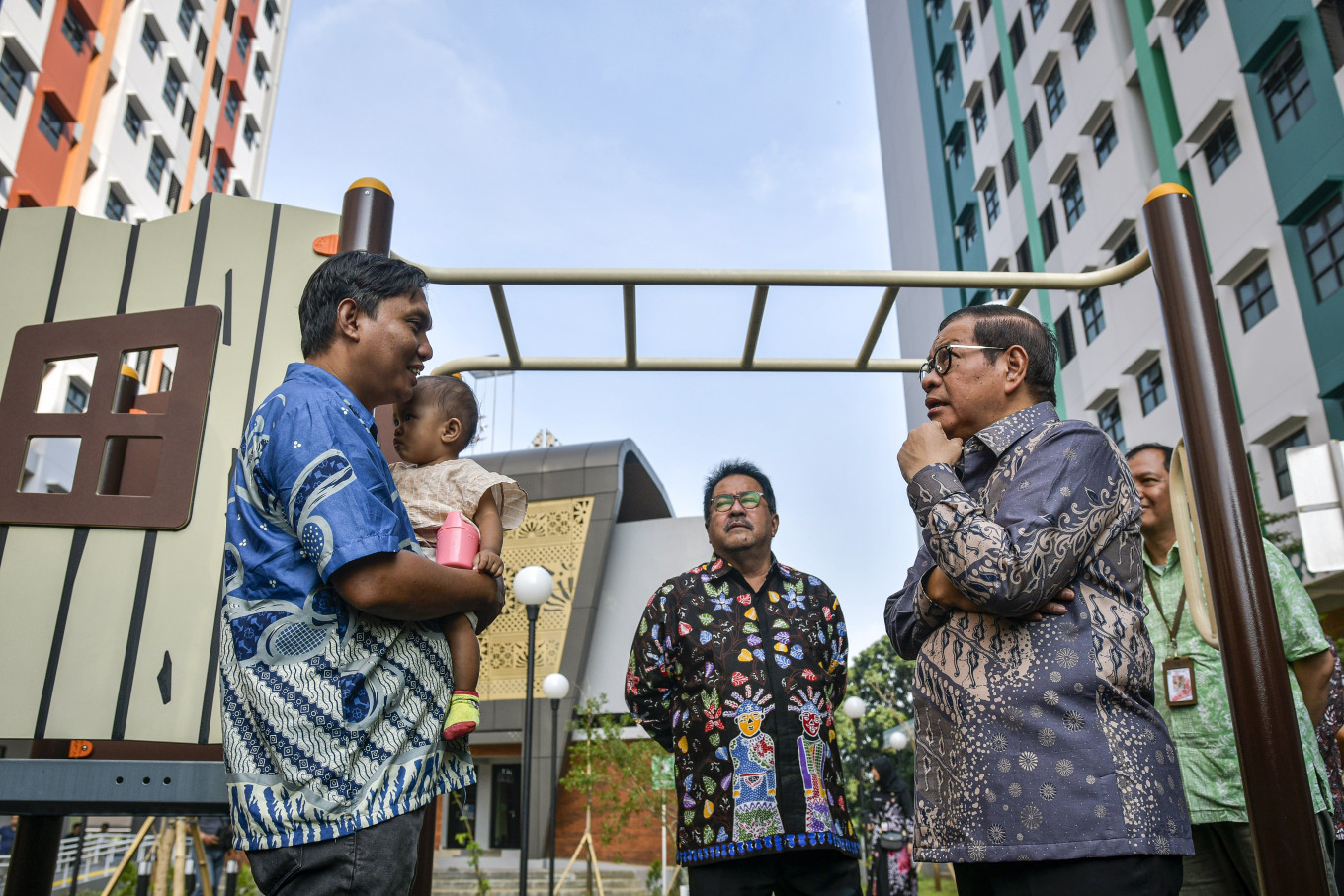 Jakarta Governor Pramono Anung (right) and his deputy Rano Karno (center) talk on May 8, 2025 with a prospective resident of low-cost rental apartments (rusunawa) Jagakarsa in South Jakarta. (Antara/Sulthony Hasanuddin)
I
magine a sprawling metropolis awakening to a new dawn, its weary limbs stretching with renewed vigor, like an ancient banyan tree whose deepest roots are finally nourished after years of drought.
This was Jakarta in 2025, the first full year under Governor Pramono Anung and Deputy Governor Rano Karno. Inaugurated on Feb. 20, 2025, by President Prabowo Subianto, the duo stepped into office with a heartfelt tagline: "Building Jakarta from the Ground Up". It was not about erecting more gleaming skyscrapers to pierce the sky, but about tending to the hidden foundations: the everyday people, the struggling families, the wide-eyed children and the quiet dreams that had long been overshadowed by the city's relentless pace.
Their leadership flowed like a steady river, carving paths of change through education, health, infrastructure, environment, economy, youth empowerment, cultural preservation and social harmony, always centering human dignity as the core of progress.
The narrative opens with the bedrock of society: education, the roots that anchor and nourish the entire tree of a nation's future. From the outset, Pramono and Rano poured resources into expanding access for the most vulnerable.
The Jakarta Smart Card program grew to support over 705,000 underprivileged students, while the Superior Student Card extended aid to nearly 20,000 university scholars, many from families who could scarcely afford textbooks. Picture thousands of young faces, once clouded by the fear of dropping out, now lighting up with possibility, dreams of higher education sprouting like fresh shoots after rain. The diploma redemption initiative acted as a cleansing storm, wiping away years of debt: thousands of certificates were cleared, freeing graduates to step confidently into the workforce. School canteens were revitalized into nourishing havens, providing balanced meals that combat stunting and build resilient bodies and minds. These efforts were not mere statistics; they were lifelines, weaving a stronger social fabric from the ground level.
The story then winds toward health and social welfare, the vital sap coursing through the city's veins. Clean water, long a luxury in dense settlements, became a priority. New communal reservoirs in areas like Tambora and Gandaria sprang up like vital springs, serving thousands of households and easing the daily burdens of mothers fetching potable water.

Distribution of health cards and water tanks reached hundreds of thousands, turning parched corners into thriving communities. Stunting prevention and poverty alleviation pulsed at the heart of the 2026 budget, a robust Rp 81.32 trillion (US$4.85 billion) plan designed to sustain these gains. Economically, Jakarta bloomed steadily, with growth holding firm amid national challenges, creating jobs that offered stability to families. When natural disasters struck elsewhere in Indonesia, the city responded with open arms, channeling billions in aid, a river of compassion flowing outward.