TheJakartaPost
Please Update your browser
Your browser is out of date, and may not be compatible with our website. A list of the most popular web browsers can be found below.
Just click on the icons to get to the download page.


Popular Reads
Top Results
No results found. Please check your search term and try again
Can't find what you're looking for?
View all search results
Popular Reads
Top Results
No results found. Please check your search term and try again
Can't find what you're looking for?
View all search resultsThe paradox of police reform: High approval ratings, low rule of law
Despite the sweeping reform in 1998, the National Police is still fraught with a culture of violence, uneven professionalism and a lack of accountability.
Change text size
Gift Premium Articles
to Anyone
Share the best of The Jakarta Post with friends, family, or colleagues. As a subscriber, you can gift 3 to 5 articles each month that anyone can read—no subscription needed!
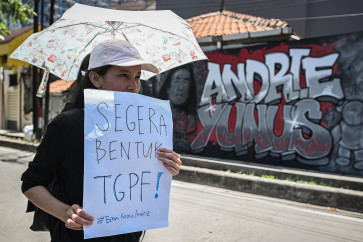
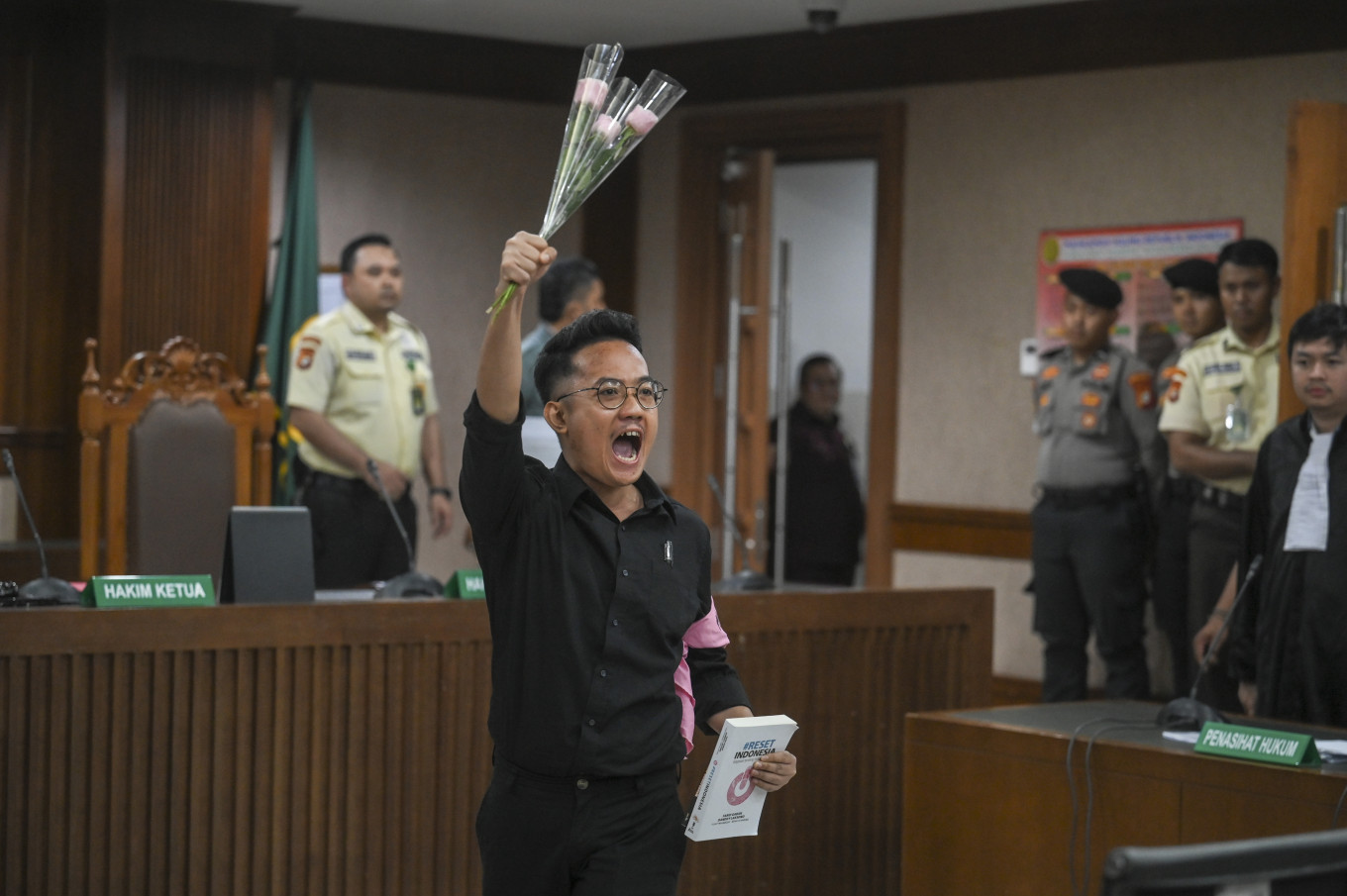 Lokataru executive director Delpedro Marhaen gestures after attending the reading of charges on Dec. 16 at the Central Jakarta District Court. Delpedro and three other co-defendants, Muzaffar Salim, Syahdan Husein and Khariq Anhar, have been charged with incitement for allegedly posting social media content related to demonstrations in August that turned violent after a delivery driver was ran over and killed by police. (Antara/Hafidz Mubarak A)
T
he year 2025 ended in a paradox for Indonesia’s security sector reform. On the surface, a fresh breeze blew when President Prabowo Subianto, after navigating long political dynamics, inaugurated the Police Reform Acceleration Commission last November. Viewed through a strategic lens, this was a calculated chess move. The President is aware that too many agendas for reforming the Bhayangkara Corps have stalled, and the image of a "professional and accountable" force remains a pipe dream, far removed from the gritty reality on the ground.
But for those inside the ad hoc commission, this task is no sprint on a smooth tartan track. Far from it. The journey of this first month has felt more like that of a trail runner. The terrain is unpredictable, riddled with steep ascents, treacherous roots and mentally gruelling distances. There is no room for explosive, wasteful energy; what is needed is efficiency, long-haul endurance and the resilience to merge with the harsh landscape.
It is this trail-runner mentality that the Commission adopted. Instead of working from behind desks, they descended into eight regions, from Aceh to Bali, traversing East Kalimantan to Maluku. They opened wide channels for aspiration, sitting down with 82 community groups in 17 face-to-face meetings. From religious leaders to ordinary citizens, everyone was heard. The goal was singular: to construct an inclusive synthesis acting as a bridge between public outcry and policy change.
Unfortunately, as the commission "ran" to absorb these aspirations, reality on the ground offered a jarring contrast. Good intentions seemed to be tripped up by the institution's own feet. Internal police performance showed no synergy; in fact, at certain points, it inflicted new wounds.
Take the events of late November 2025. The arrest of two environmental activists, Adetya Pramandira and Fathul Munif, sparked a wave of solidarity movements among hundreds of national figures. Although their detention was suspended on Dec. 10, the event left a traumatic imprint of how the law is weaponized to silence dissent.
Before that wound could heal, Police Regulation (Perpol) No. 10/2025 on officers’ assignment in civilian bureaucracy emerged, substantively colliding with legal precedence and Constitutional Court rulings. This was not just an administrative error; it was a tacit message of institutional arrogance, placing the police above constitutional supremacy.

The regulation was signed by National Police Chief Gen. Listyo Sigit Prabowo less than a month after the court banned active officers from holding posts outside of the institution.